
The Lakeberg Residence
On the Market
By Thompson Berwick & Pratt Architects, 1957
Southlands, Vancouver
Photography by James Han
Story by Nadine Cuttingham
A Vancouver time capsule preserving an unpublished mid-century modern landmark
Introduction
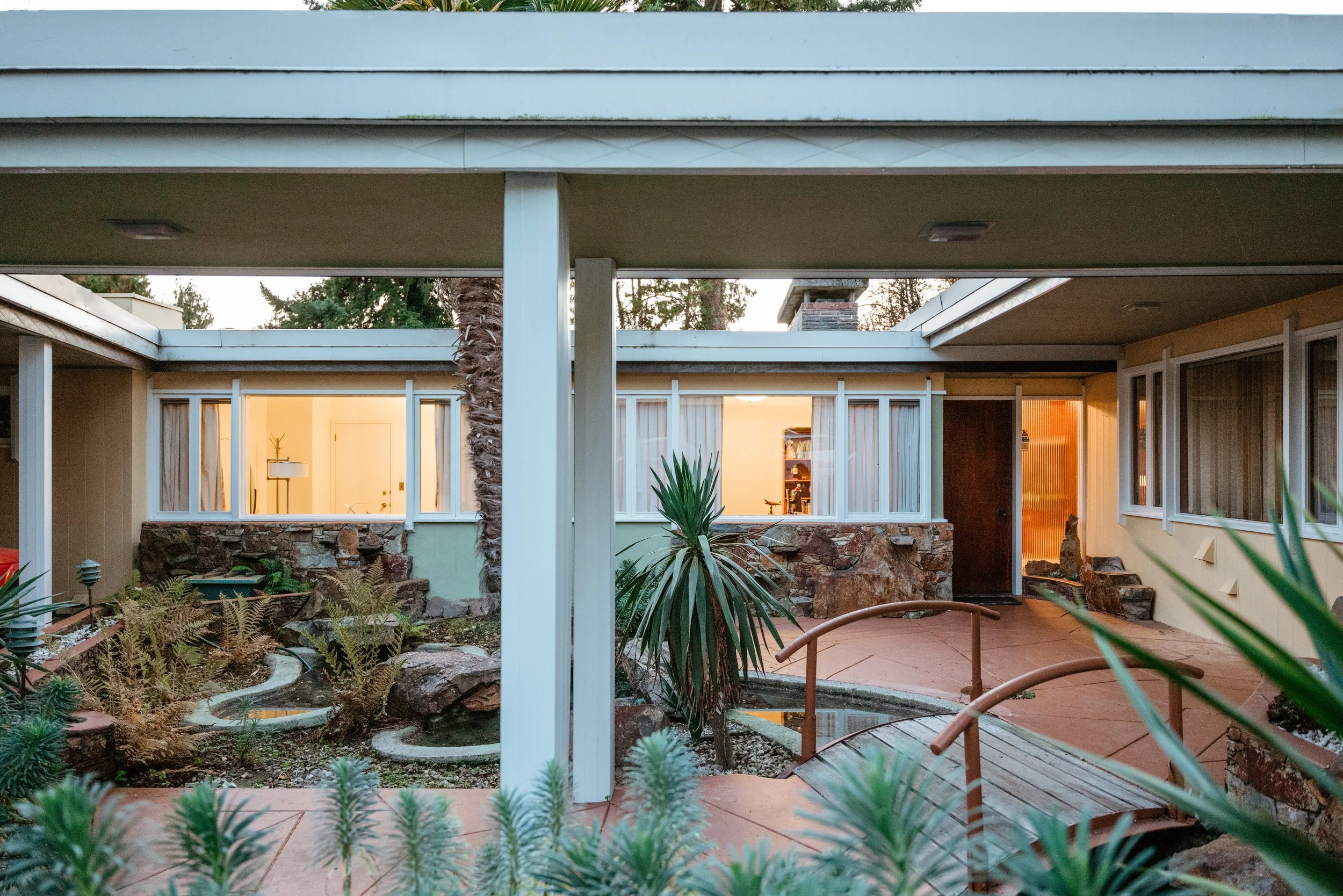
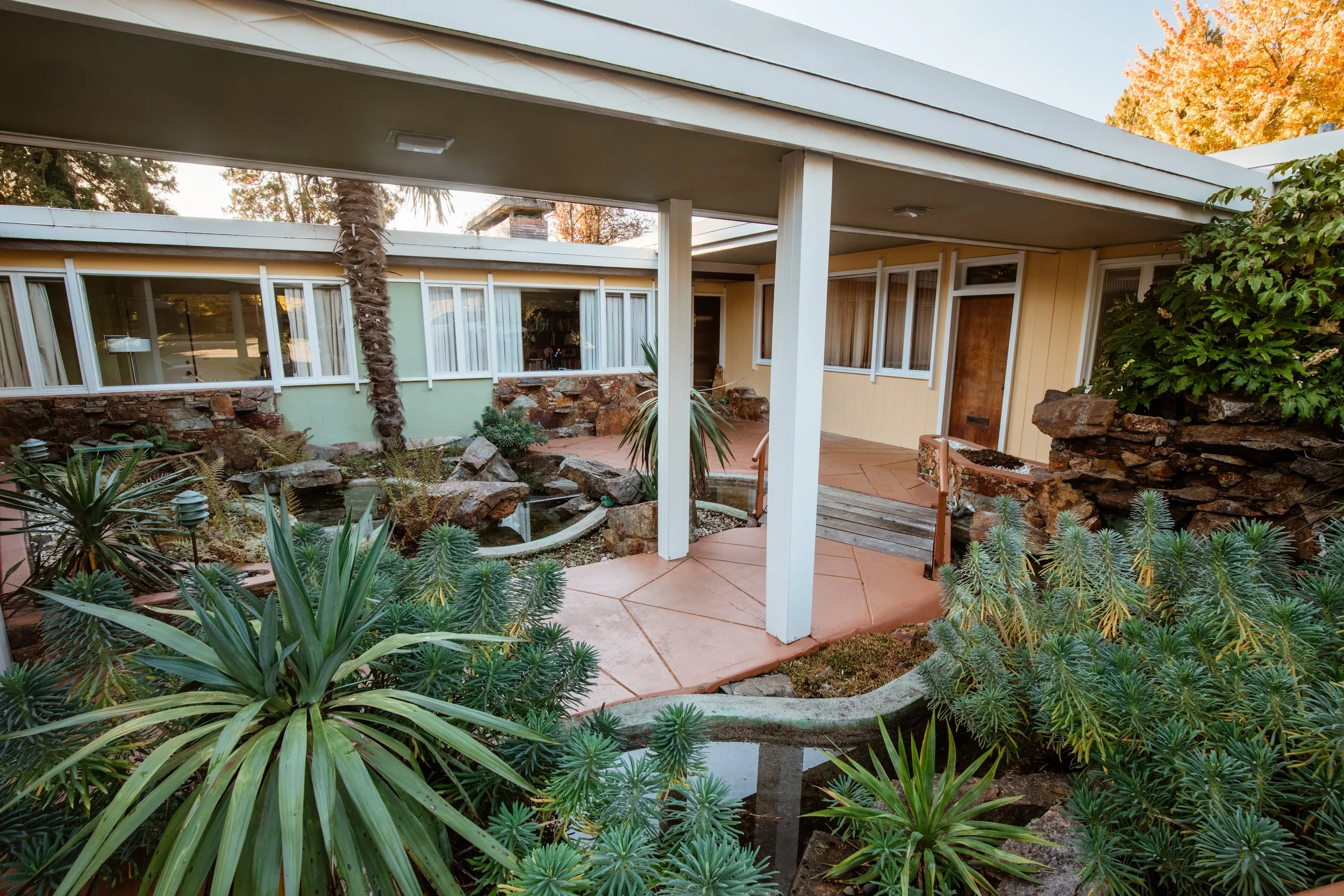
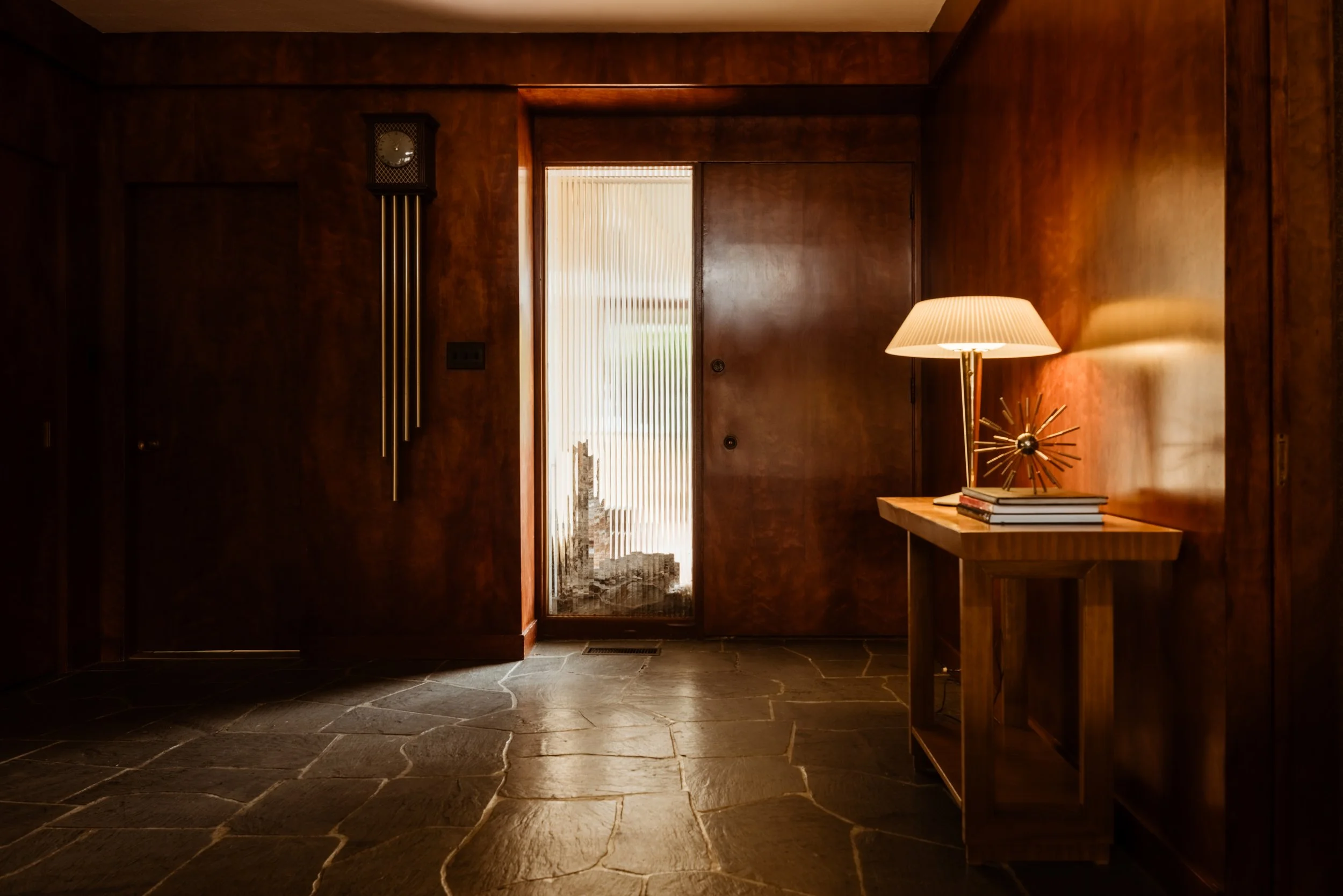
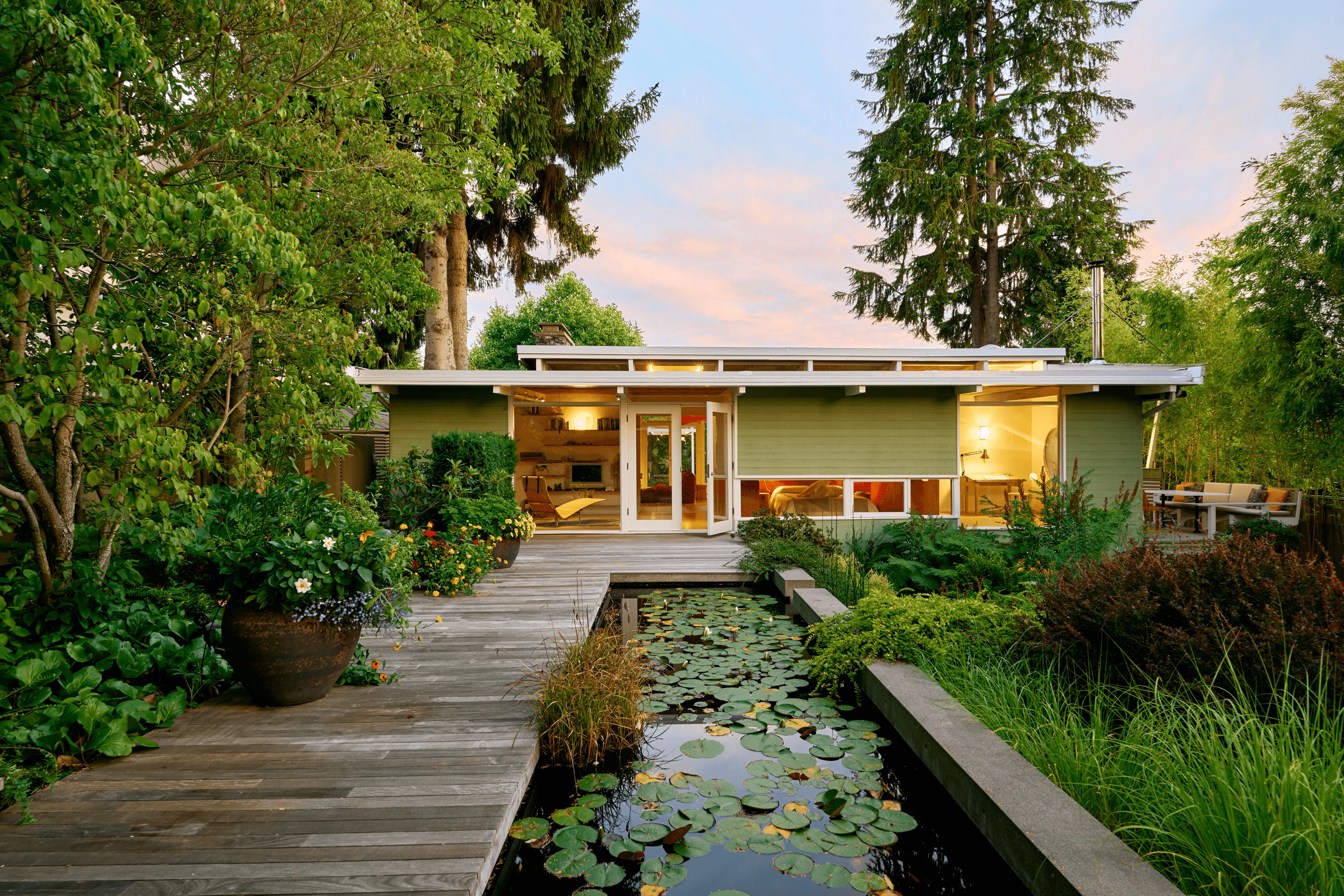
It is often hard to put a name on what West Coast Modernism really is. Architectural theories tend to fall flat without a proper illustration or context, and as architects, aesthetes, or simply humans with an oriented sensibility, we have found that the best way to experience architecture is to actually walk through it and sense it physically. This is what Vancouver’s Lakeberg Residence could be all about, and what has certainly prompted the current custodians to buy it instantly upon stepping into the house’s mineral black slate entryway for the first time more than 20 years ago, but also what leads the regular deliverymen to gaze at the house with wonder when they cross the wooden bridge above the streaming pond leading up to it.
Prologue
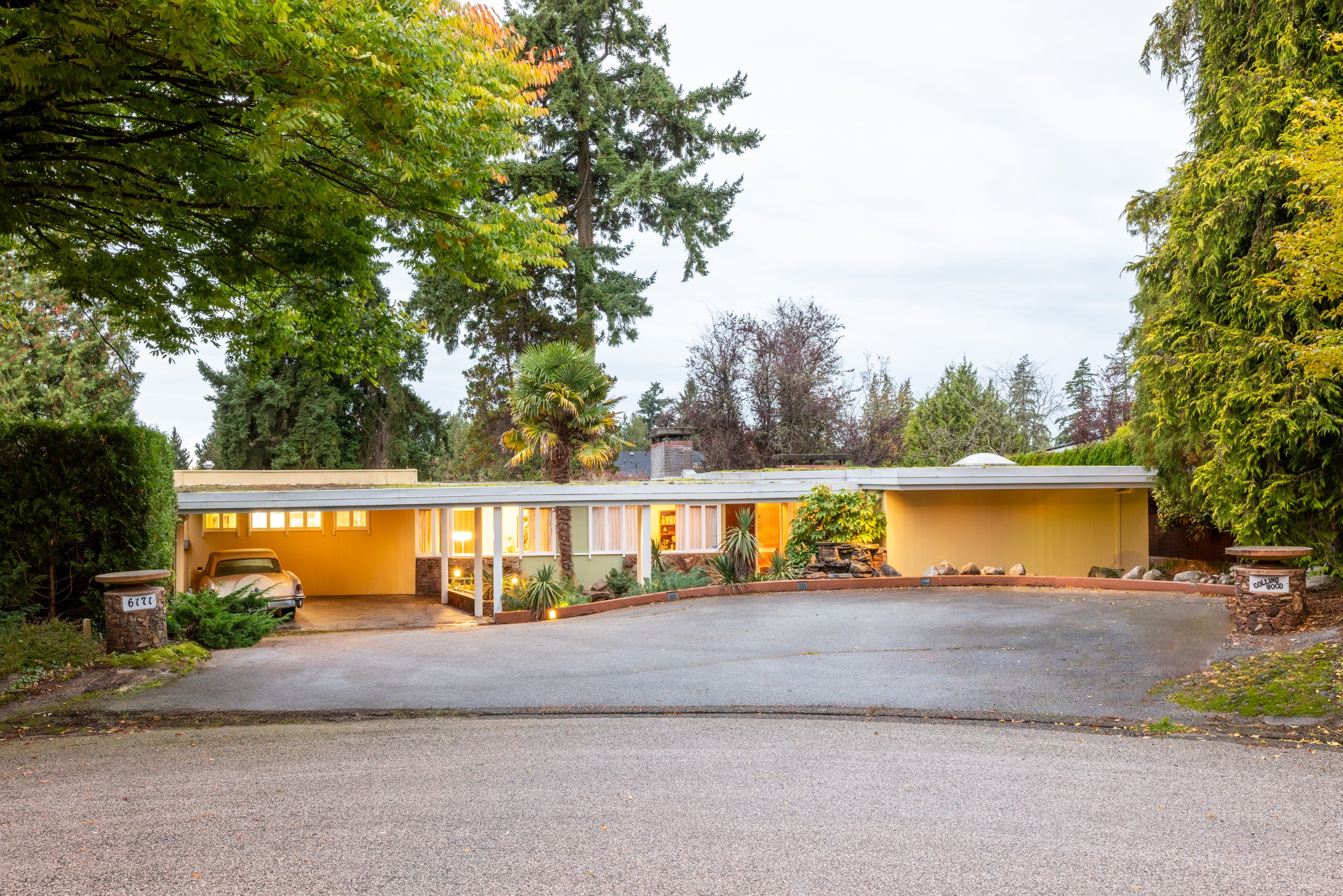
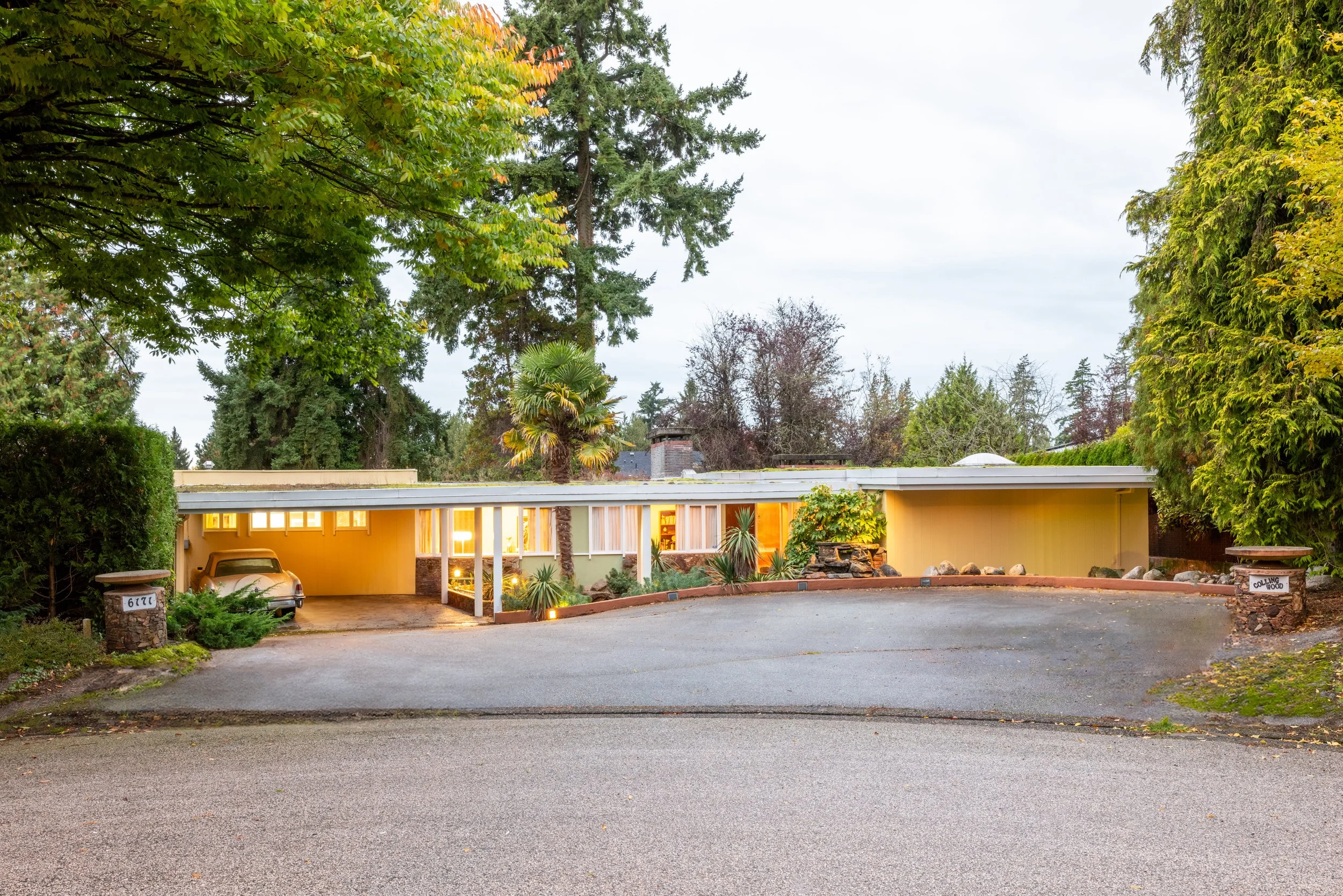
Located at the end of a quiet, residential cul-de-sac in a coveted Vancouver Westside neighbourhood, the Lakeberg Residence is a modernist icon that has been hiding in plain sight for the last 68 years, and that has seen a small series of careful owners preserve it all along this time. If rather discreet and private from the onset, one can easily recognise the distinctive touches that characterised the work of the pioneering Thompson, Berwick, Pratt & Partners, whether it is in the house’s low and wide tar-and-gravel roof, or its apparent generous use of vernacular materials.
The practice, dubbed “the firm that built Vancouver”, was the original cradle for most of British Columbia’s architect masters such as Barry Downs, Paul Merrick or Arthur Erickson, who gave this boundary-pushing group the name of “Vancouver School”. Amongst them, Lakeberg Residence architects Charles Edward “Ned” Pratt and Ronald Thom were indisputably two of the most influential, and have come to realise West Coast icons both in domestic (Ned Pratt House, 1951, Fraser Residence, 1968) and institutional architecture (Massey College, 1963). As part of this historically important portfolio, the Lakeberg stands out as one of Vancouver’s most expensive home to be built at the time, needing a $80,000 construction price tag where others in the city’s west side were usually costing around $10,000 — a gap reflected in the quality of the volumes and materials at play in this one-of-a-kind project.
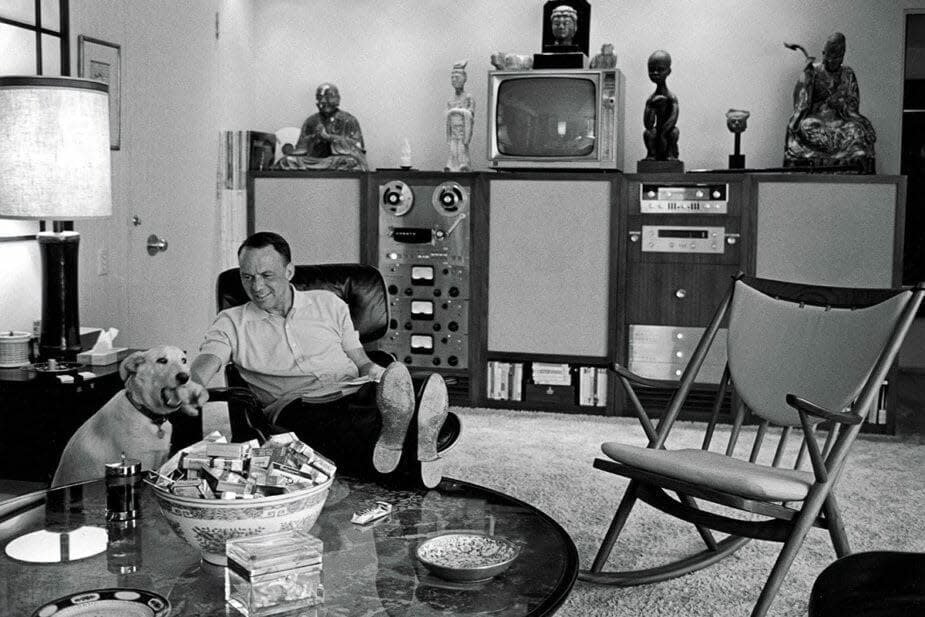
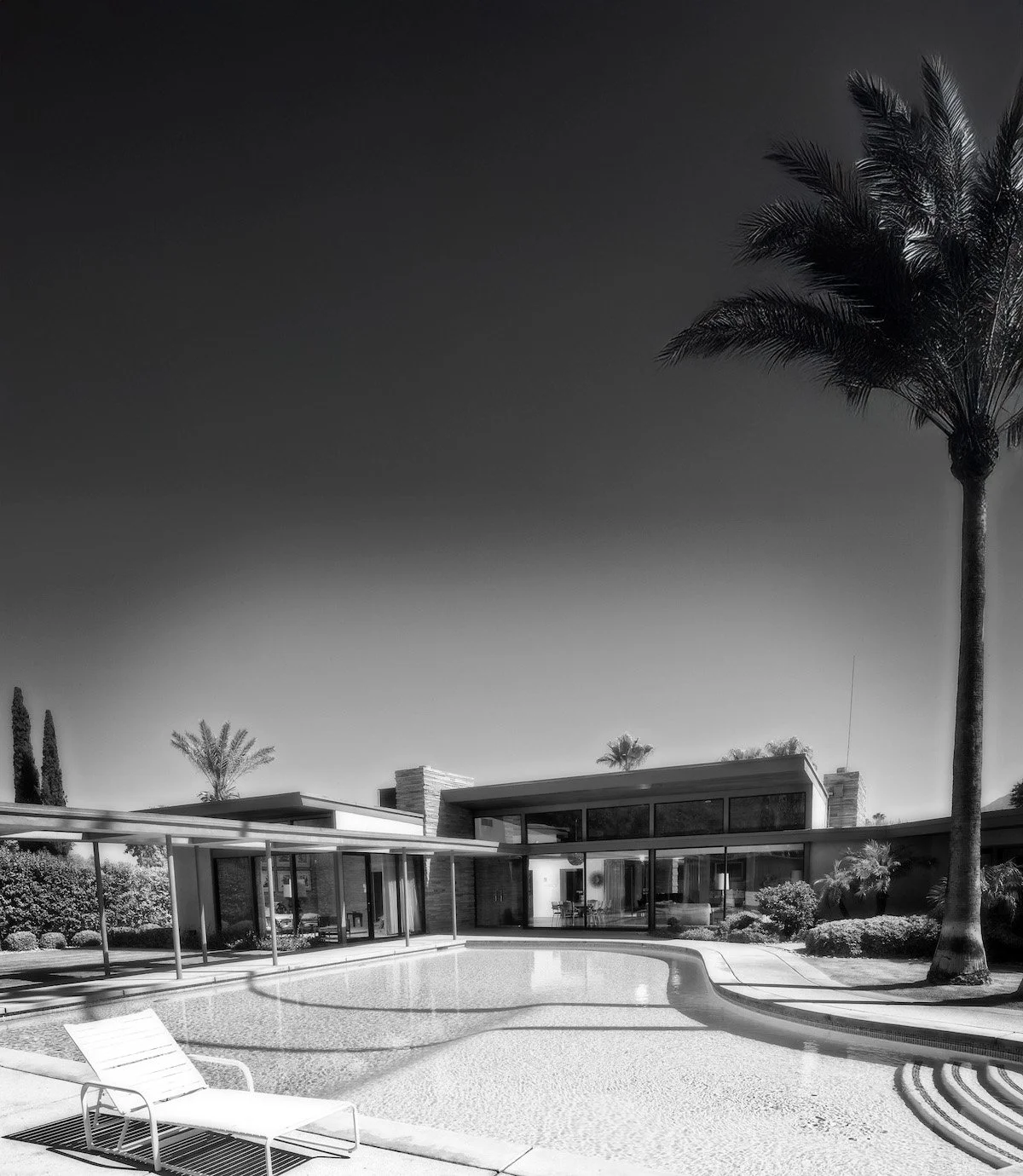
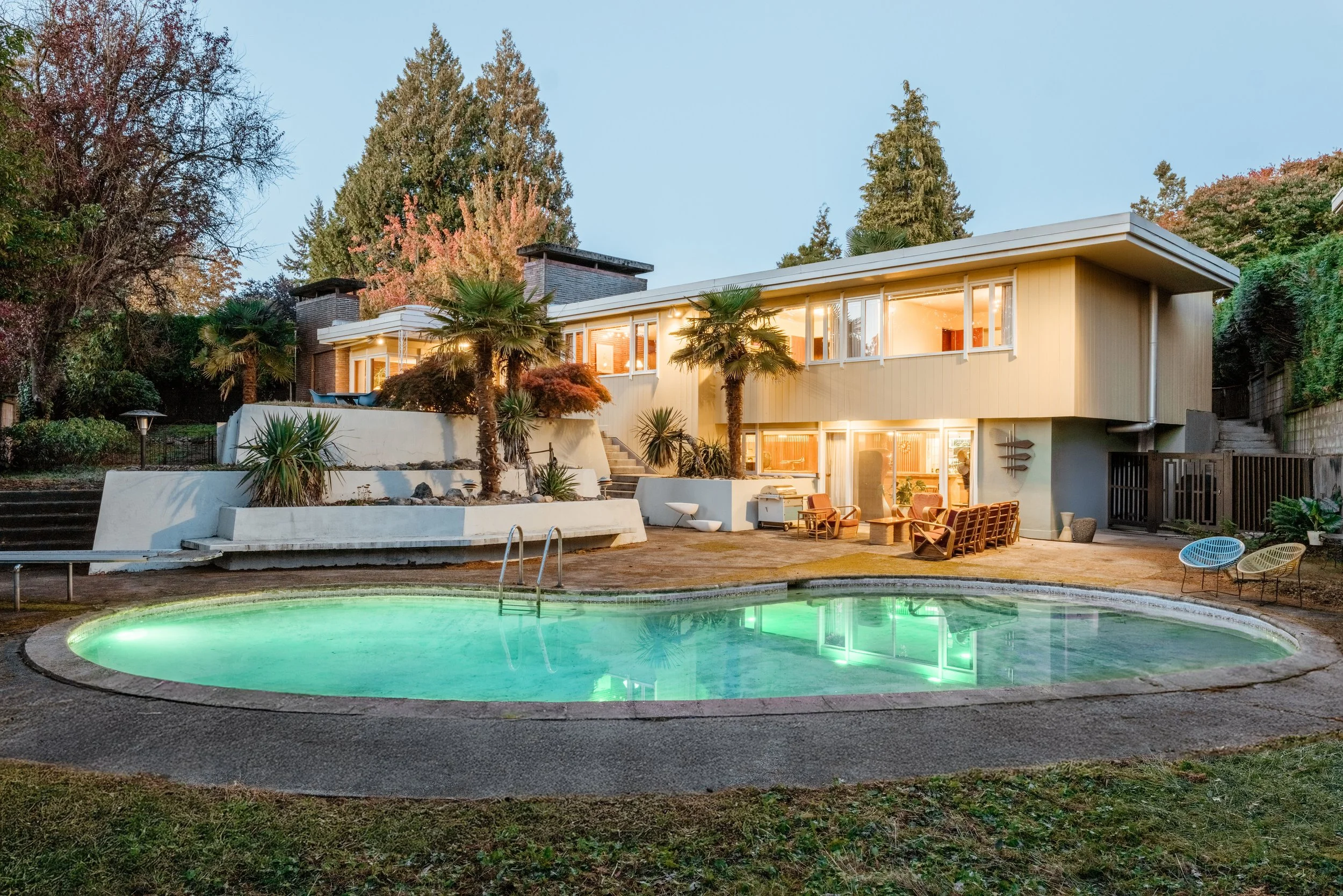
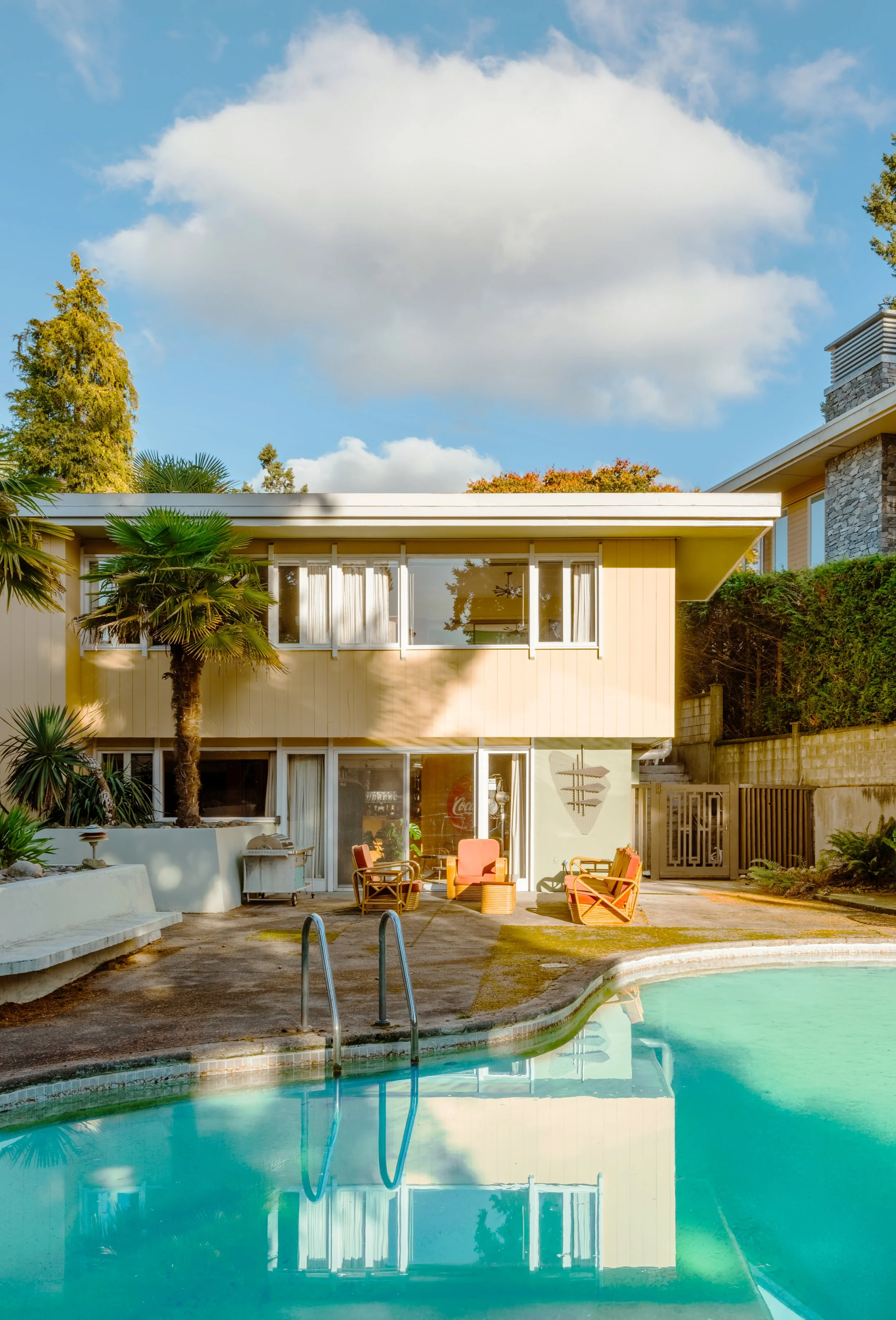
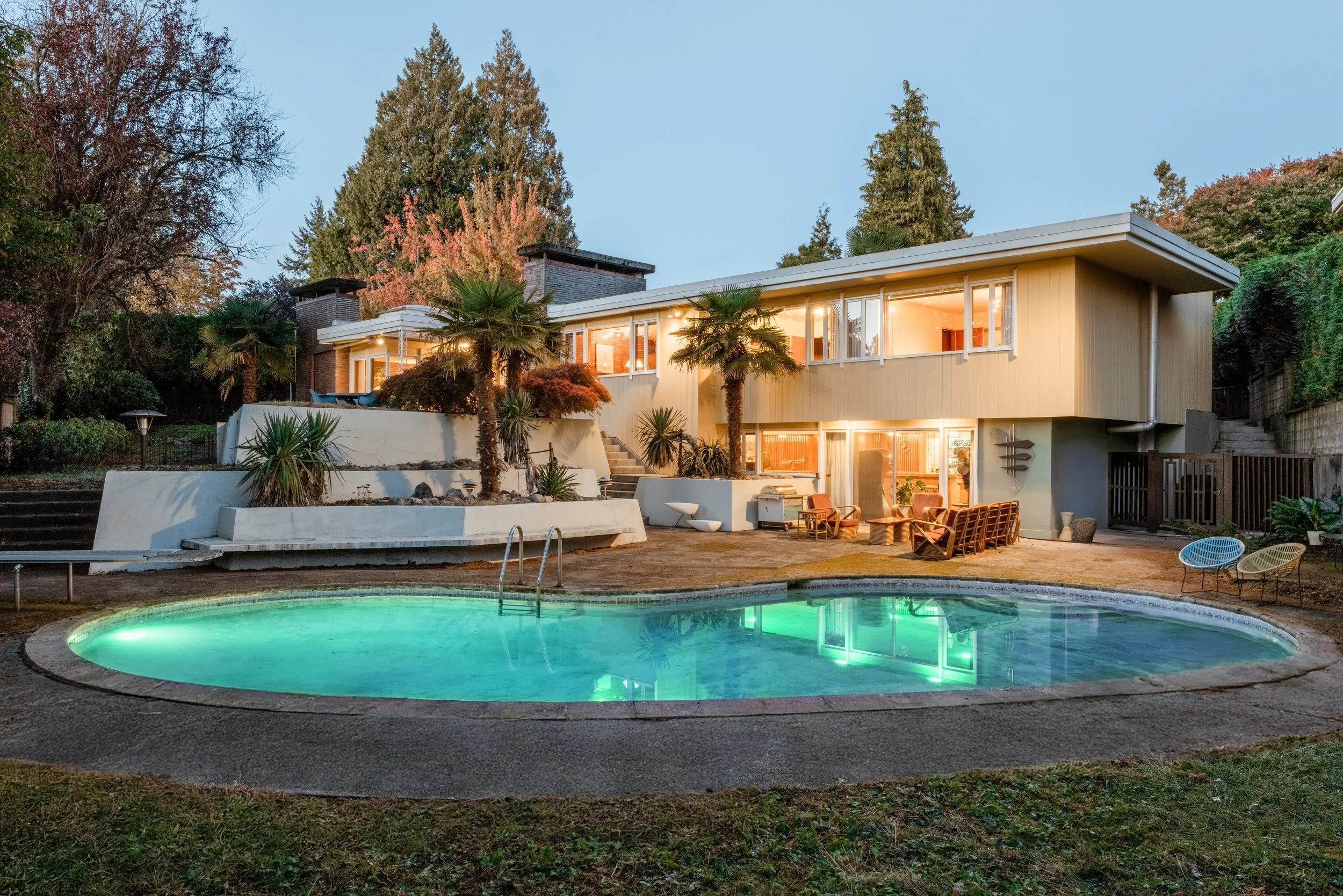
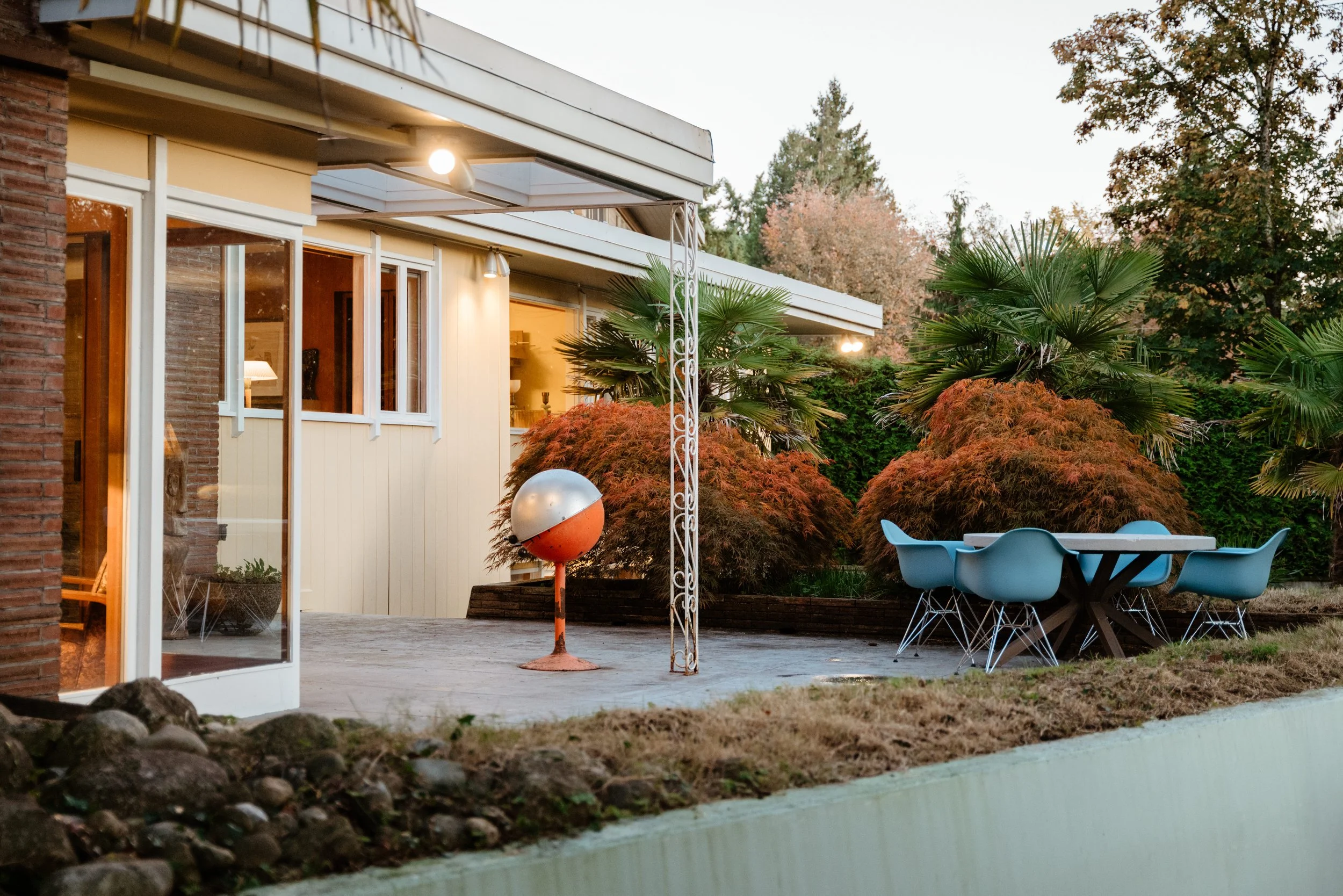
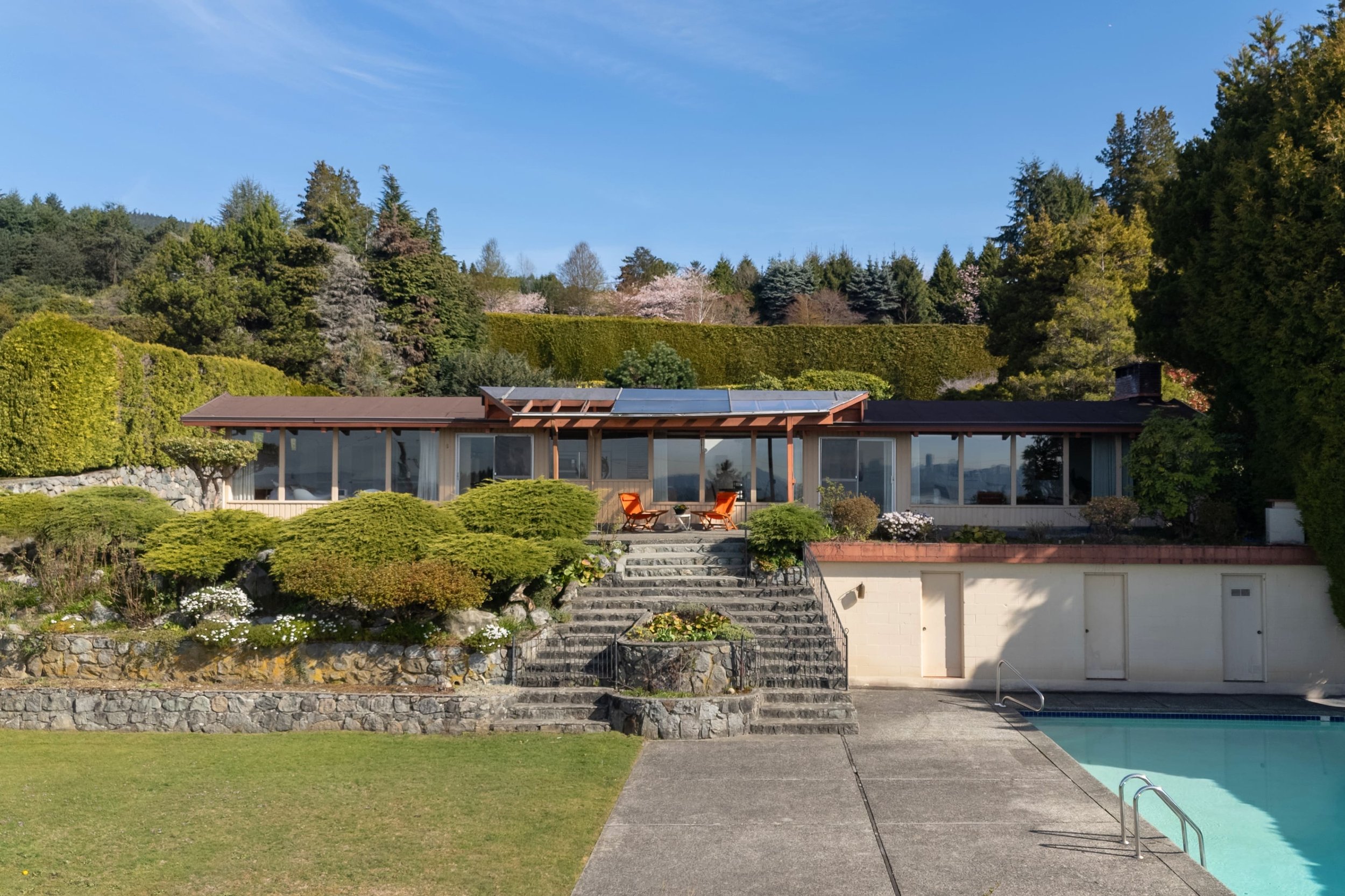
In many ways, these homes associated with a certain West Coast regionalism can be thoroughly linked to the same kind of experimentations that were happening simultaneously down south in Los Angeles or Palm Springs, with the fundamental Case Study House program and the ground-breaking work of European emigrés architects like Rudolph Schindler or Richard Neutra. The latter came and lectured in Vancouver several times, helping to reinforce many of the existing ideas of Thompson, Berwick, Pratt & Partners’ progressive “graduate school”. It comes as no surprise that the Lakeberg Residence’s current custodian, a married couple of connoisseurs and collectors, tagged the home their “Sinatra House”, for the incredible amount of similitudes that can be found between the two architectural projects. Just like Frank Sinatra’s E. Stewart Williams-designed “Twin Palms”, Lakeberg Residence features an inaugural and distinctively lightweight breezeway leading up to the house, a kidney-shaped pool that wittily resembles a piano and a vibrant, almost tropical-like foliage, on top-of the essential post-and-beam structure, flat roof and wide-spanning volumes typical of classic mid-century modern architectures.
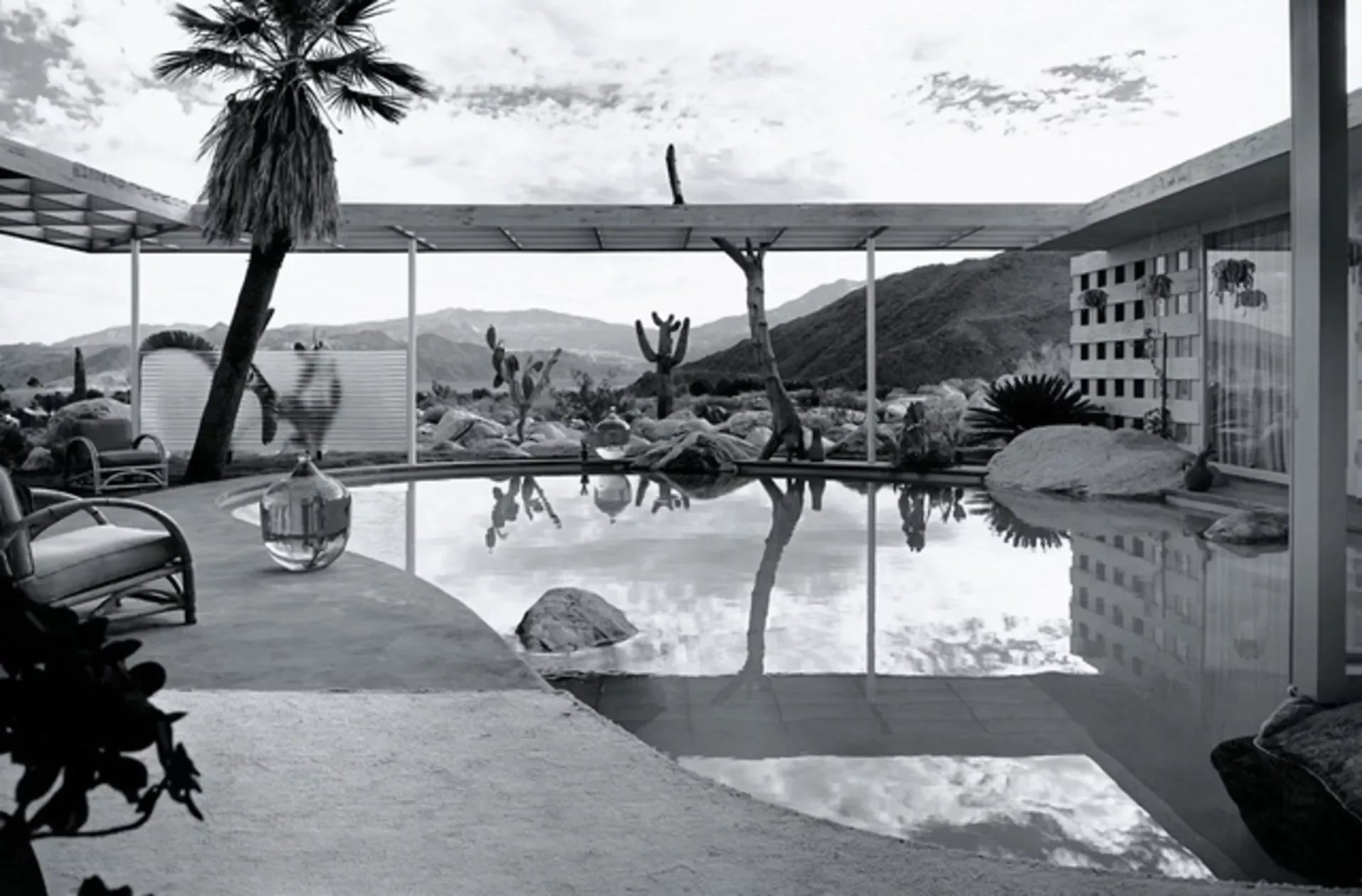
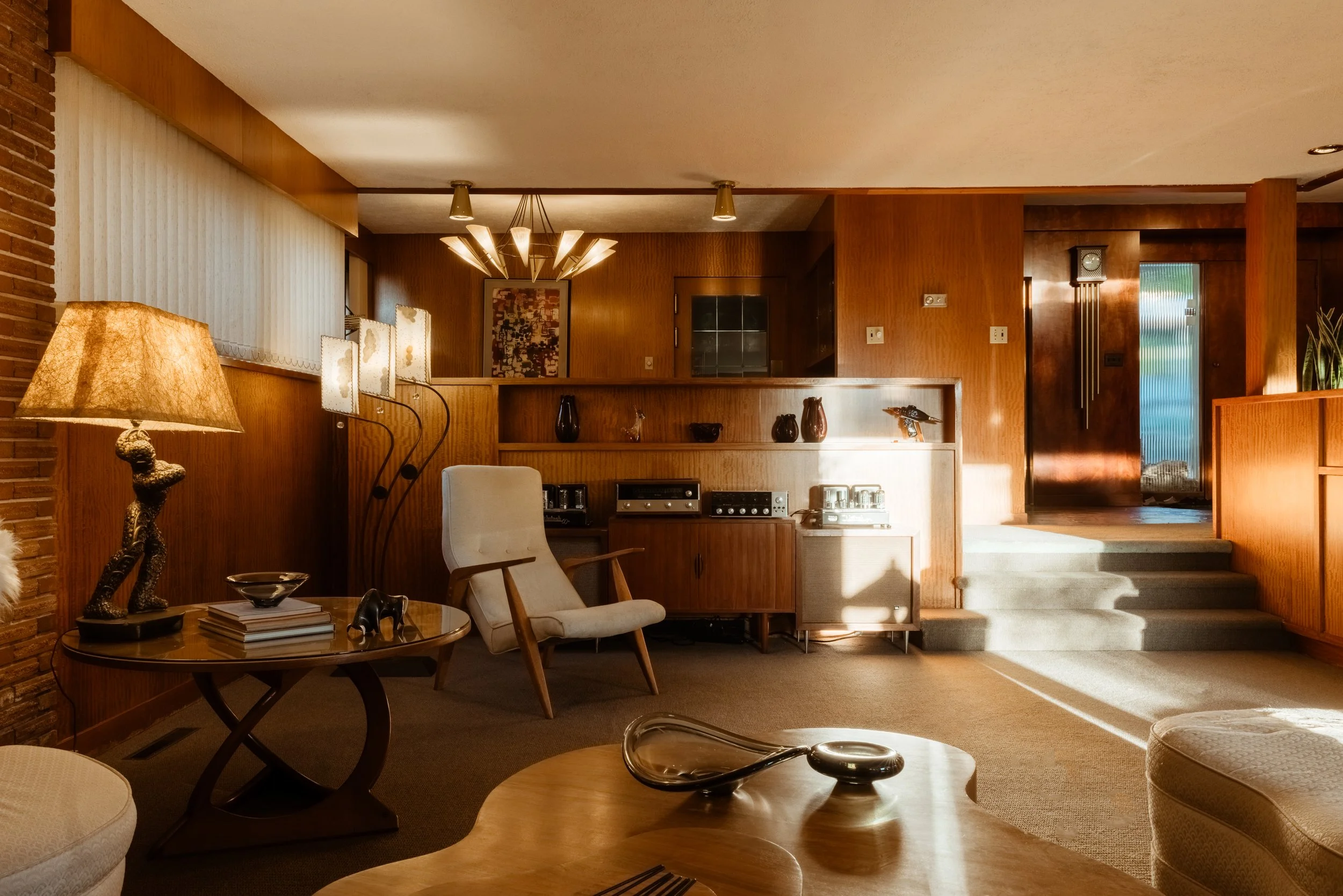
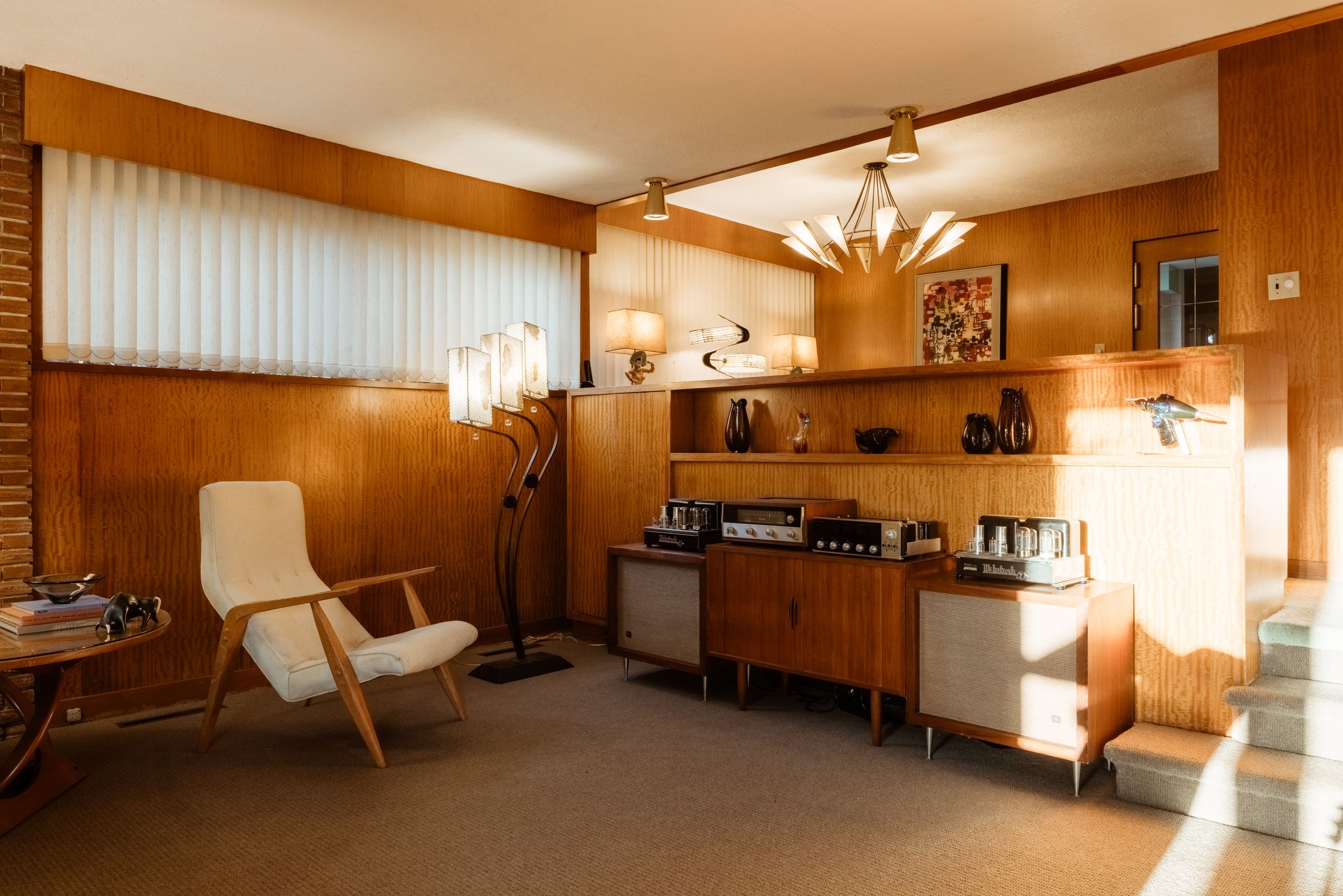
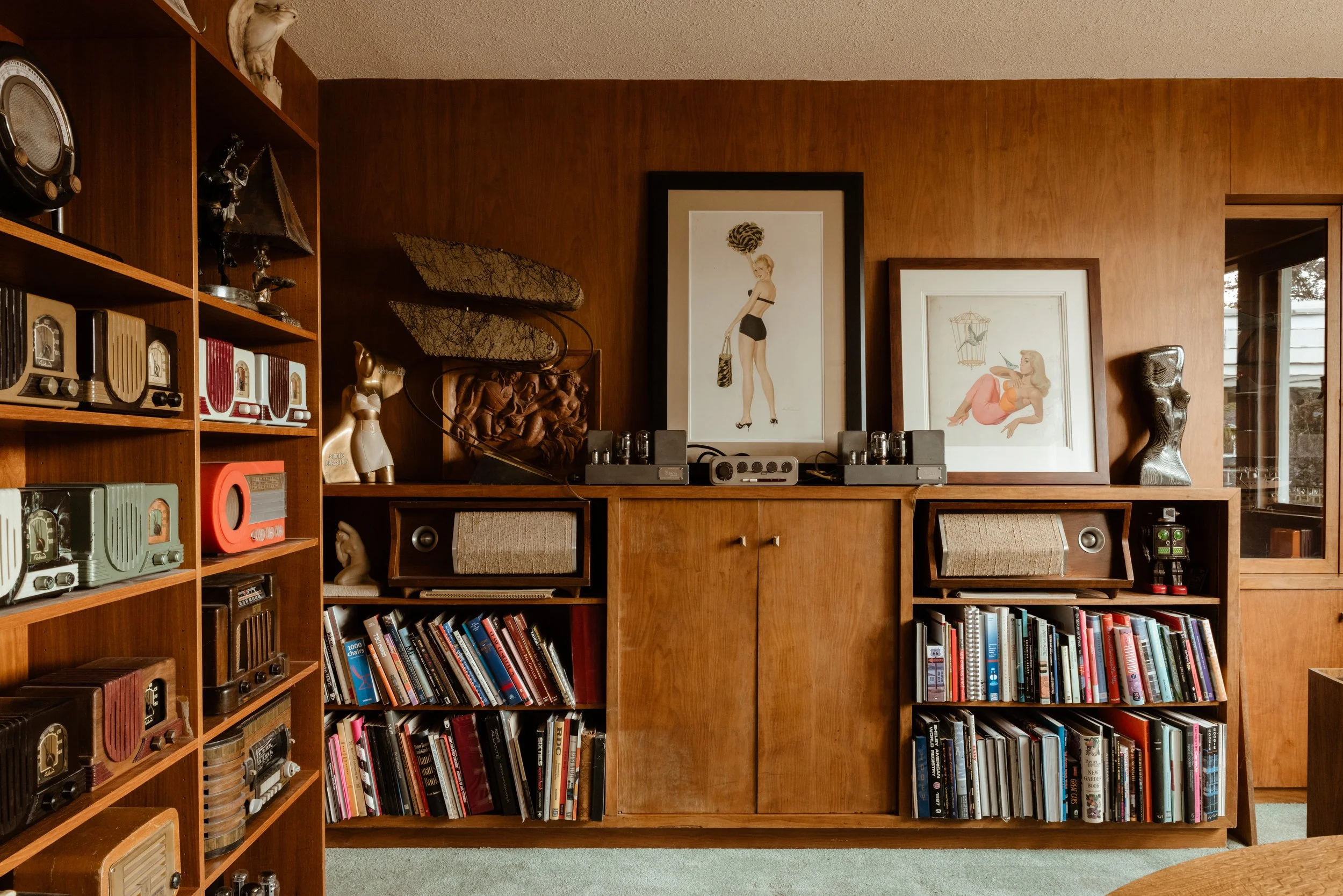
Incidentally, the same duality between the organic shape of a pool contrasted with the rational lines of the house’s structure can also be found in Albert Frey’s Loewy’s House, another seminal work of Palm Springs residential architecture that has been widely photographed by Julius Shulman. And just as much as Twin Palms was made for the enjoyment and representation of a music legend, Lakeberg Residence currently shares this coinciding audiophile sensibility in its display of many vintage sound systems that match in design and spirit the resolute fifties aura that is inherent to the house.
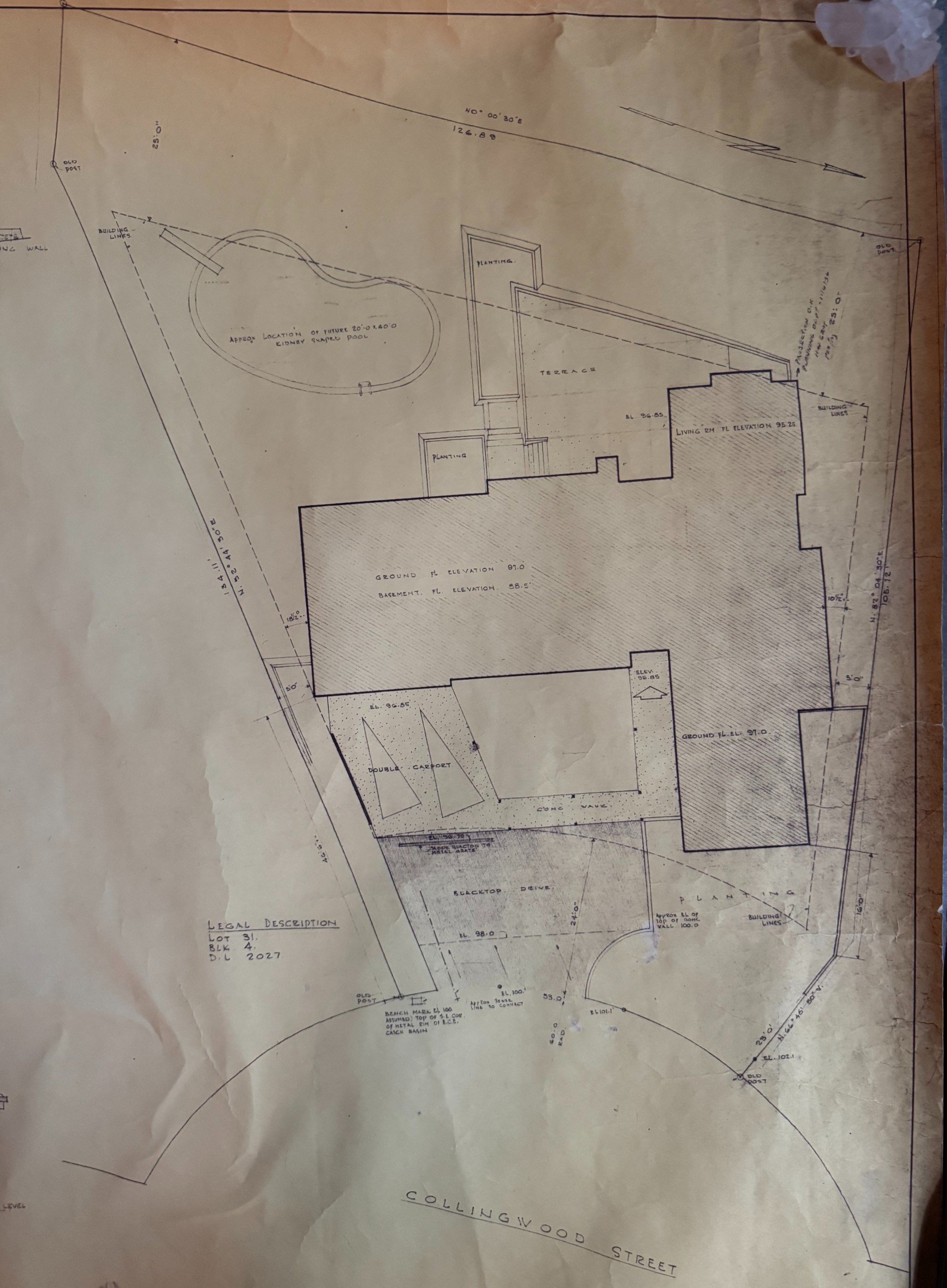
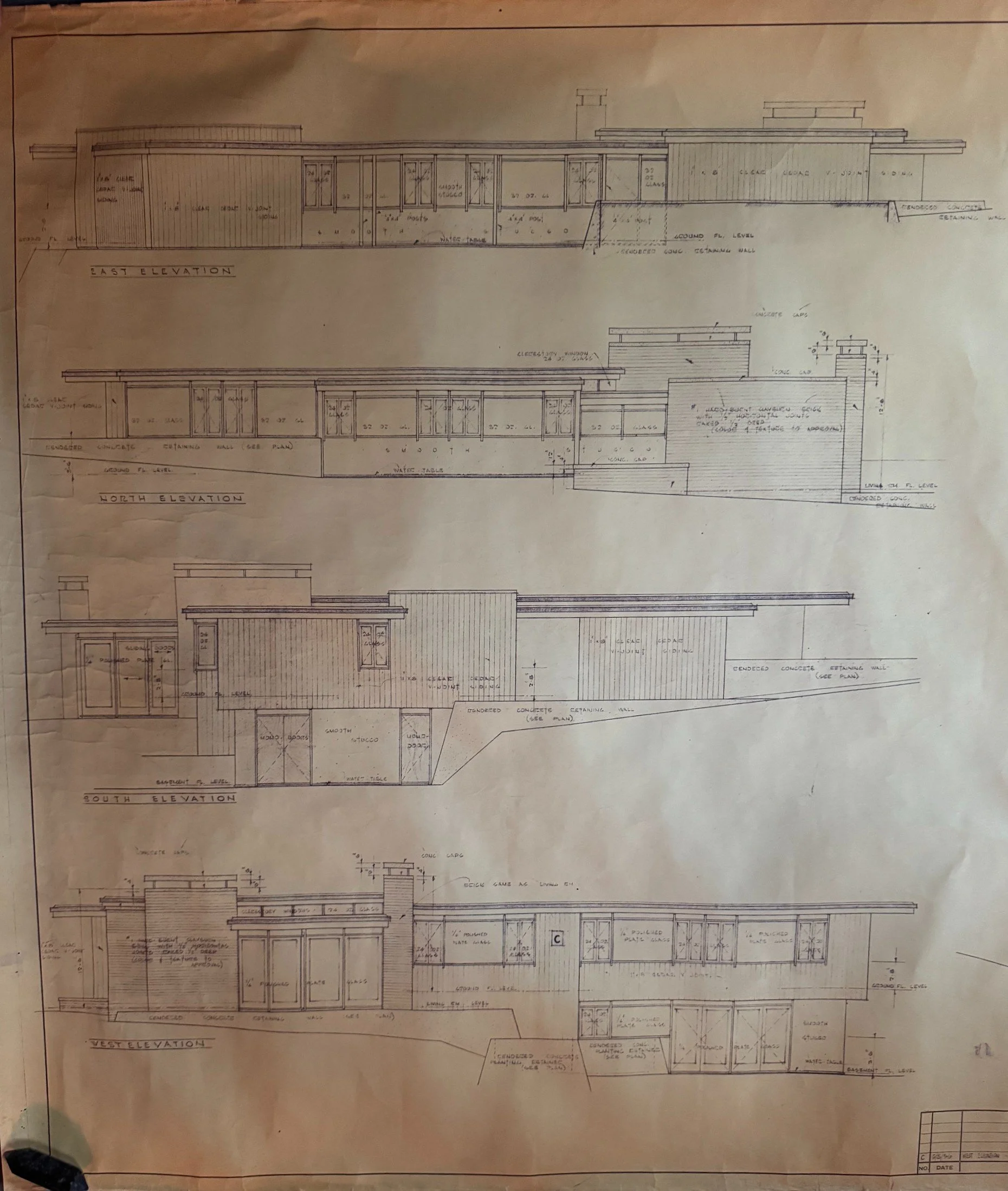
Historical Blueprints
Home Tour
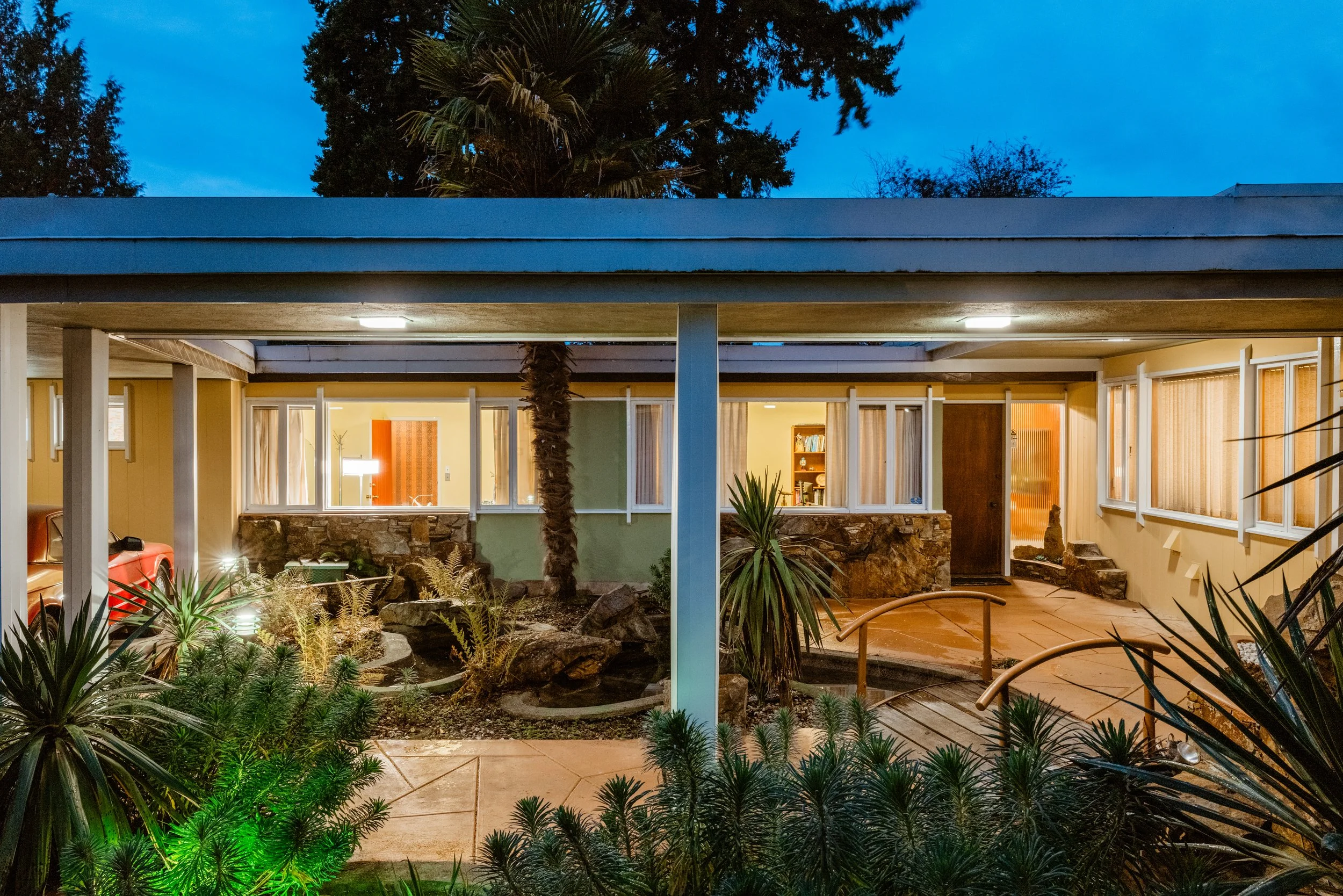
And indeed, it is the very sound quality that Lakeberg Residence possesses that strikes us as unique. Nestled between two culs-de-sac, a ravine as well as a golf course, the home feels peacefully isolated from the rest of the city, surrounded by a lush fauna and flora.
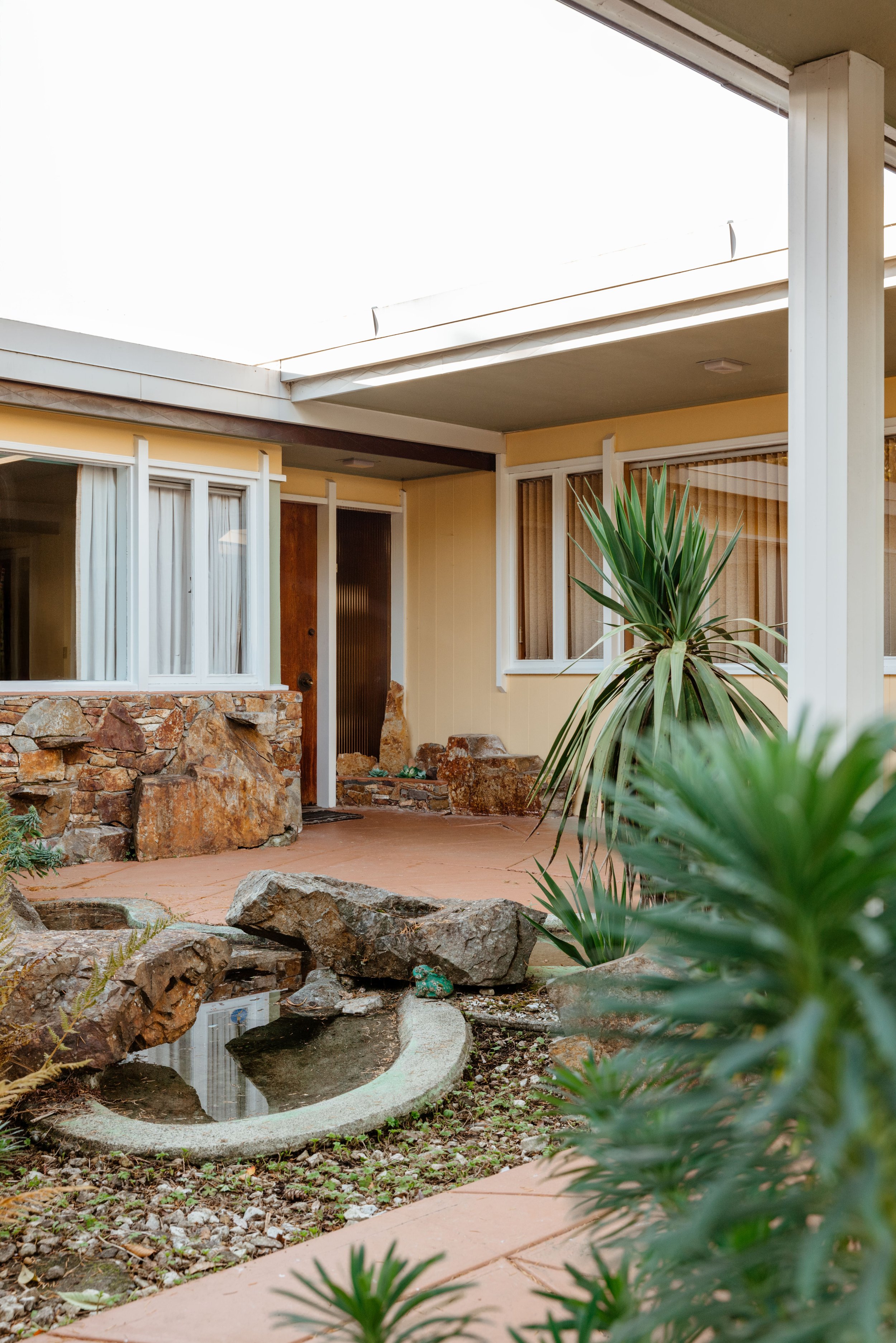
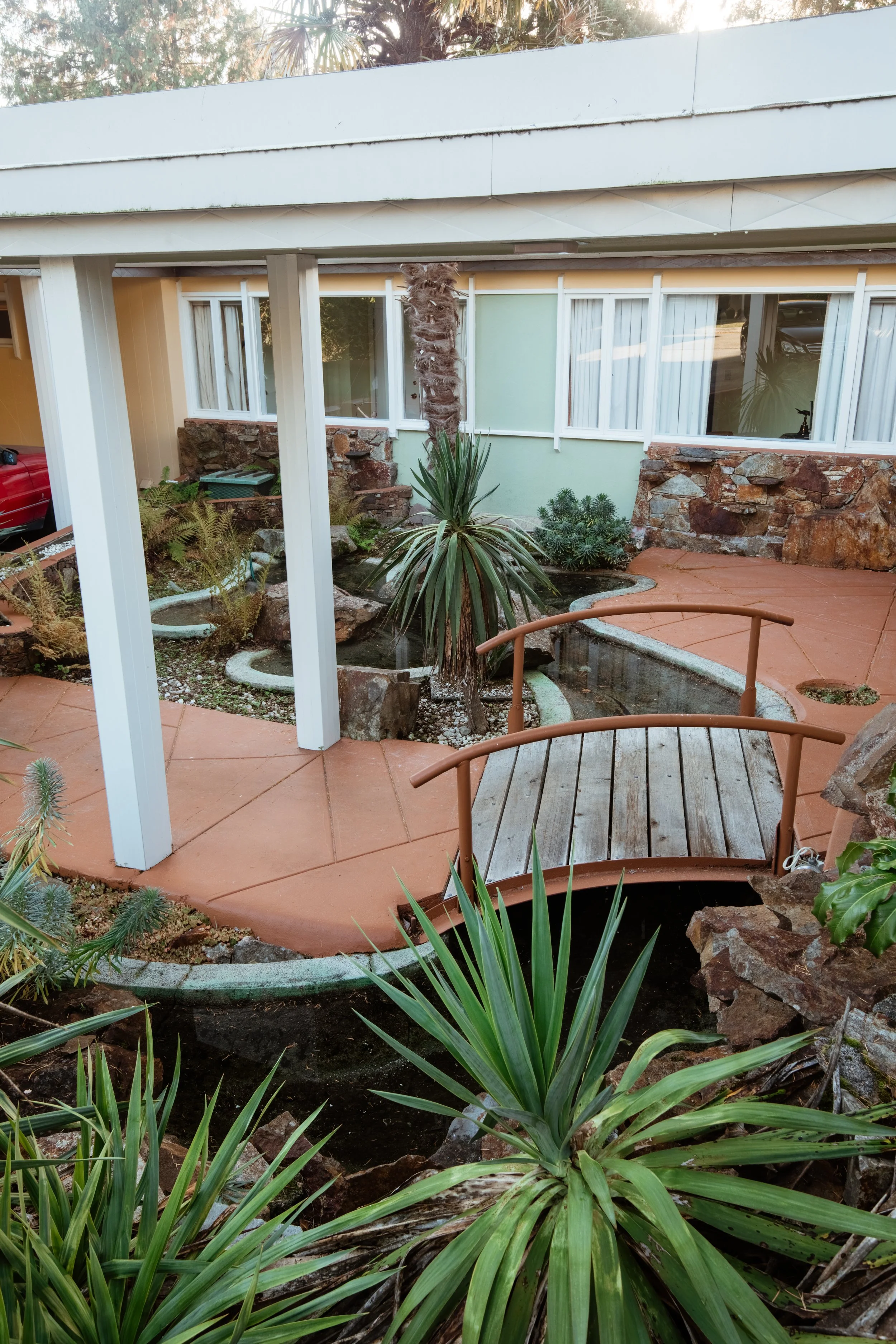
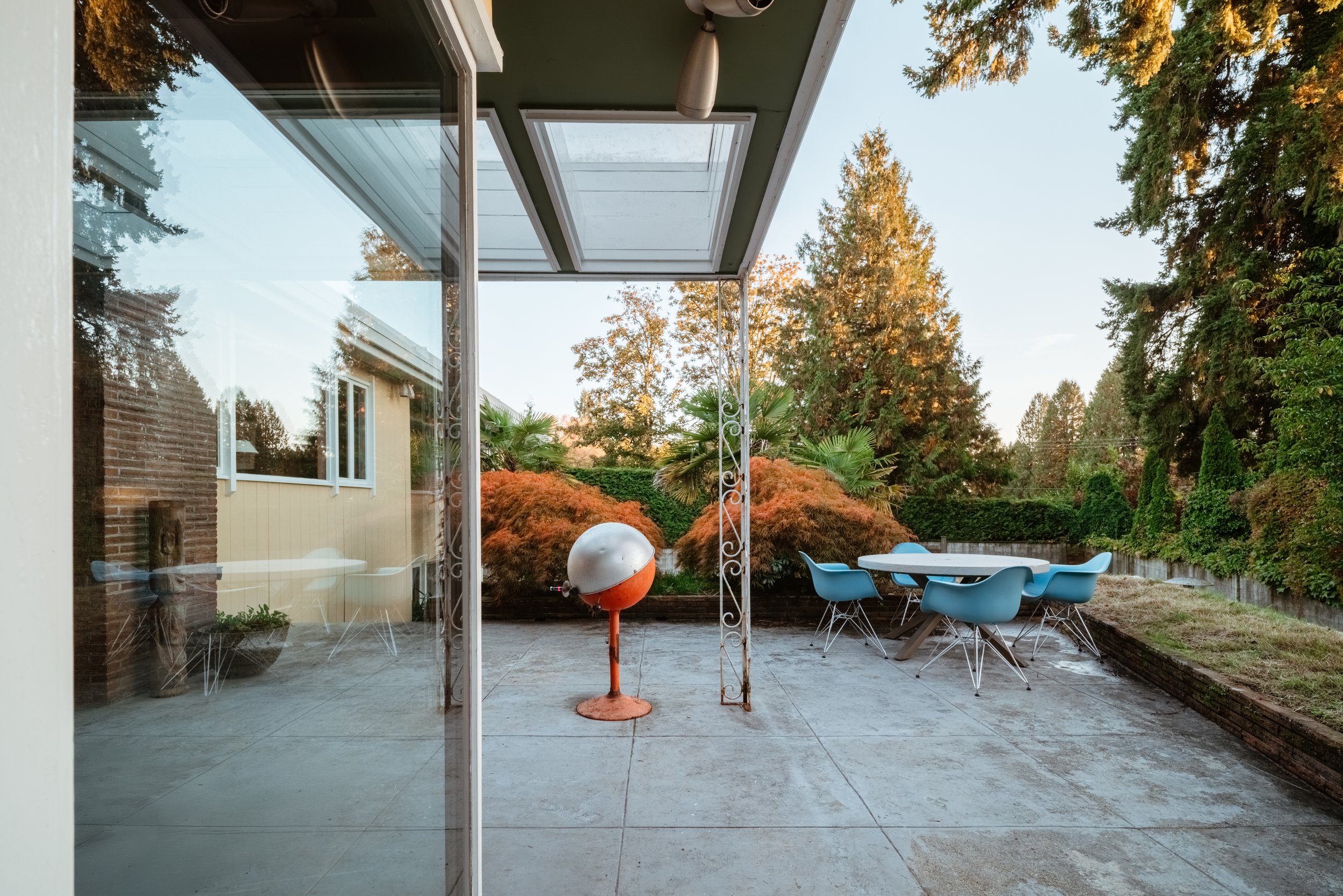
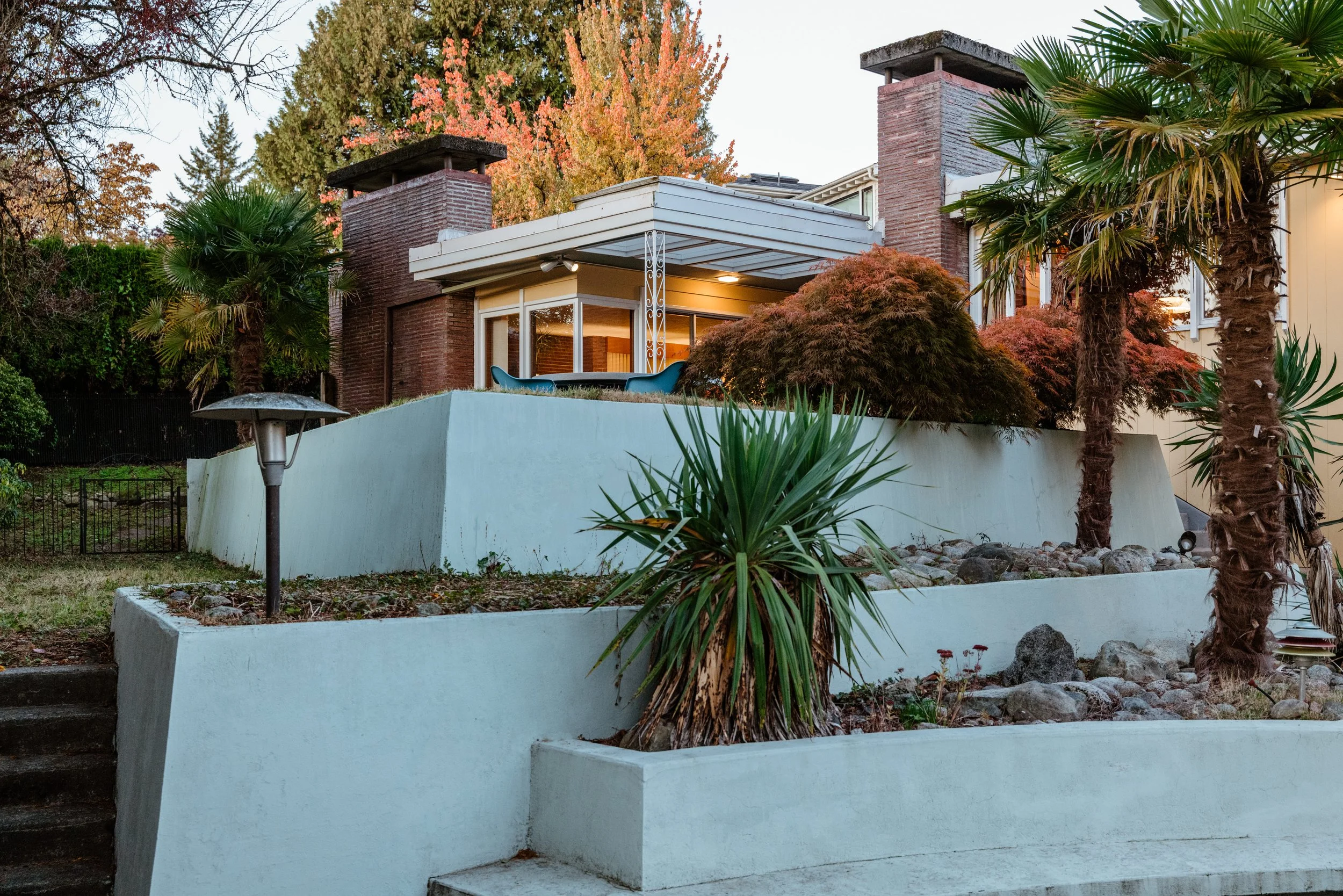
The first thing we see as we make our way towards the entrance are the palm trees popping out of the roof’s playful structure, as well as the pond’s gently babbling water. From the two levels, only one can be distinguished from the street, and it almost feels like the house is naturally disappearing in its forested and quiet landscape.
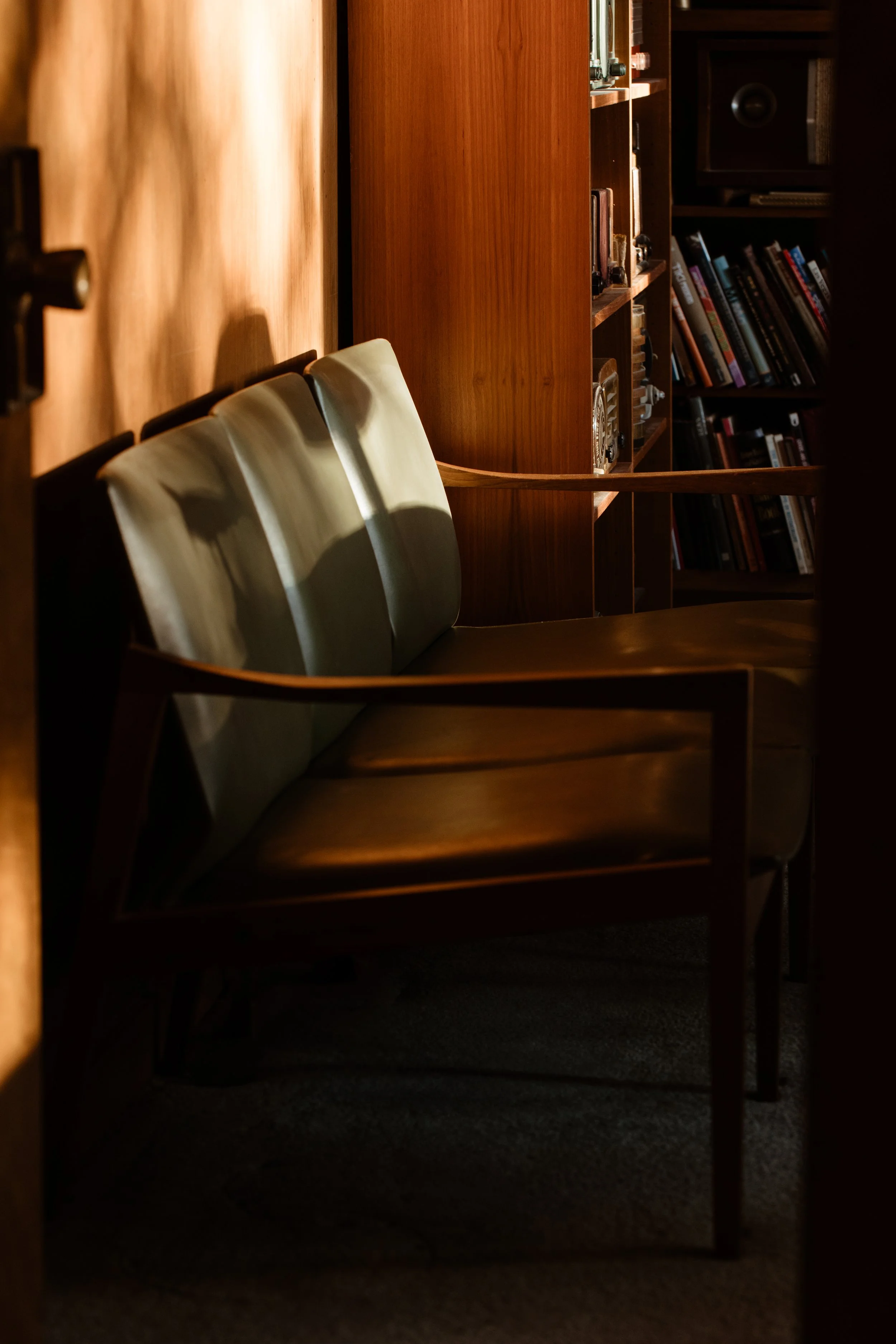
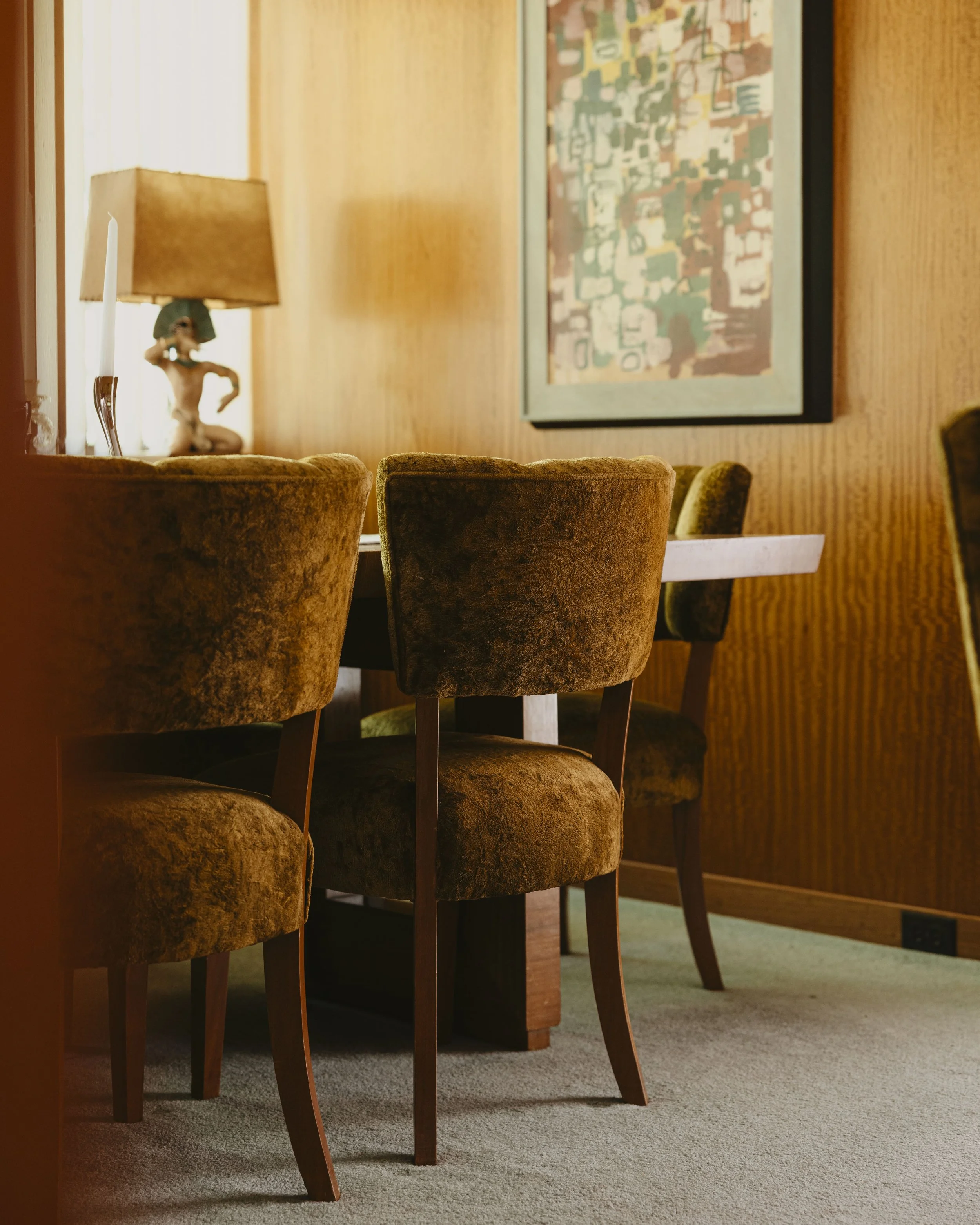
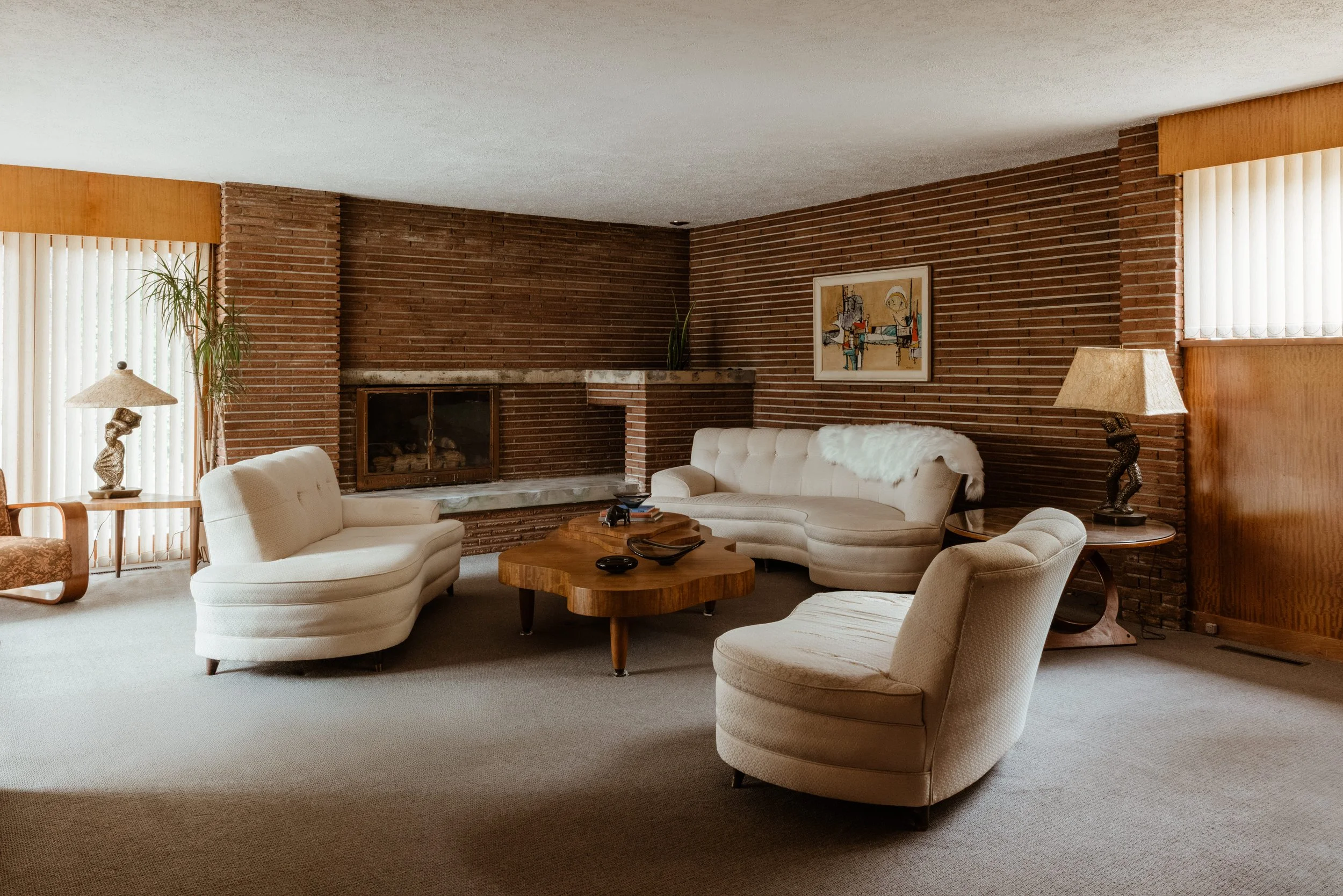
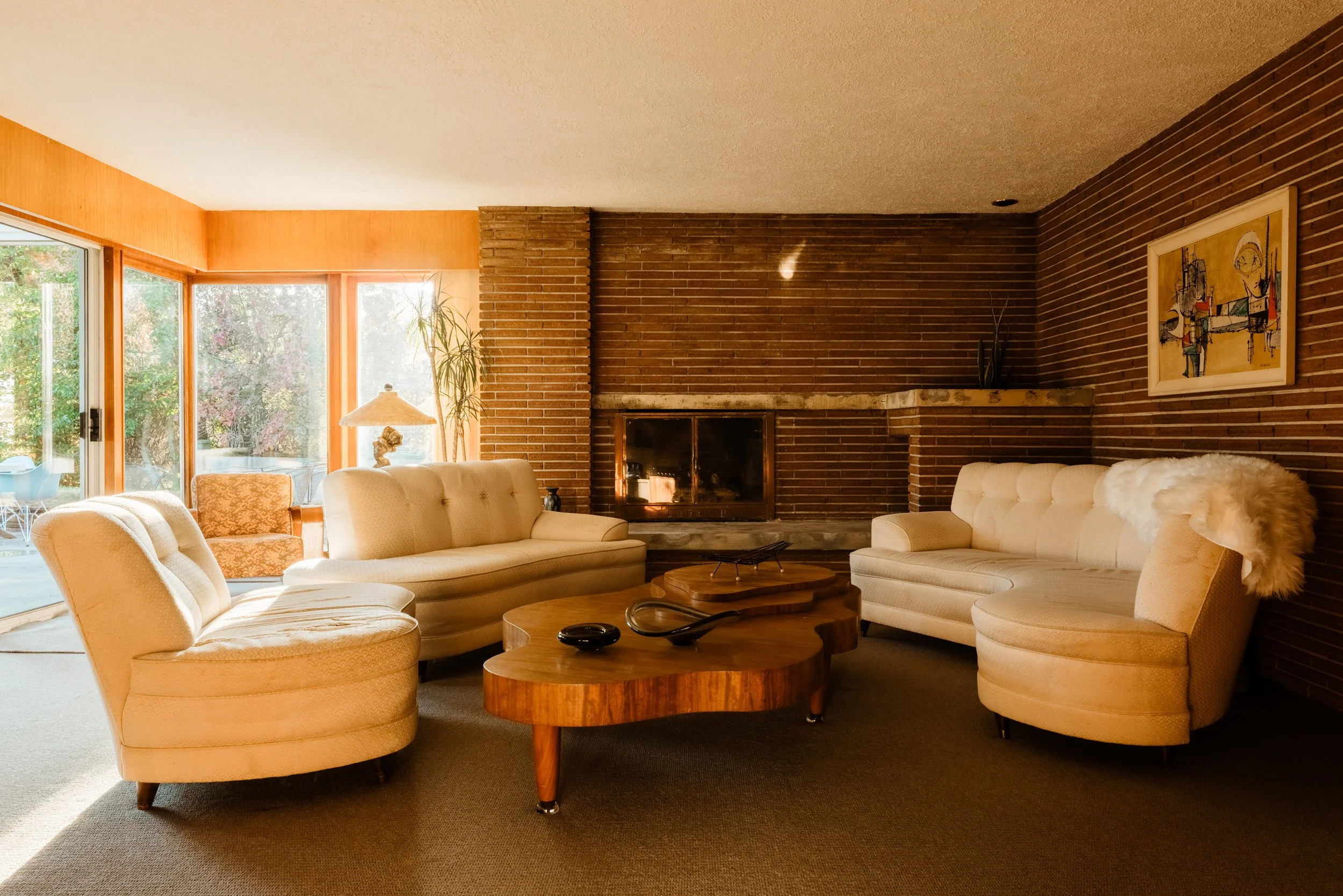
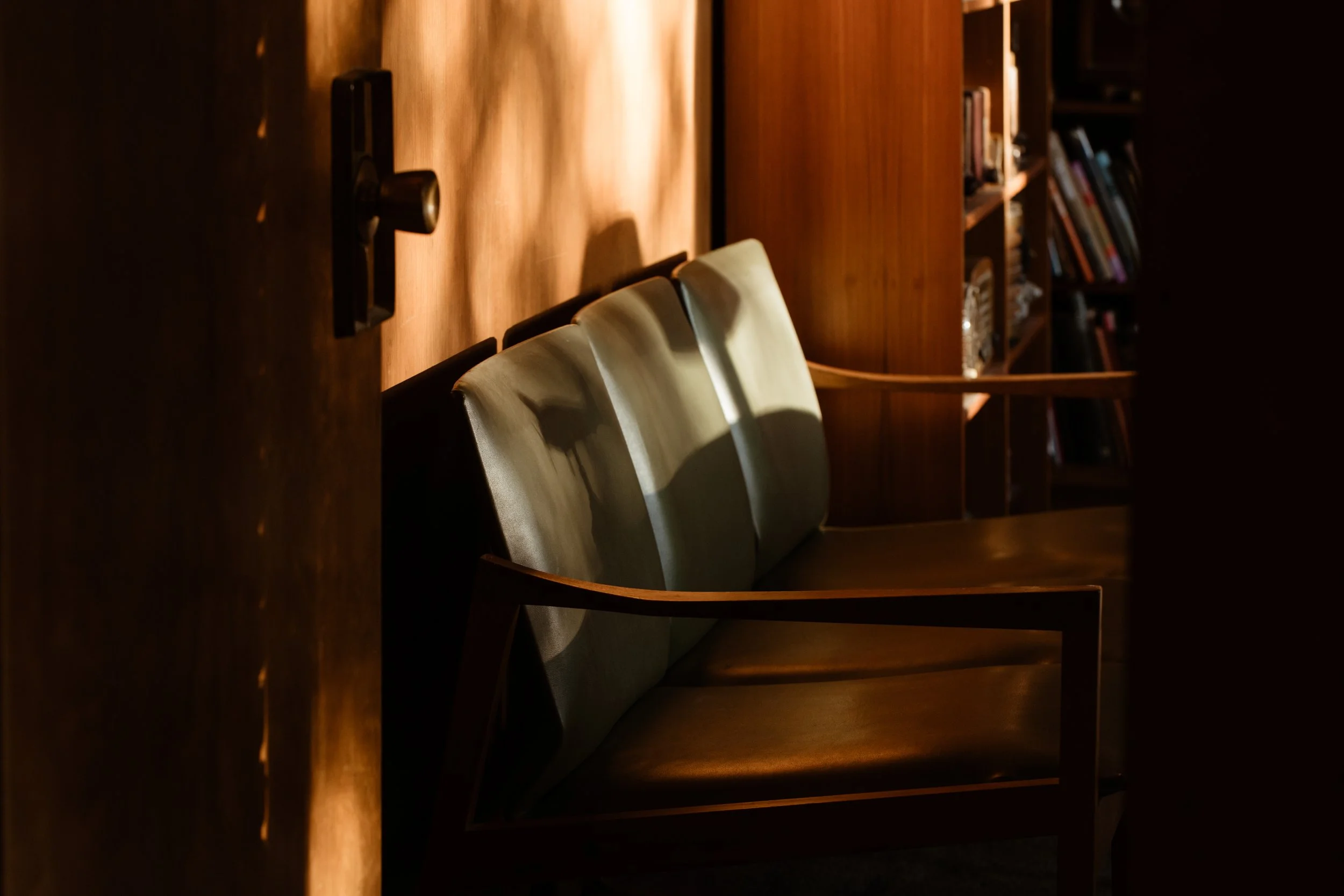
Inside, and down a few steps leading to a light-filled sunken living room, a warm, honey-hued world of expansive volumes and delicate design details unfolds, revealing what the house has been preciously keeping intact. Time, as well as sound, is prescient in Lakeberg Residence, and perhaps the most striking element of the house is its pristine state of preservation.
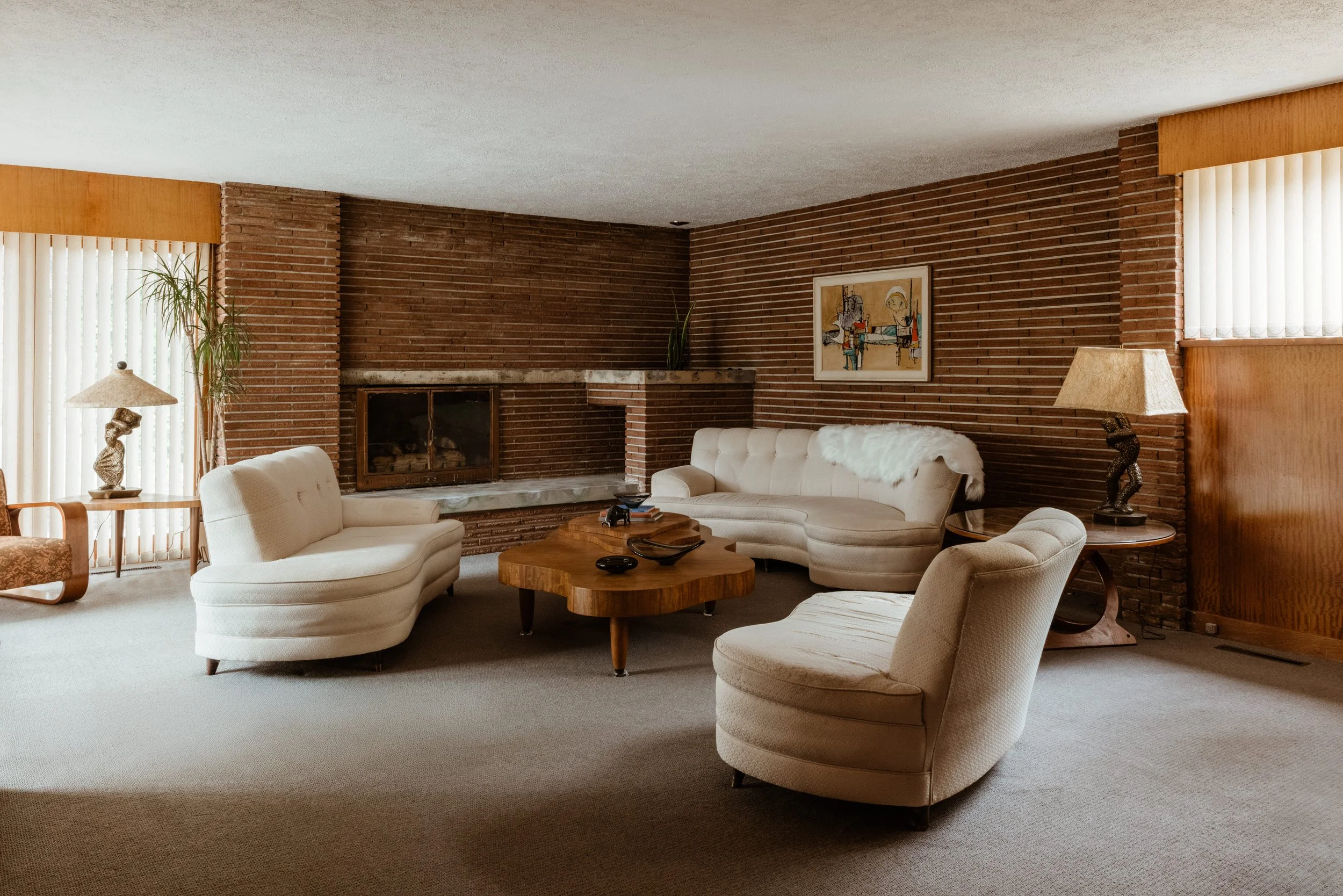
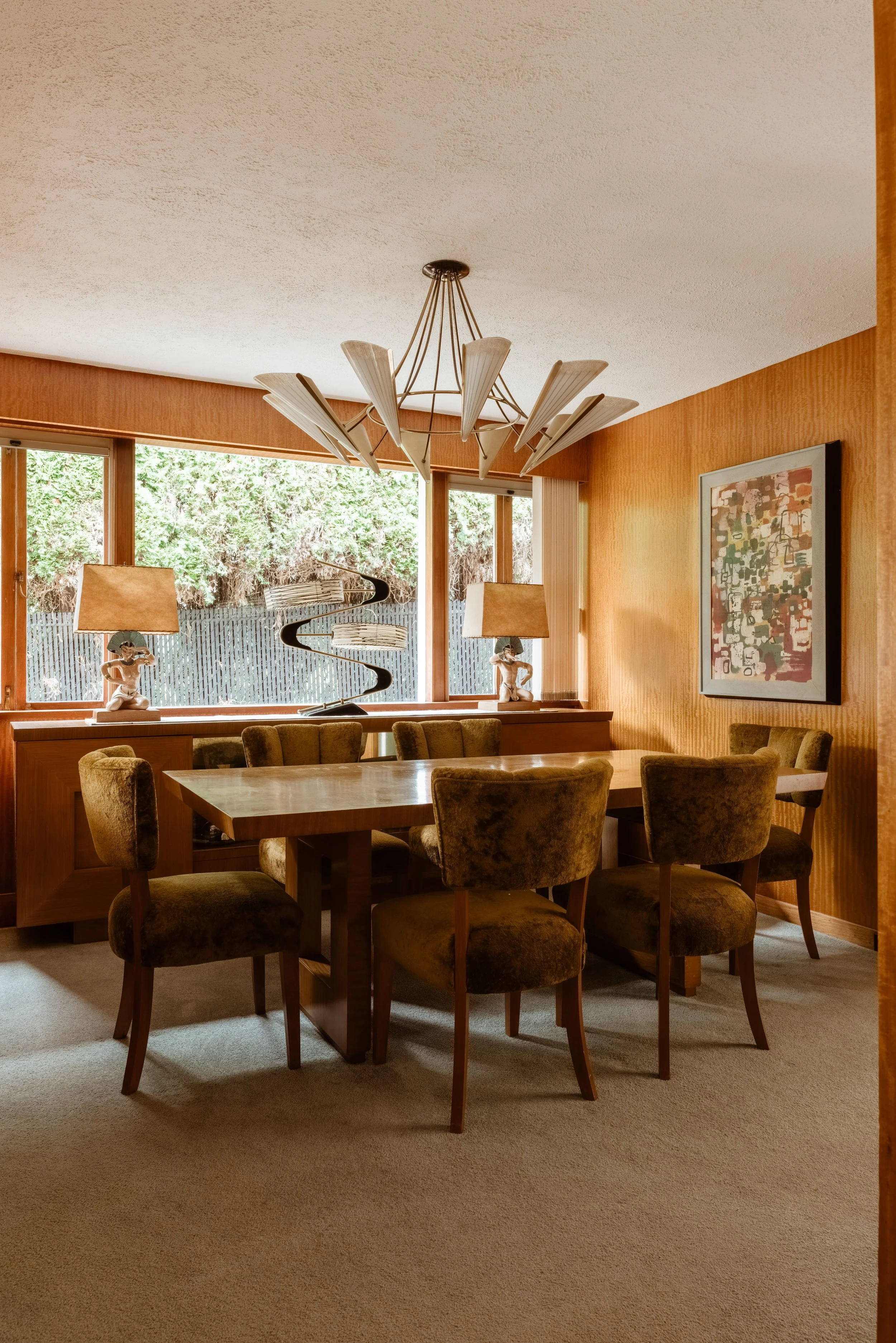
Its precious pyramid mahogany walls and built-in fixtures have been retained, but also its teak panels or uniquely textured Roman tile bricks, which cover entire wall panels as well as the fireplaces. And if Donald M. Manning, in his ambition to theorise West Coast’s modern homes, states that “one luxury was a fireplace”, the Lakeberg Residence has three, proving once again the quality standards desired by its first commissioner. Likewise, this extremely meticulous use of indigenous materials is typical of British Columbia mid-century architecture, although not usually in those ample proportions, and is reminiscent of the similar qualities found in homes such as Frank Lloyd Wright’s Hollyhock House or Fallingwater.
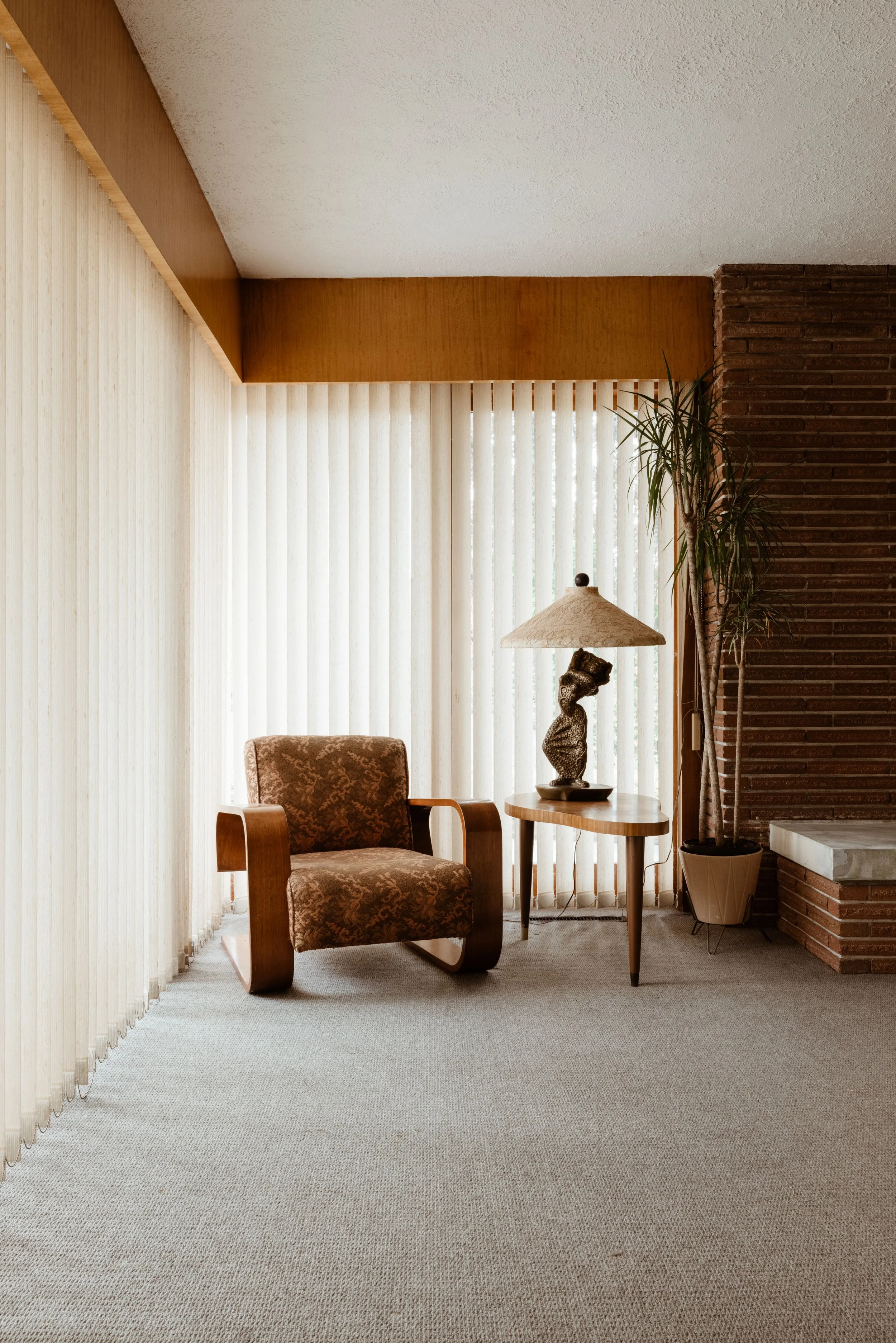
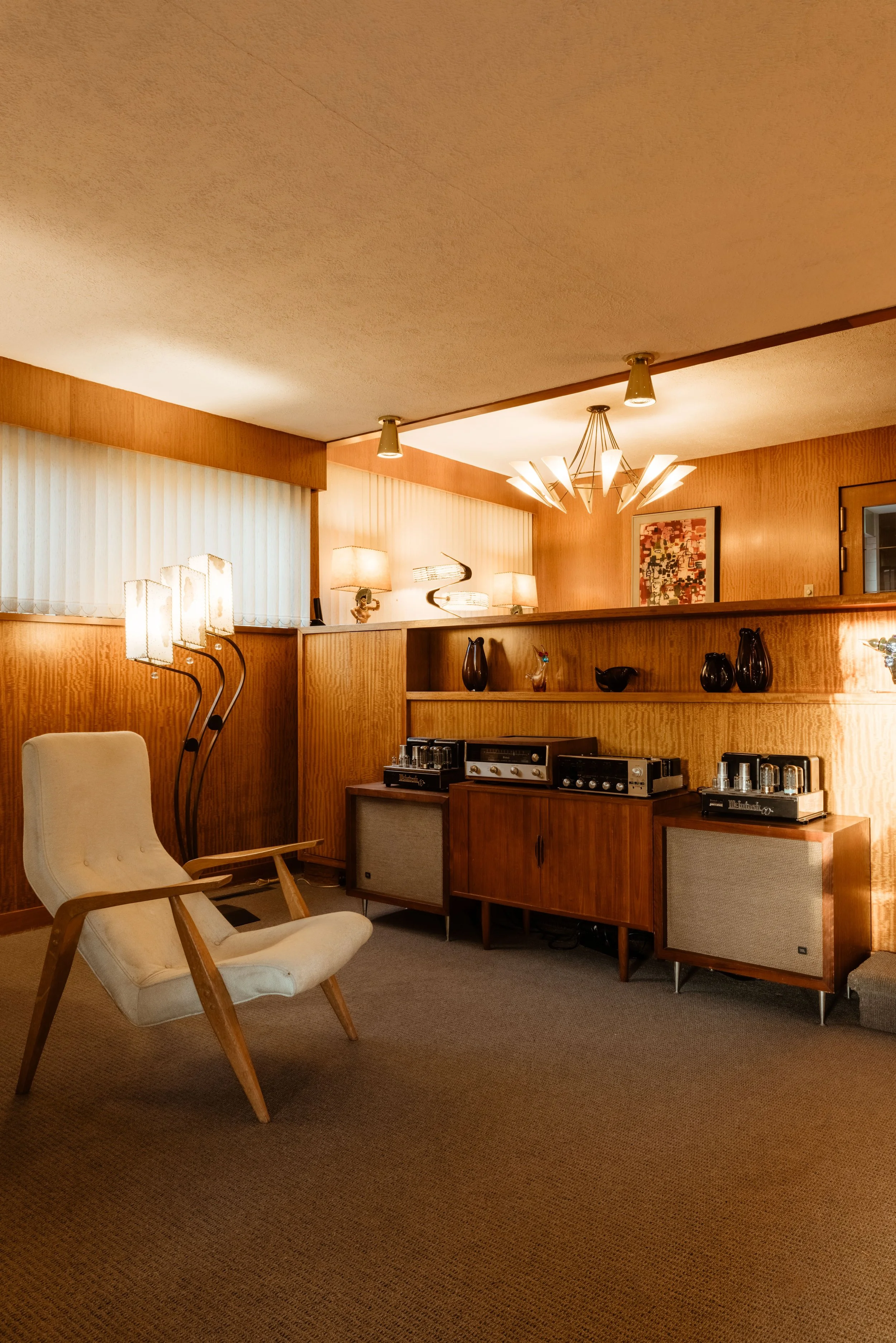
The house’s sculptural aspect is then only reinforced by its delicate collectible light fixtures, seemingly diffusing the very essence of Lakeberg Residence while also standing as poetic testimonies to the design-aficionados who cared for this landmark until now.
Invitation to custodianship
And a collector home it is indeed. With opportunities for both domestic life and hosting, Lakeberg Residence feels like a vast modernist canvas where to apply one’s identity and taste. Not only is it rare to stumble upon an original Thompson, Berwick, Pratt & Partners work on the market, it is even rarer to find one with such an acclaimed pedigree, exceptional construction standards and in a carefully preserved original state.
Just like Neutra’s Kaufmann House in Palm Springs, that set a precedent for a revolutionary type of living in the desert, Vancouver’s Lakeberg Residence stands as a testimony for the far-reaching ambitions and values of British Columbia’s key modern architects that came to influence generations of thinkers and builders the West Coast over.
Home Facts
Name: The Lakeberg Residence
Location: 6171 Collingwood St, Vancouver
Neighbourhood: Southlands
Designer / Architect: Thompson, Berwick and Pratt & Partners — with involvement from Ron Thom, Ned Pratt, Bob Burniston, and Dick Mann
Original Custodians: Mr. & Mrs. Lakeberg — Forestry Executives (British Columbia’s leading industry at the time)
Price: $3,850,000
Year Completed: 1957
Site Area: 12,611.45 Sq ft
Interior Square Feet: 4,441 Sqft
Levels: 2
Bedrooms: 5
Bathrooms: 4
Structural / Engineering Highlights: Post-and-beam construction typical of West Coast Modern design, emphasizing open spans, exposed structure, and seamless indoor-outdoor connections. Structural integration around the central courtyard and pond, incorporating natural light and four-season livability.
Landscape and Planning: The home is planned around a central courtyard and breezeway, with a bridge crossing a pond and a babbling brook—integrating water and garden elements directly into the architectural experience. Set on a quiet cul-de-sac across from a ravine, with no lane access behind, ensuring privacy and tranquility.
Key Materials: Pyramid mahogany throughout entry, living, and dining rooms; Roman tile brick (floor-to-ceiling walls and fireplaces); Terrazzo flooring with walkout to poolside area; Extensive use of glass, wood, and brick
Views / Orientation: Located on Vancouver’s West Side, the home offers great views toward Vancouver Island and the water from the rooftop. Oriented to maximize light and privacy within a quiet, tree-lined cul-de-sac.
Features: 4,400+ sq ft mid-century West Coast Modern residence; Central courtyard and breezeway over pond with bridge; Three brick fireplaces; Floor-to-ceiling glass in sunken living room; Kidney-shaped pool; Mahogany interior paneling and built-ins; Original condition, mostly preserved
Now on Tour in Vancouver
Reserve your private architectural tour.
Download the Story
Download a print-ready version of this feature.


Want to see more West Coast Modern homes?
Get Early Access to the Next West Coast Modern Home.