
Arbutus House
On the Market
Arbutus House by Georg Koslowski, 1979
Caulfeild, West Vancouver
Photography by James Han
Story by Nadine Cuttingham
Styled by Yuen Design Studio
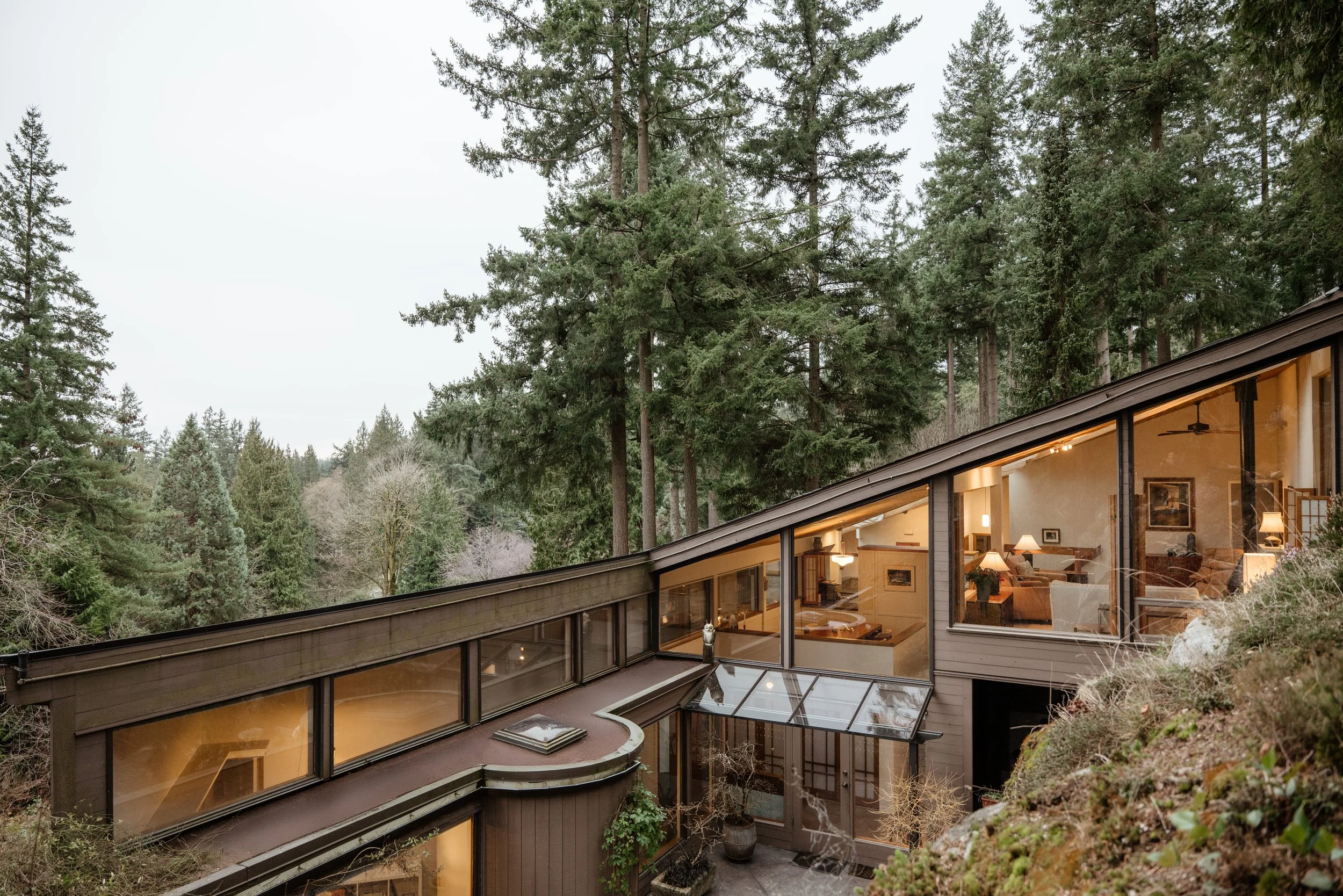
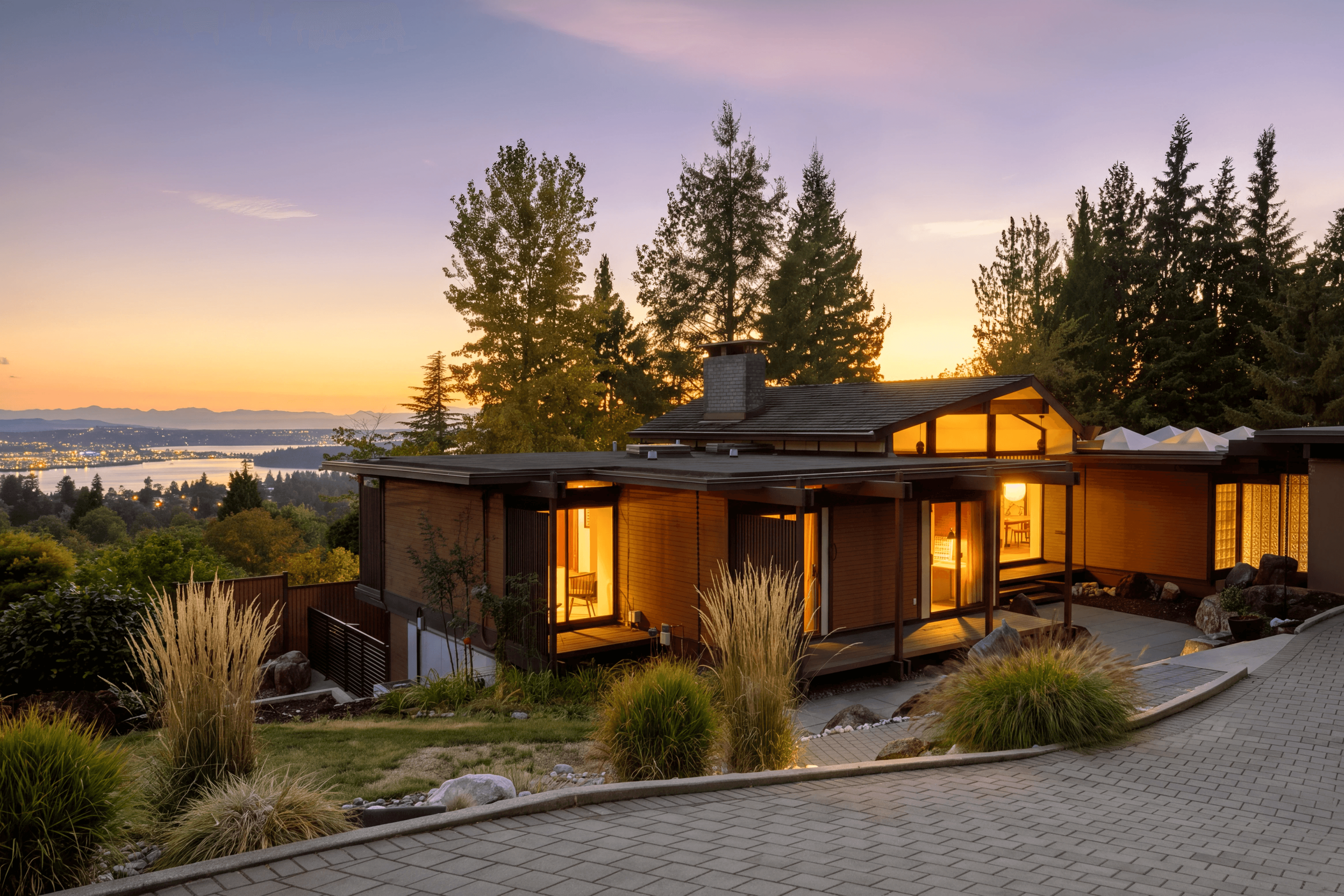
Conceived in 1979 by renowned local architect Georg Koslowski, a key figure in West Vancouver’s 1970s modern scene, the Arbutus House is a refined exploration of contemporary domesticity and its deep immersion in the West Coast landscape. Initially enchanted by the architectural language of the neighbouring home authored by the architect, the owners sought to replicate his vision by engaging him to design a house better tailored to their specific needs. Spanning approximately 2,700 square feet across its three cascading levels, the three-bedroom, three-bathroom residence applies Japanese design sensibilities to a rugged coastal setting, achieving rare spatial clarity and a direct connection to the North Shore landscape.
The Neighbourhood Context and Arrival
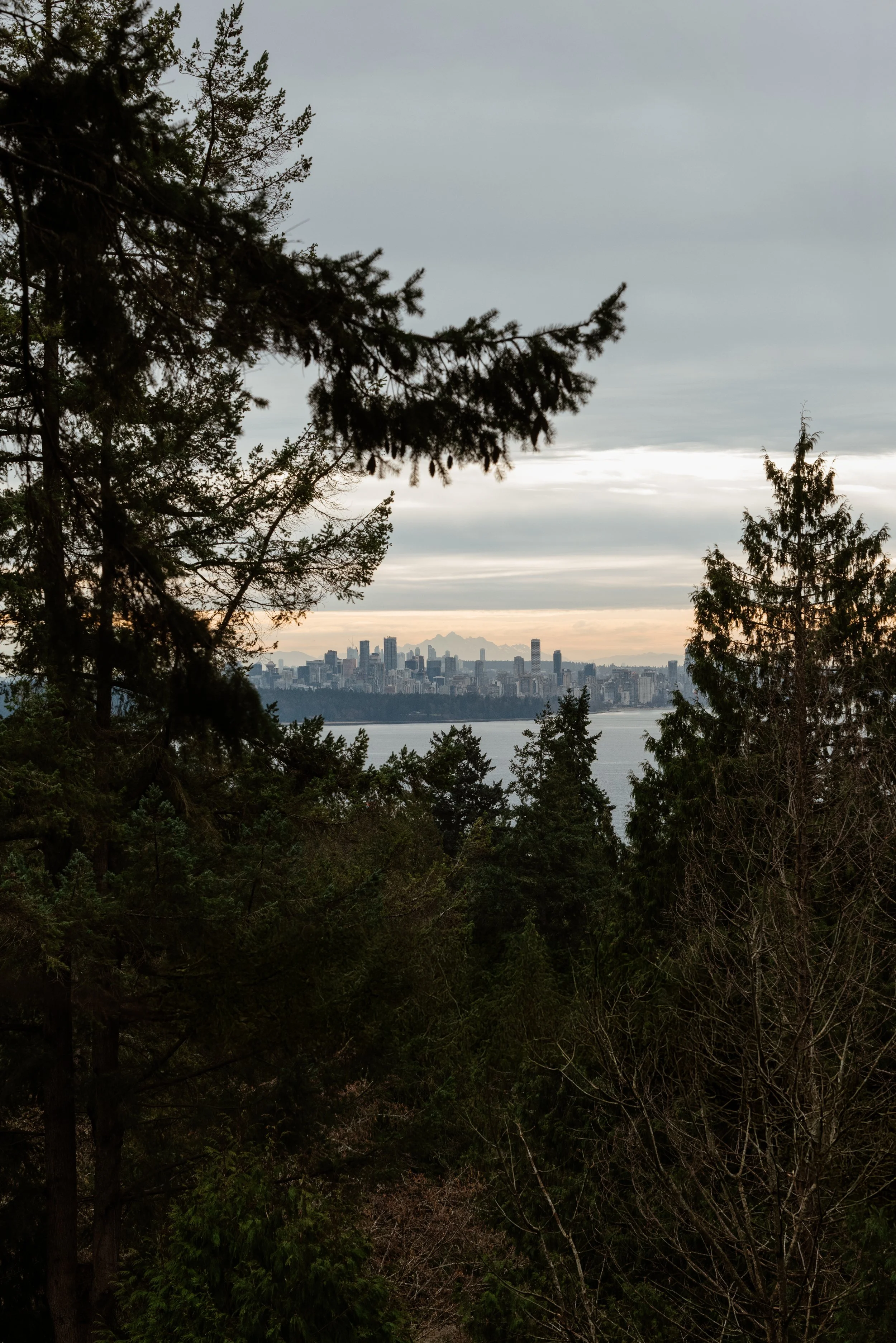
For those seeking a retreat without isolation, The Arbutus House offers a rare equilibrium. Tucked into the slopes of West Vancouver, the neighbourhood is defined by its proximity to the ancient arbutus groves of Lighthouse Park and the everyday convenience of Caulfeild Village. Here, the rugged topography has long shaped west-coast residential design, driving the desire to remain connected to the coast’s natural rhythm.
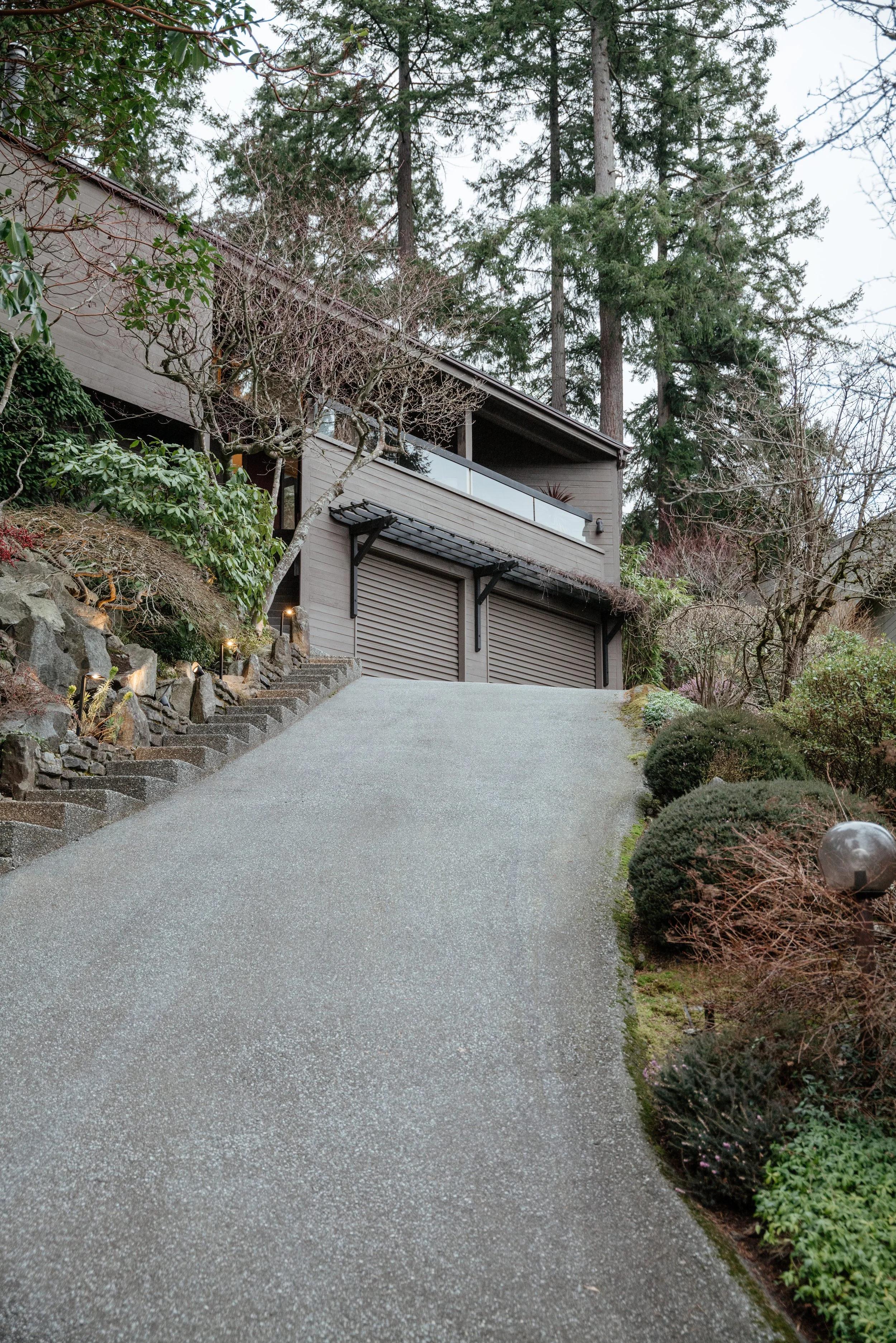
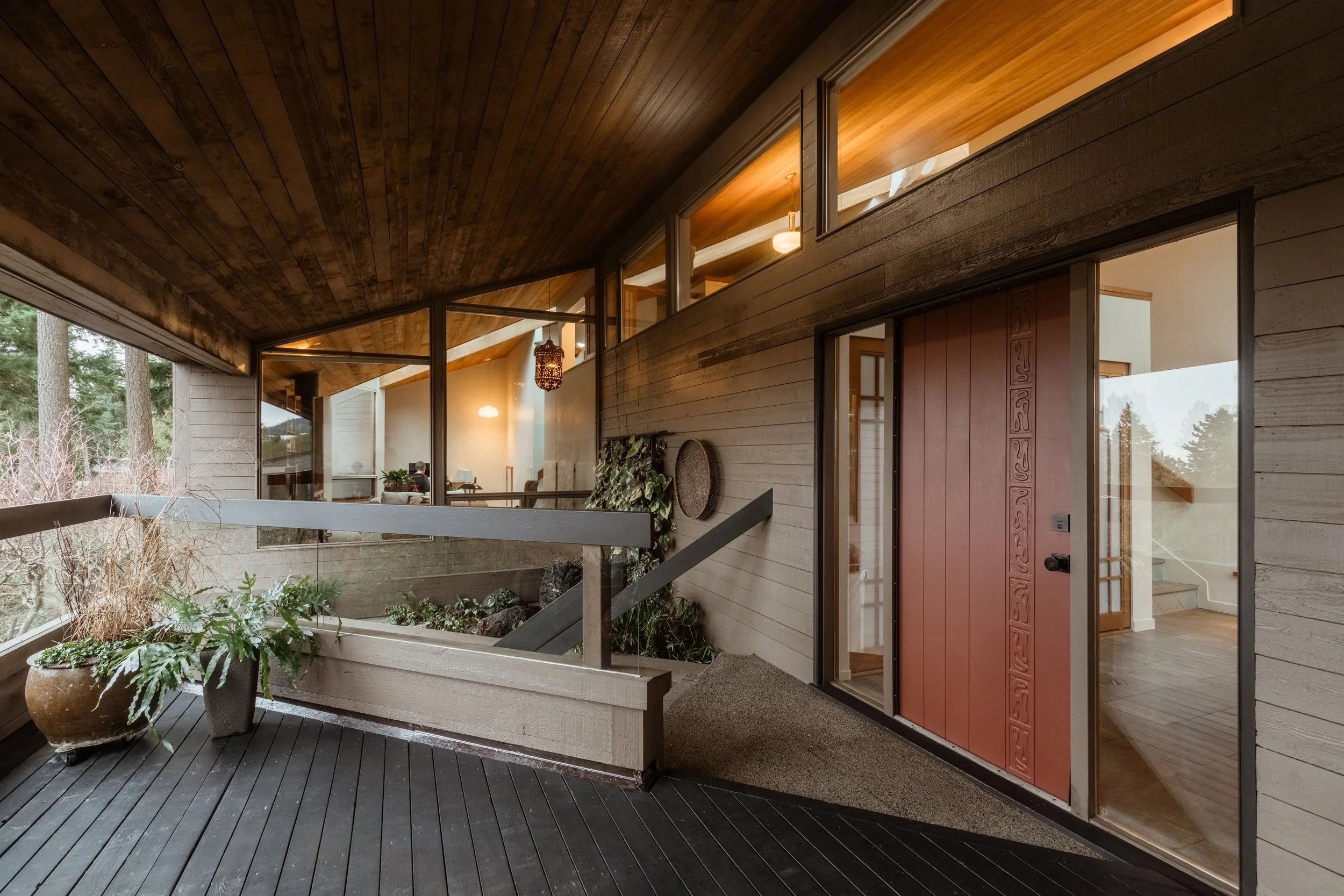
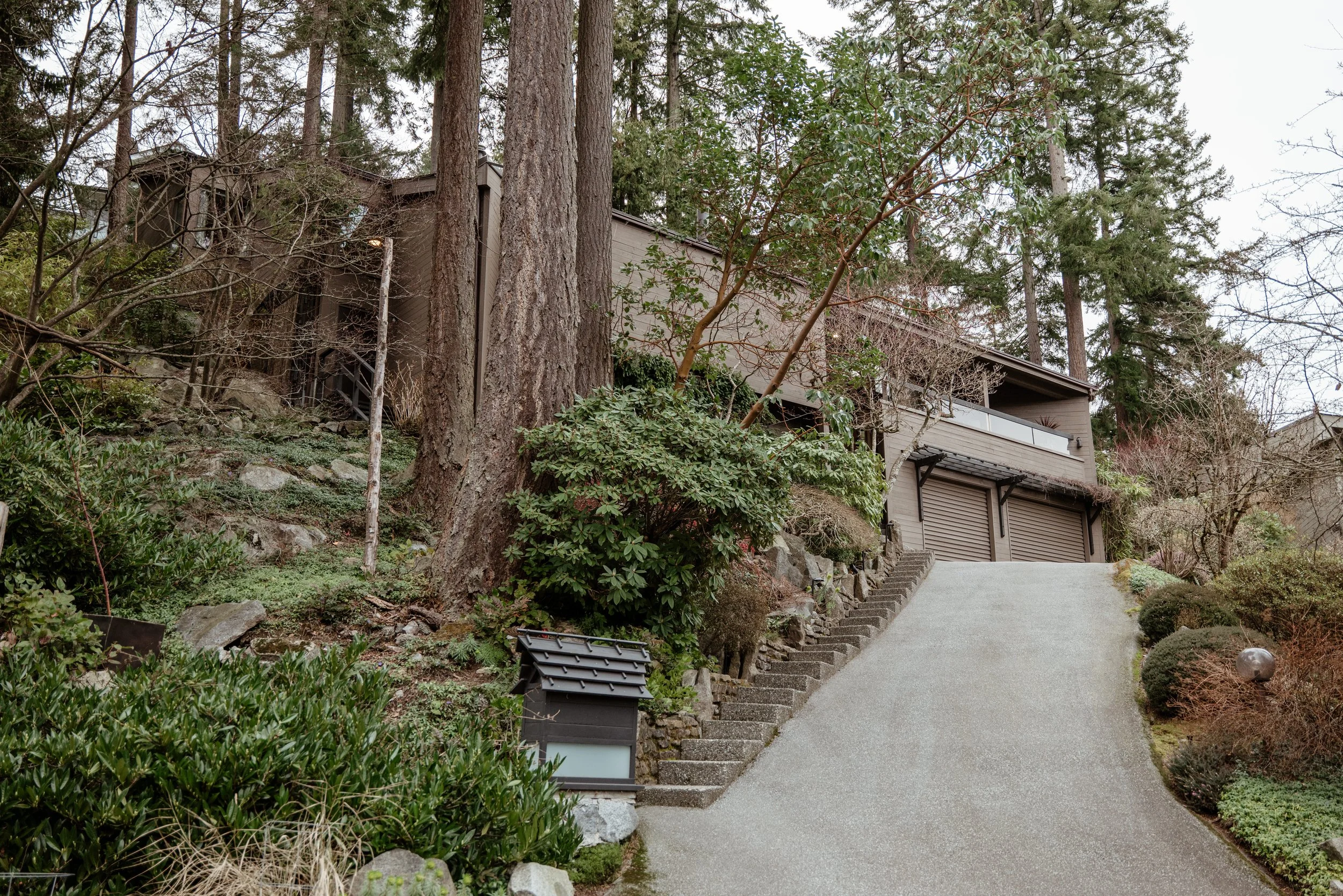
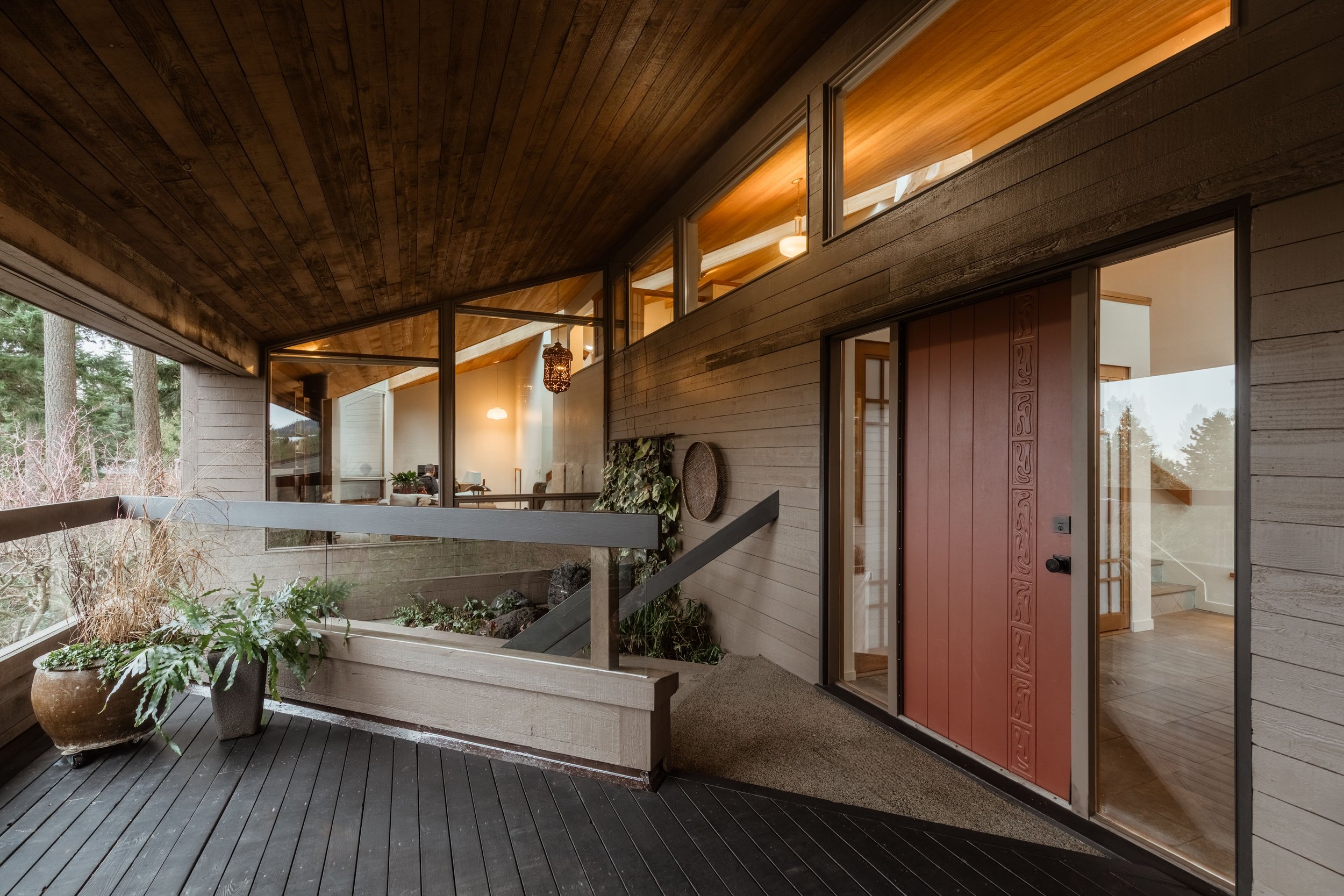
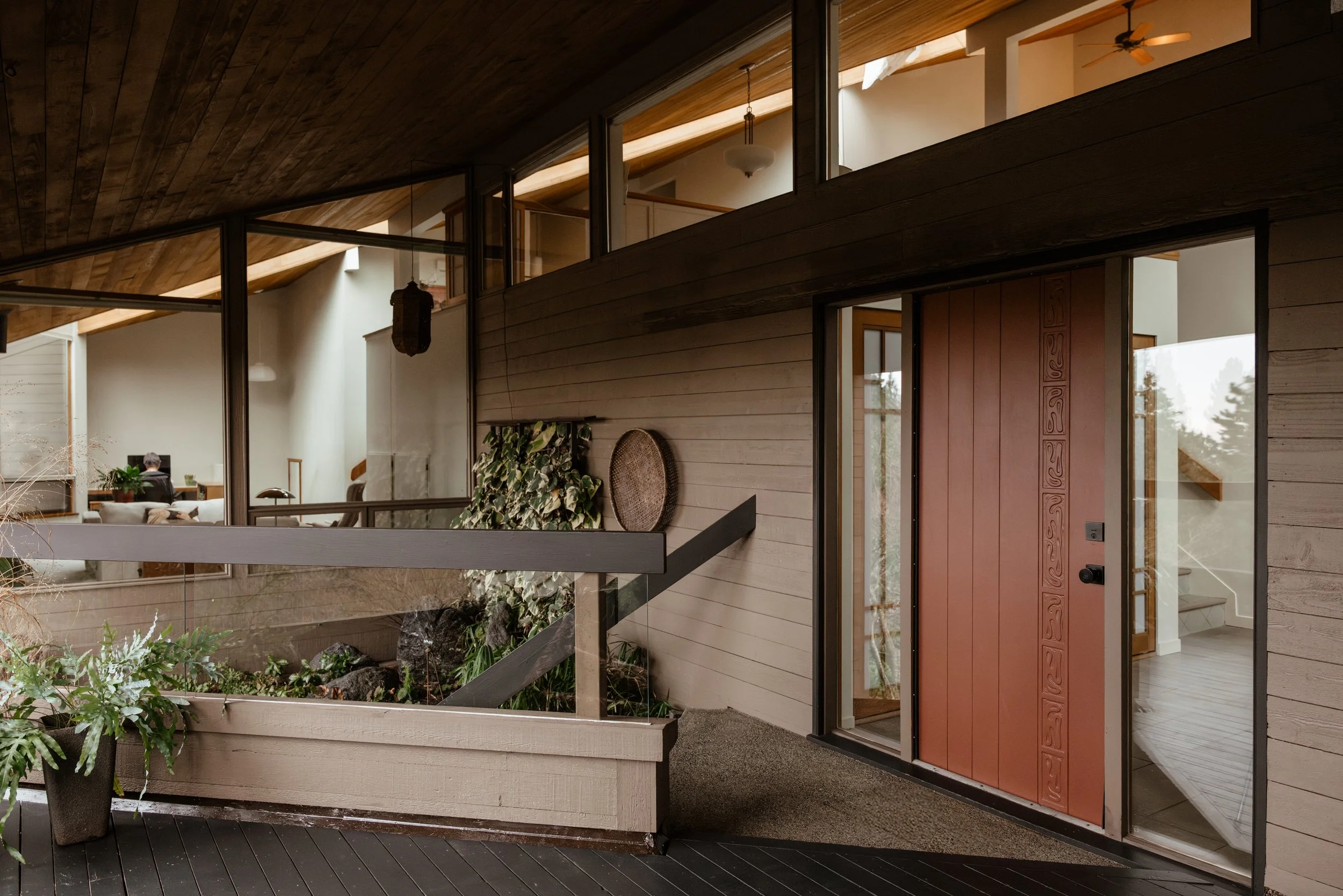
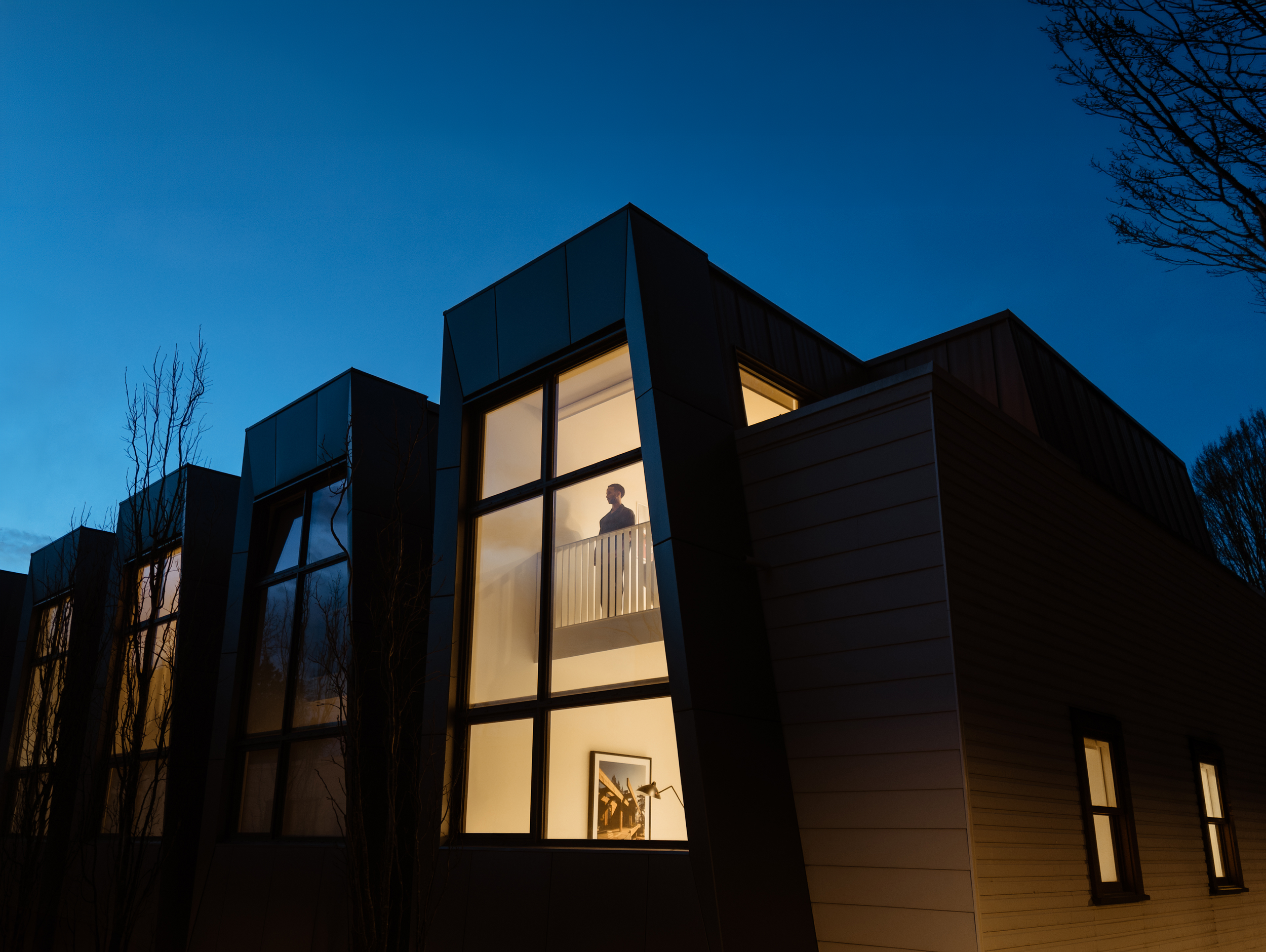
The arrival sequence begins with a measured departure from the street. A long, ascending driveway carves through naturalistic gardens, punctuated by the copper-toned bark of arbutus trees that reach above the path to frame the sky. This ascent serves as a mental transition; as the illuminated stairway rises, the noise of the city recedes and the quiet, cedar-clad modernist restraint of the architecture begins to emerge. The initial perception is one of deliberate composure, keeping the true scale and transparency of the interior hidden until the very last moment.
A Layered Reveal
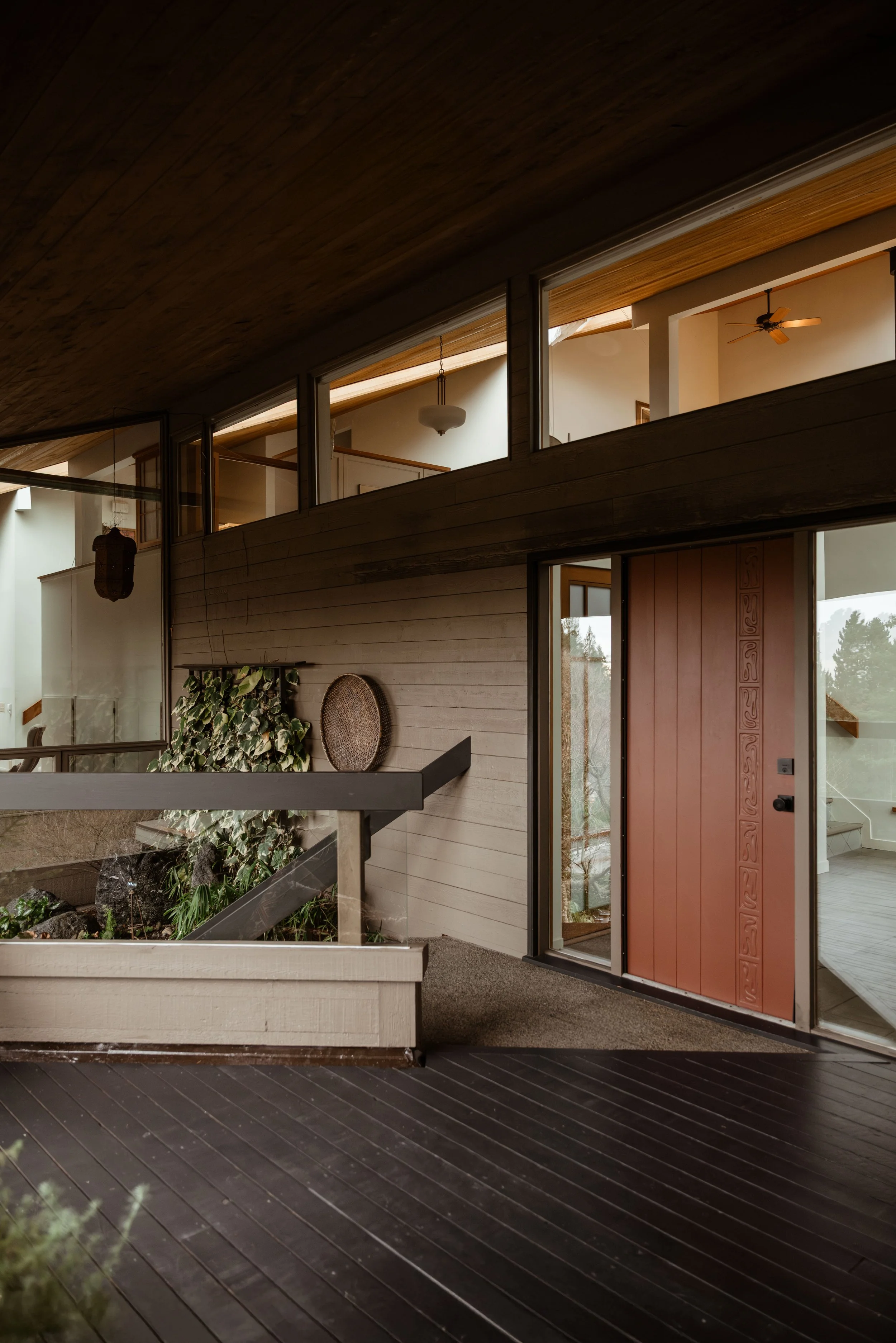
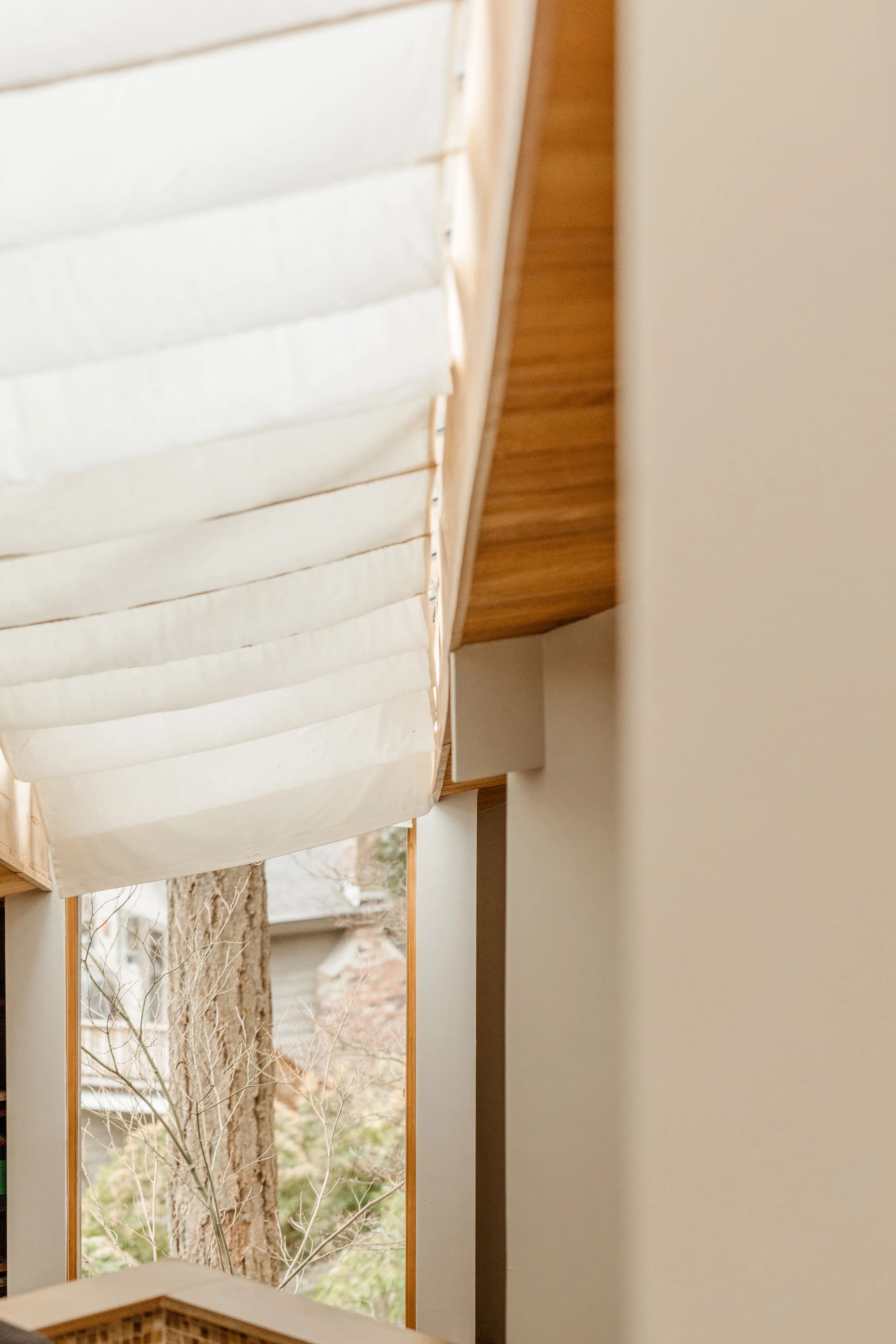
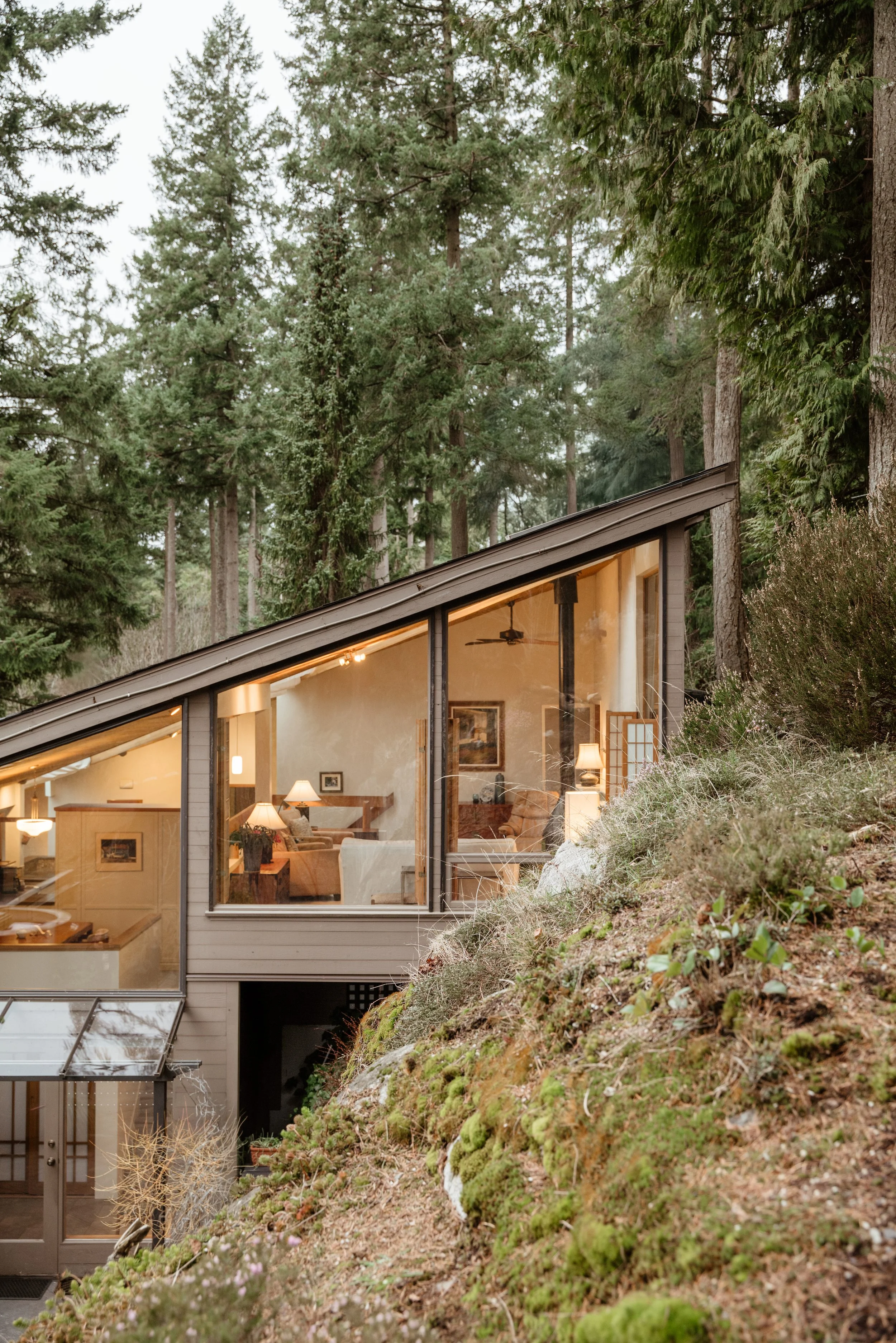
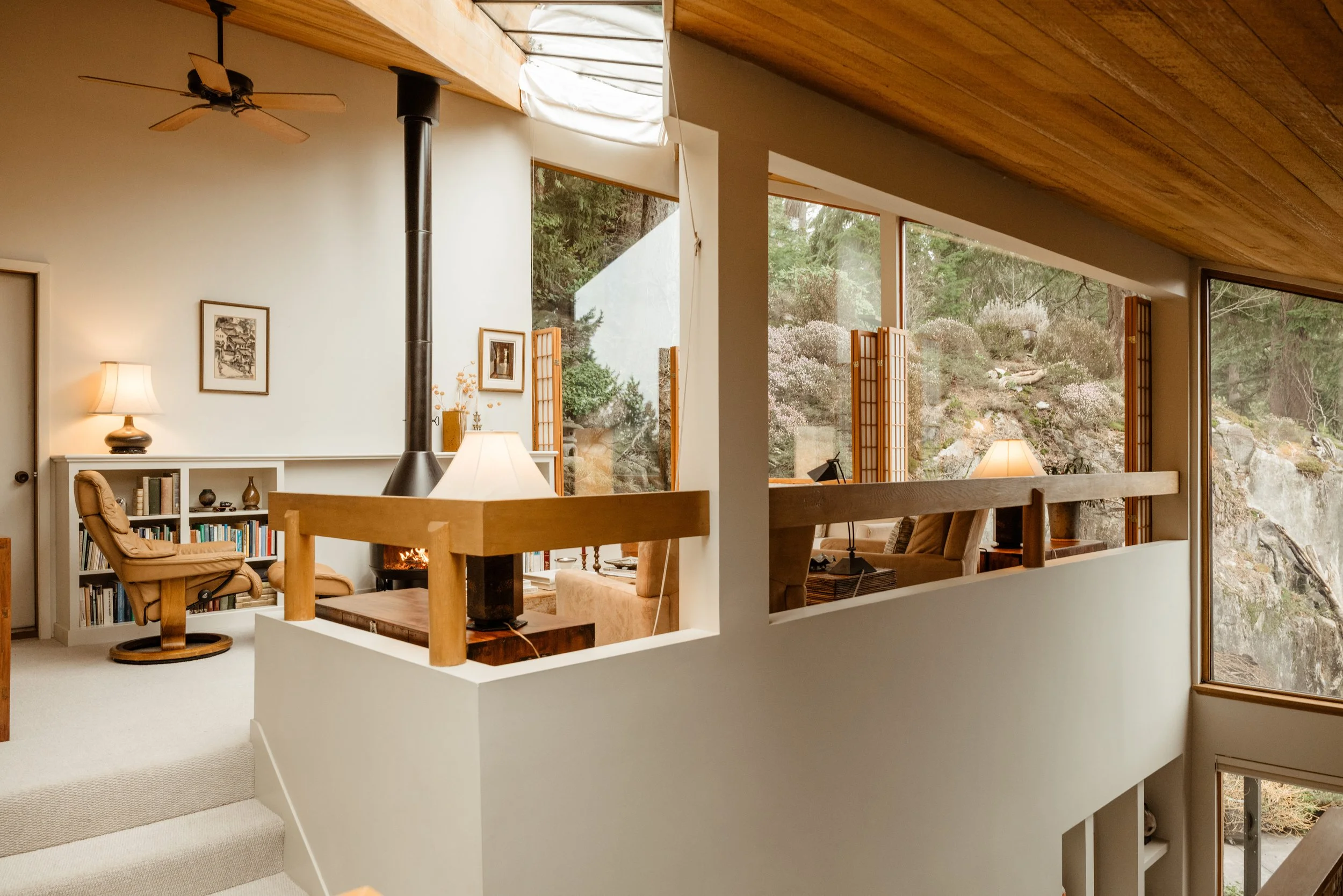
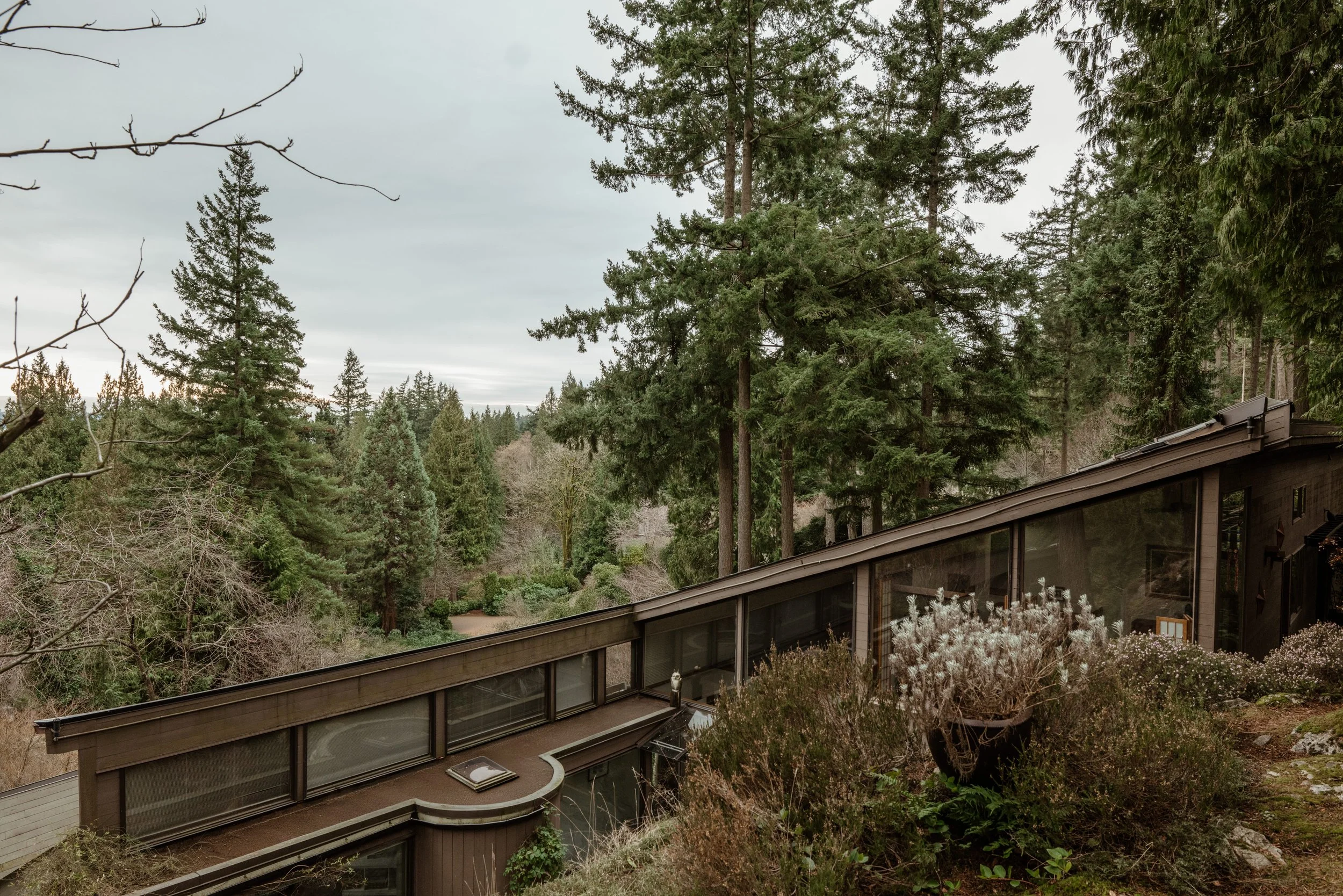
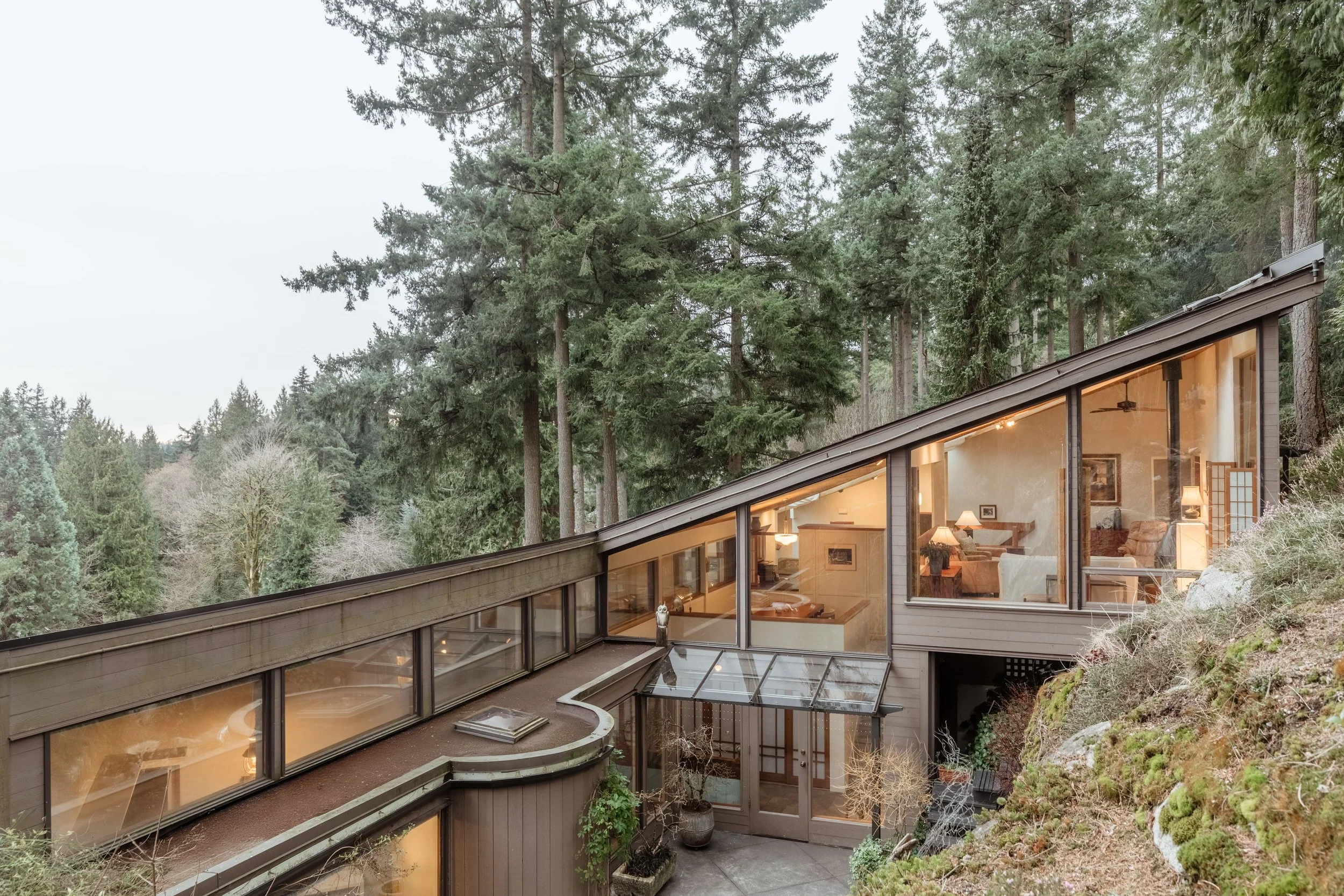
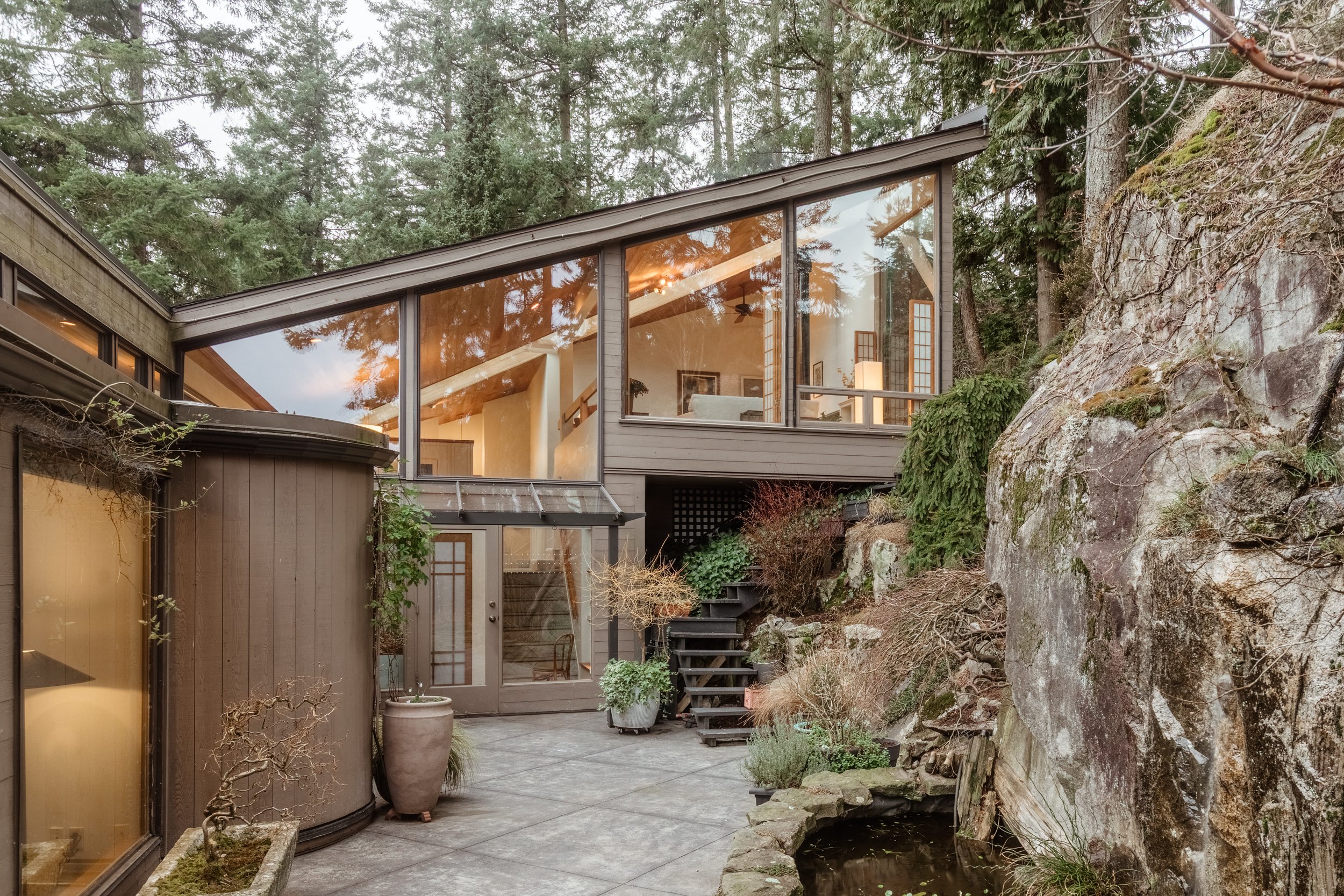
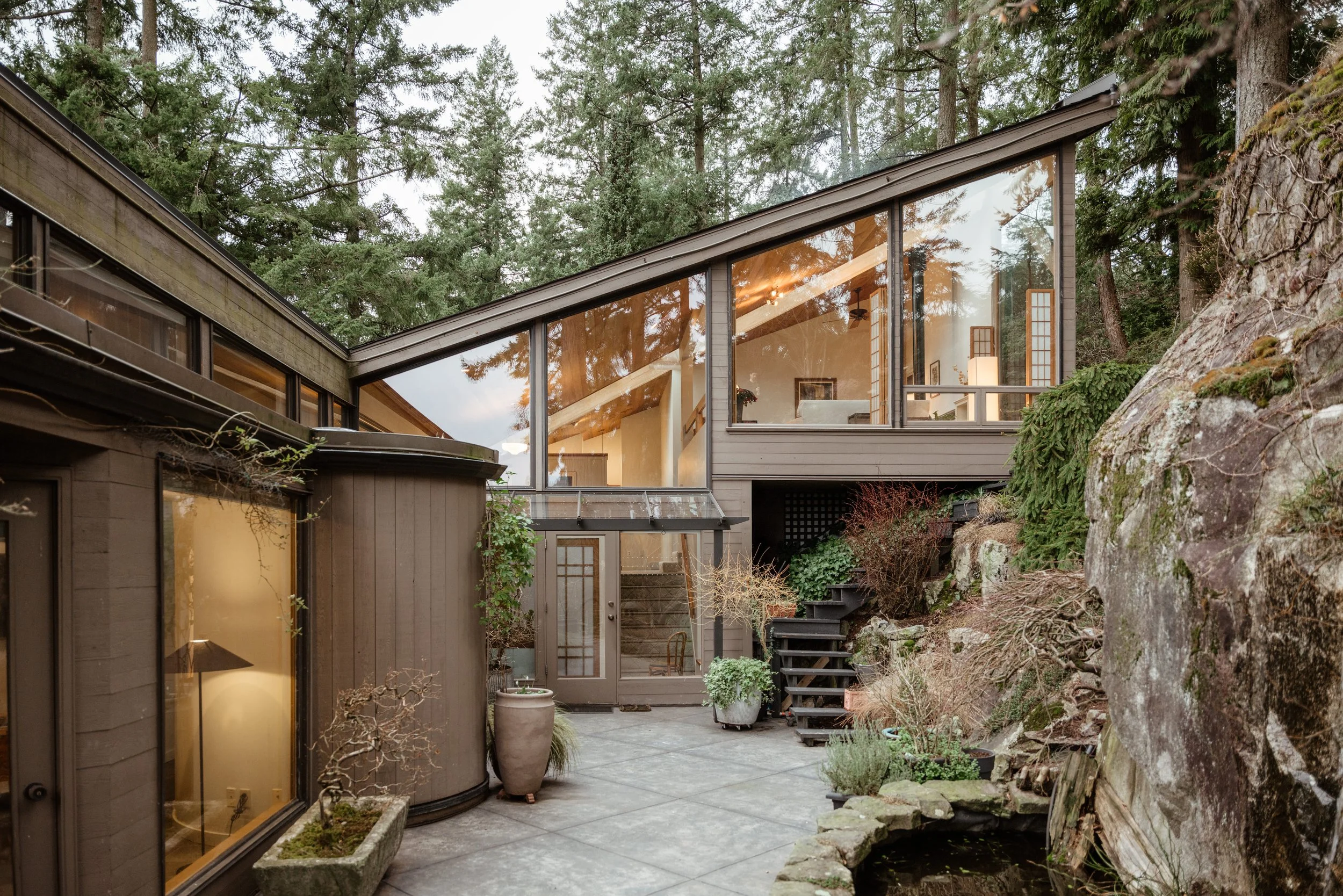
Cresting the driveway, the architecture presents a solid, guarded profile. While this initial encounter highlights a disciplined response to material and site, the impression of weight is fleeting. Upon entering the home, the opaque facade gives way to an unexpected sense of lightness. Responding directly to the contours of the surrounding granite outcrops, the interior unfolds as a cascading progression of multi-level, interlocking spaces.
"We saw the home as an extension of the landscape, each a unique structural art form."
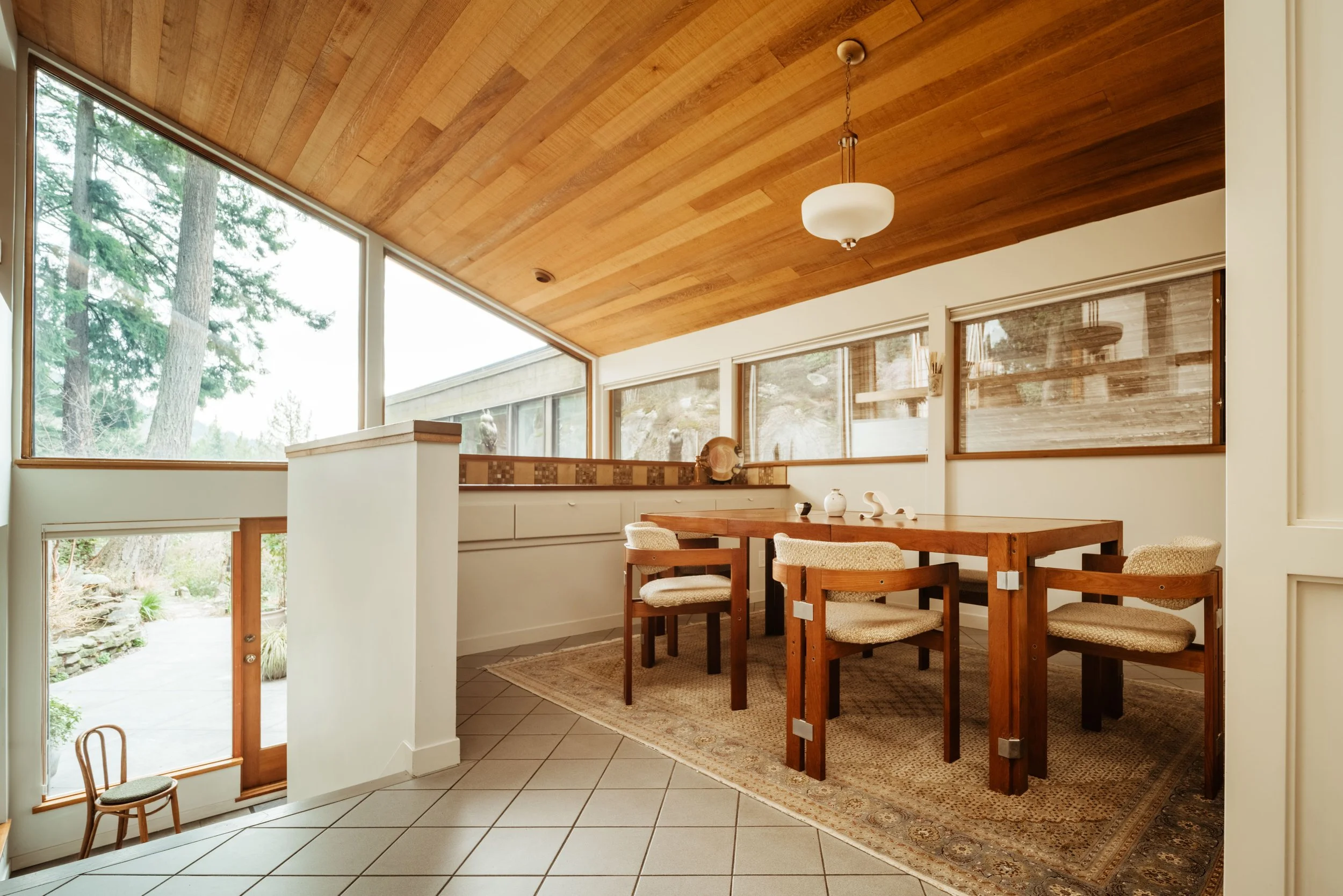
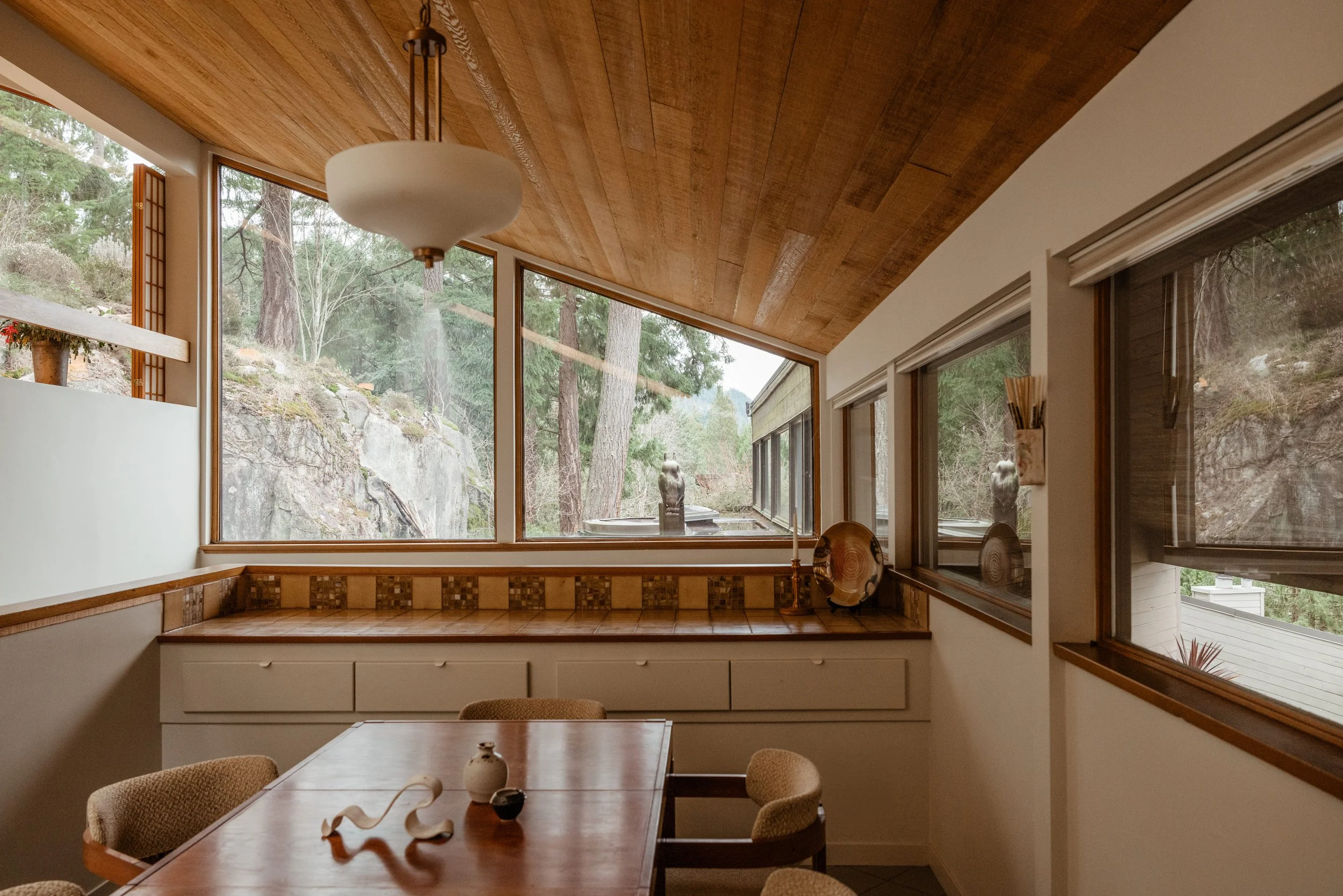
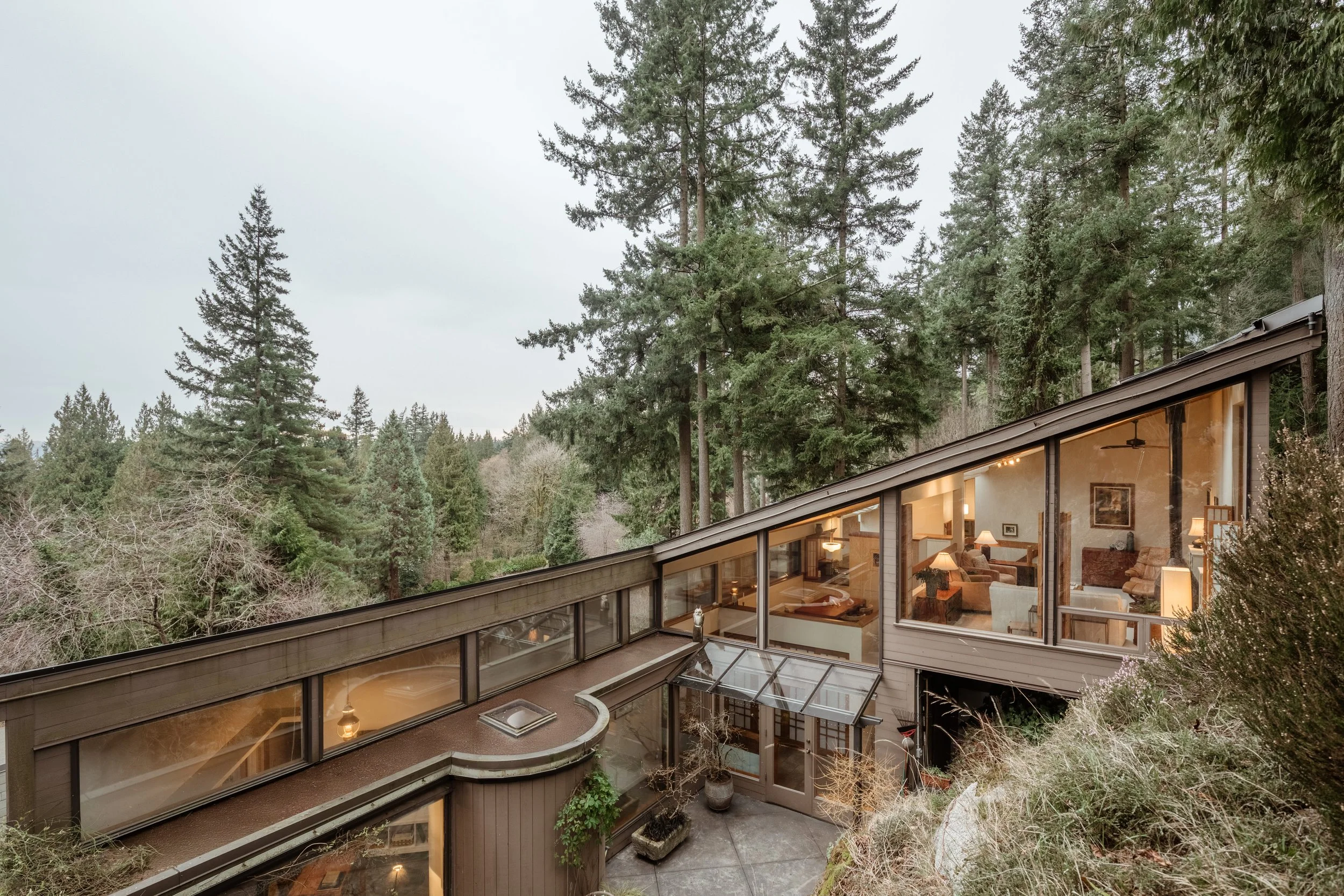
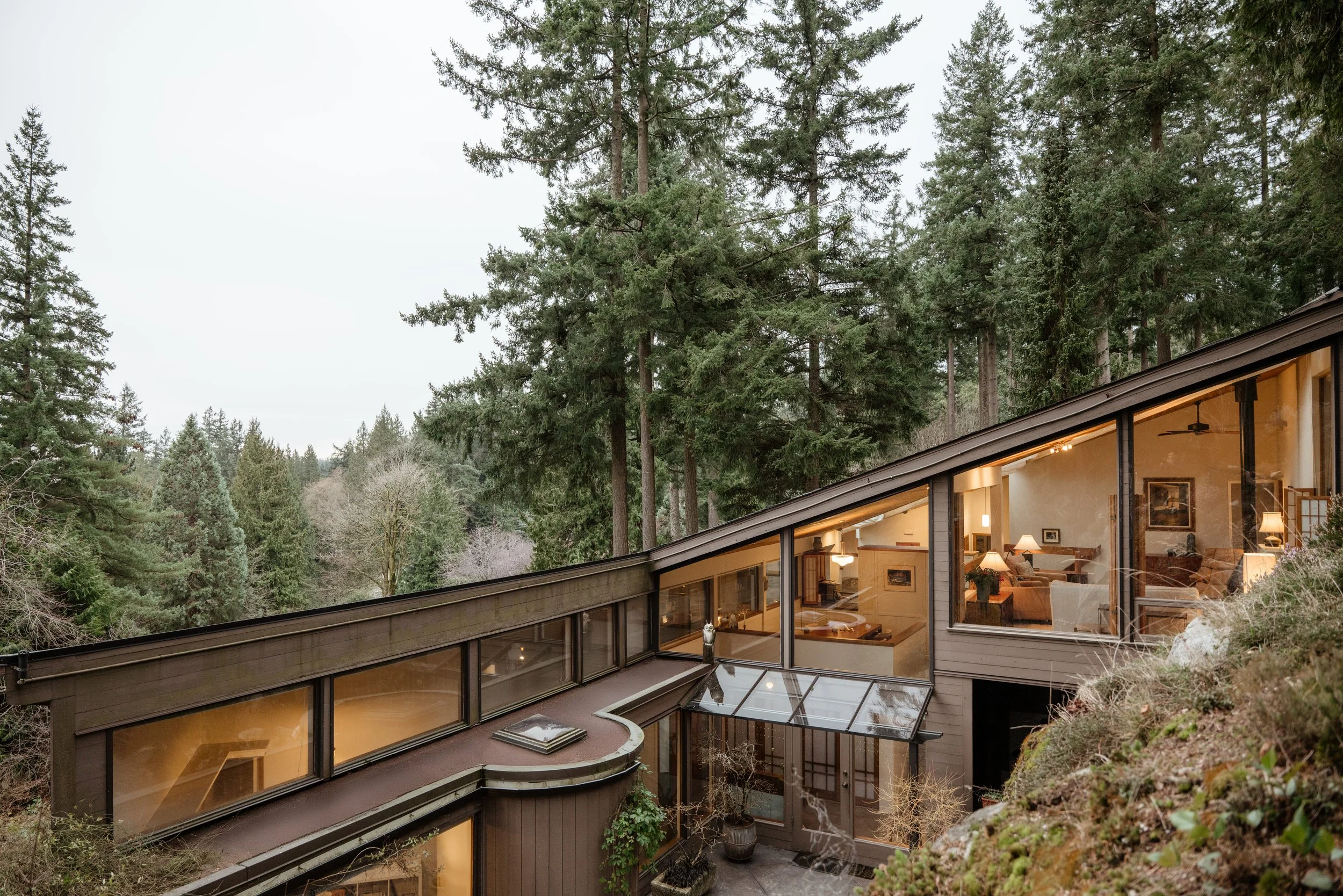
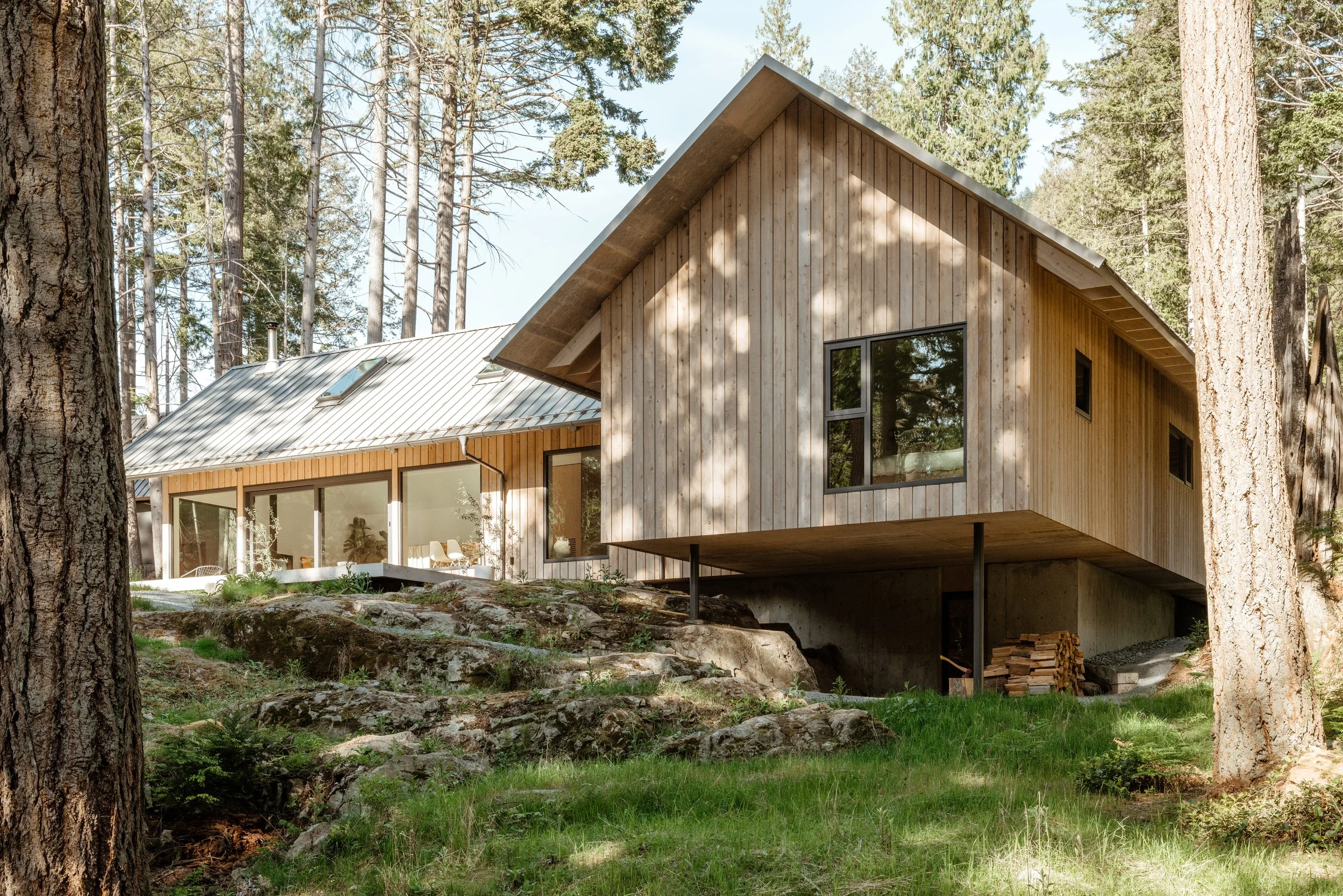
Koslowski eschewed traditional residential massing, choosing instead to let the spirit of the landscape dictate the form. Tracing the natural grade of the site, the dramatically sloping roof was designed as a continuous, defining visual presence throughout the entire interior. The result is a home that balances disciplined modernist principles with the rugged, natural beauty of the West Coast.
The Social Heart: Light and Volume
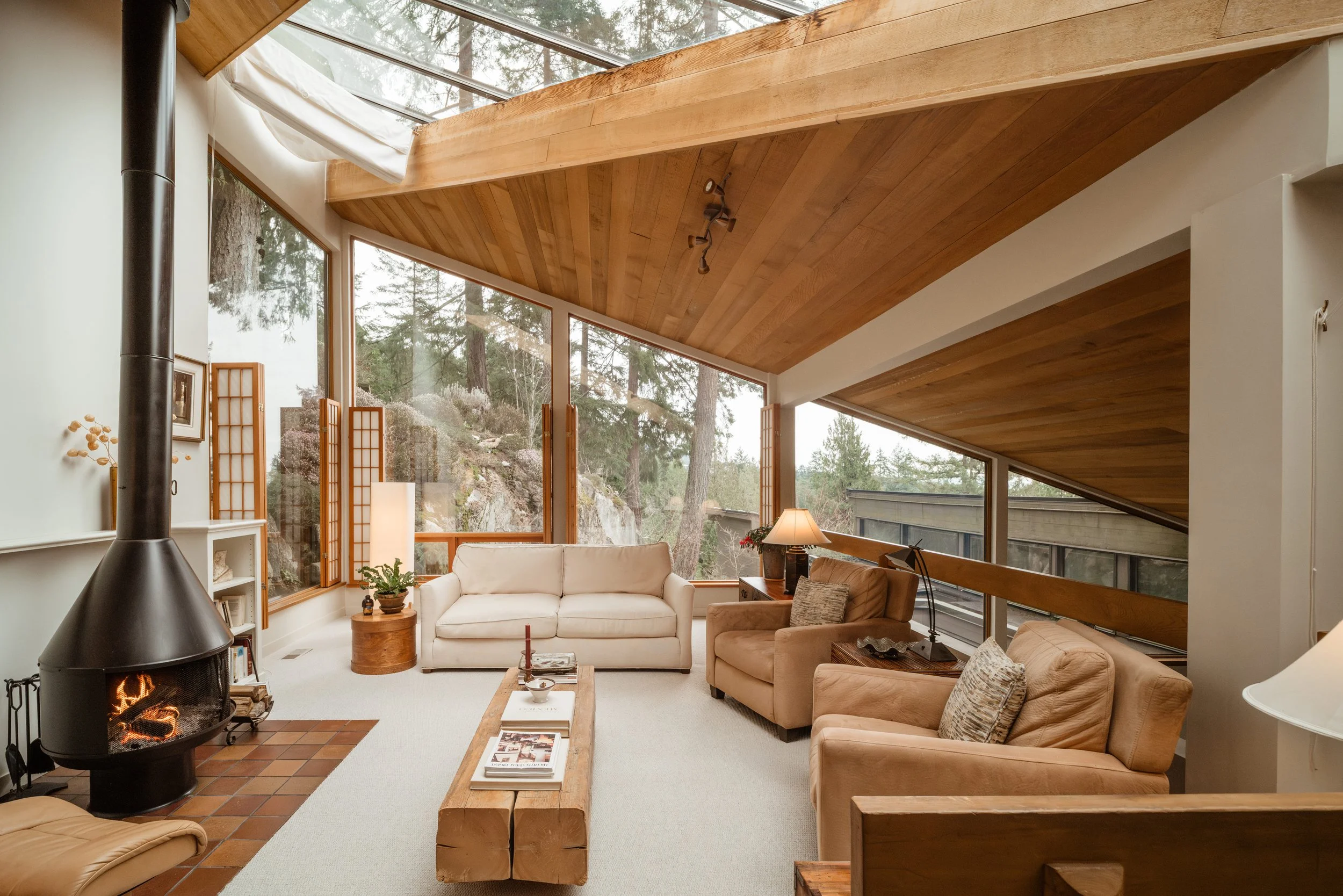
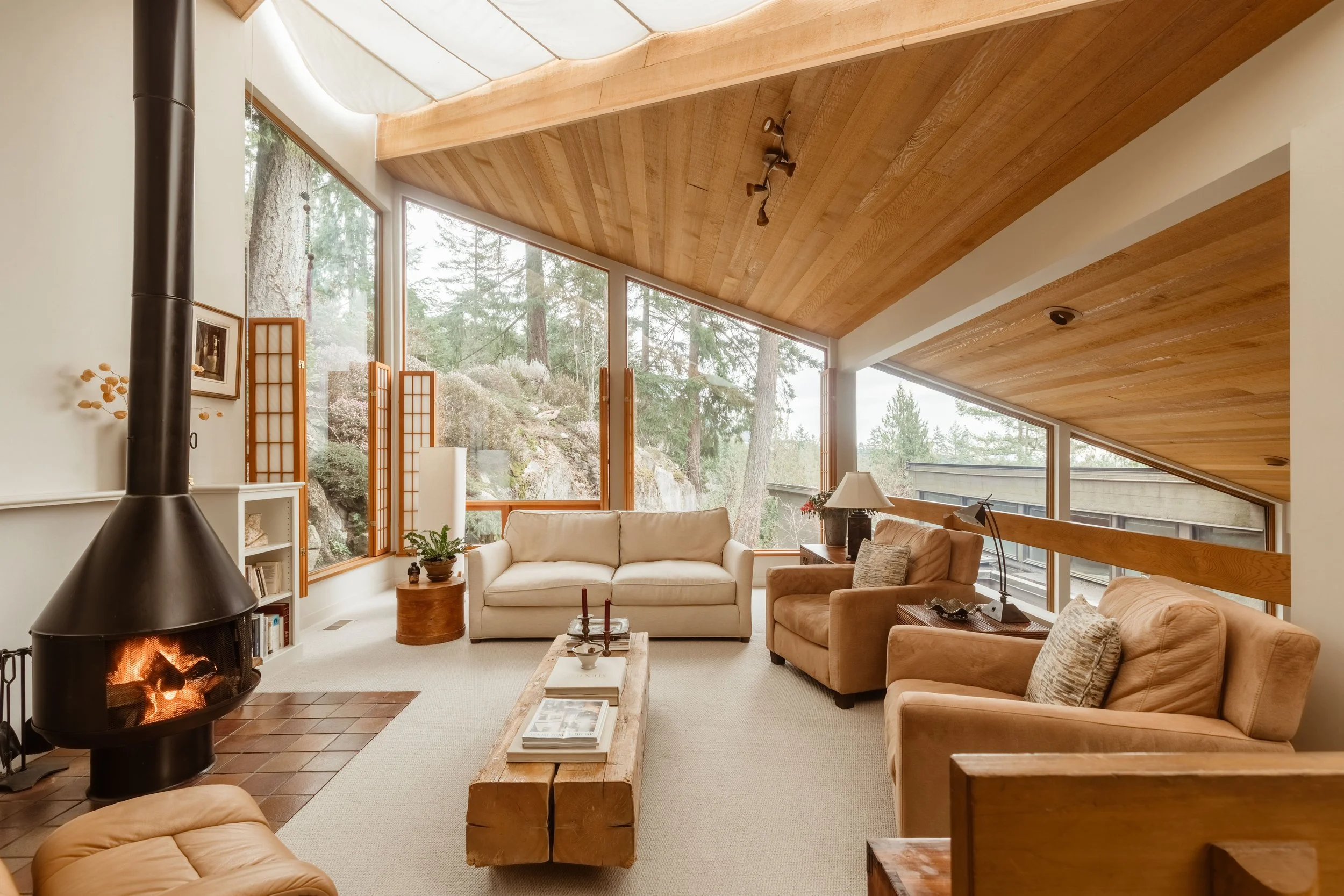
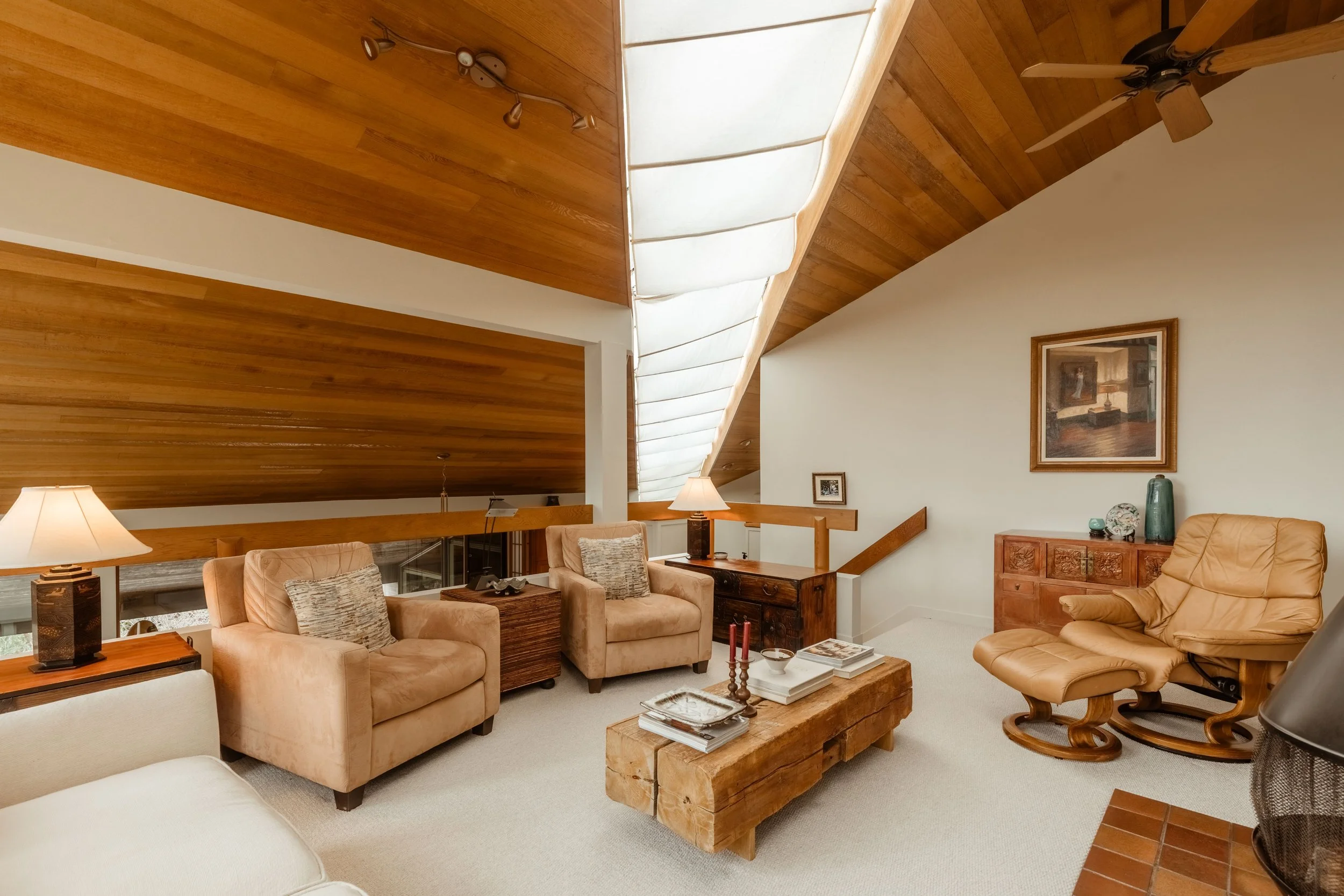
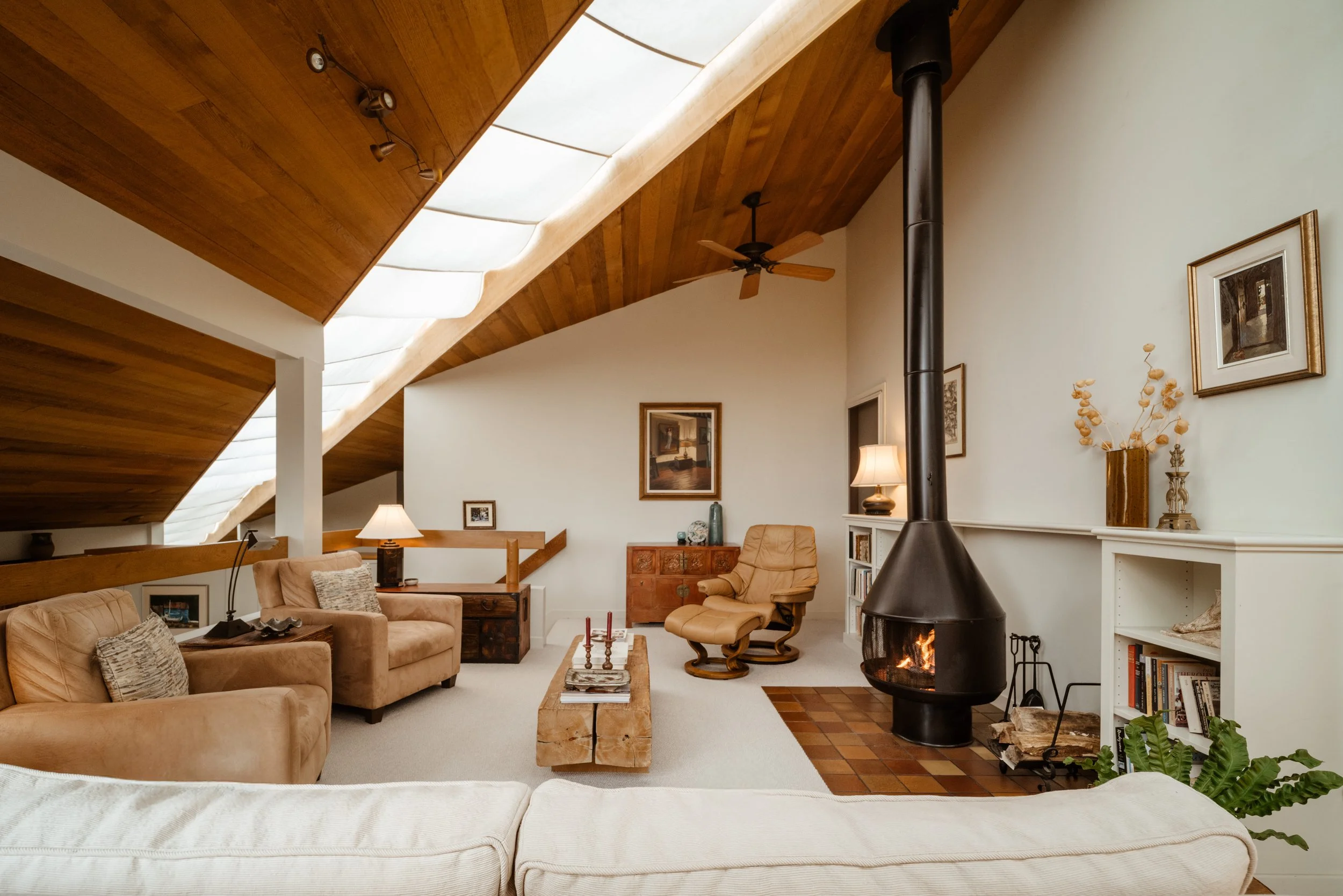
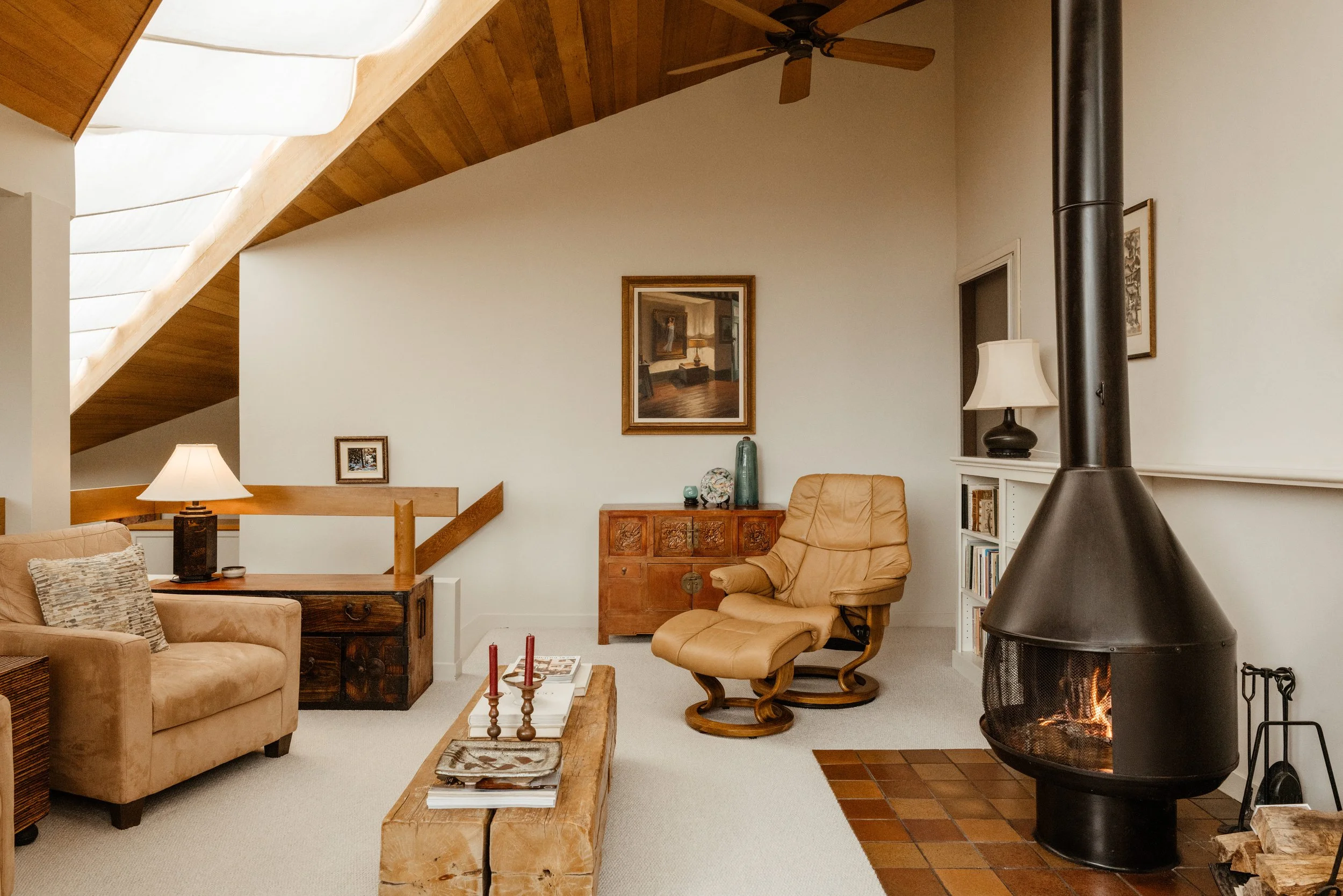
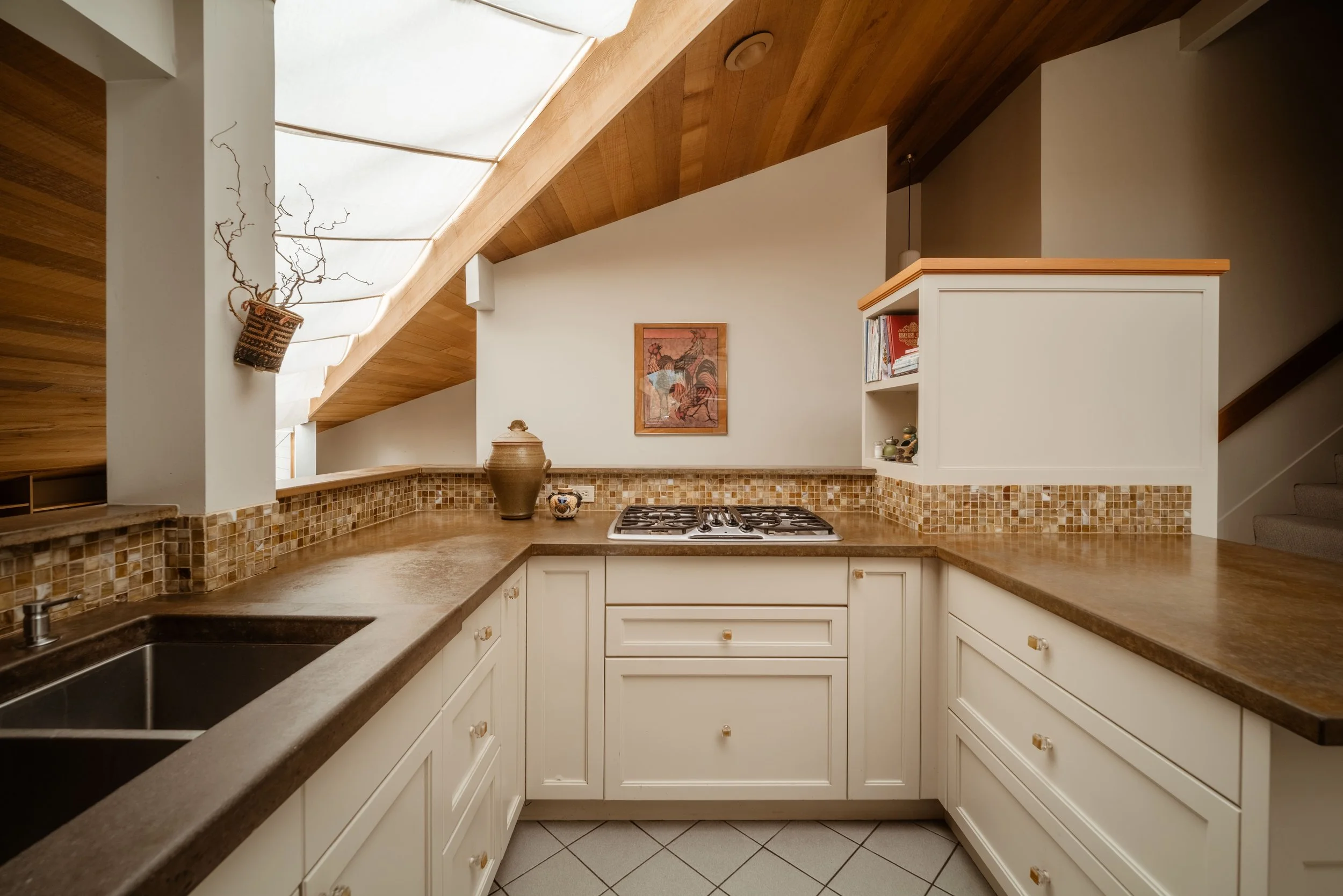
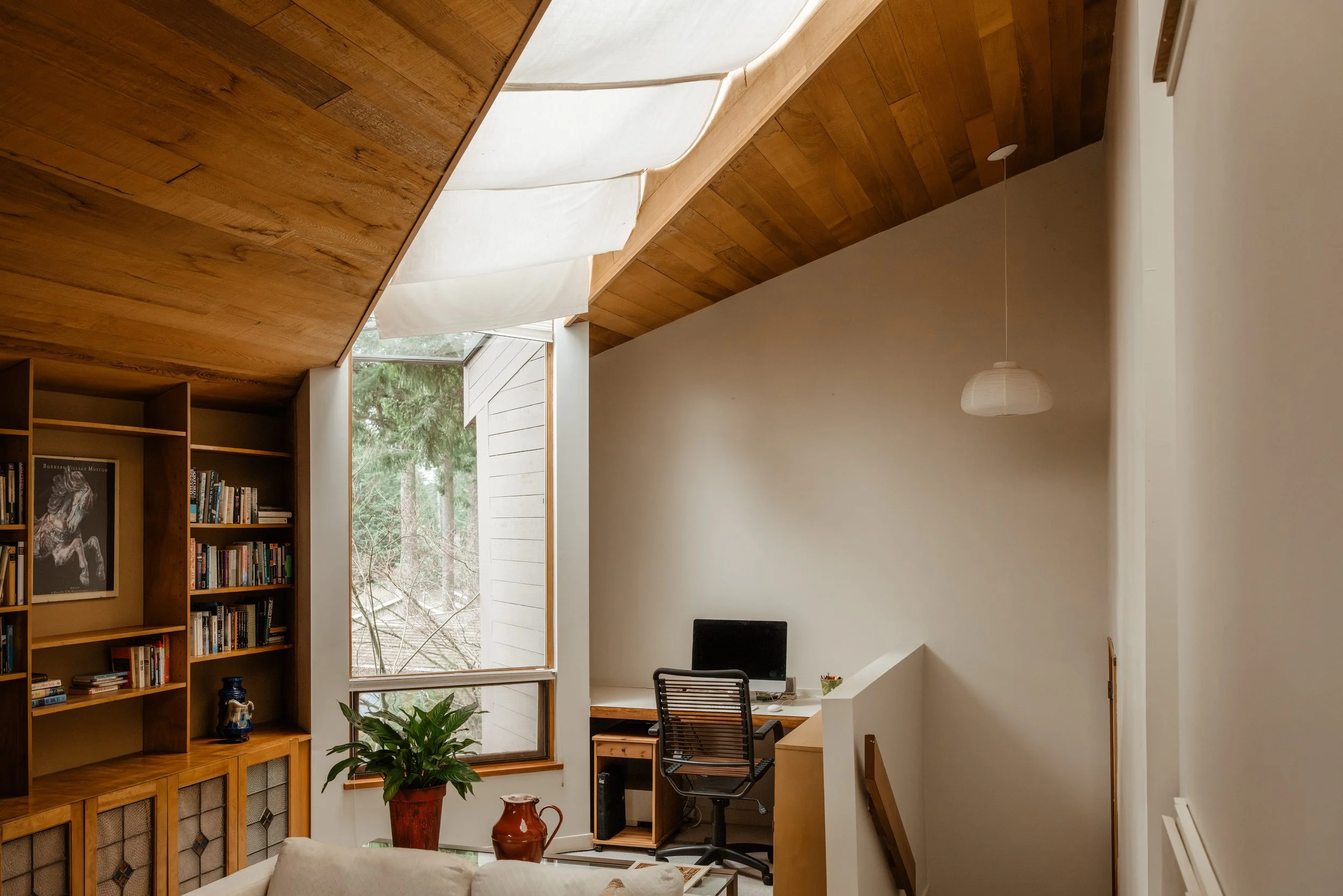
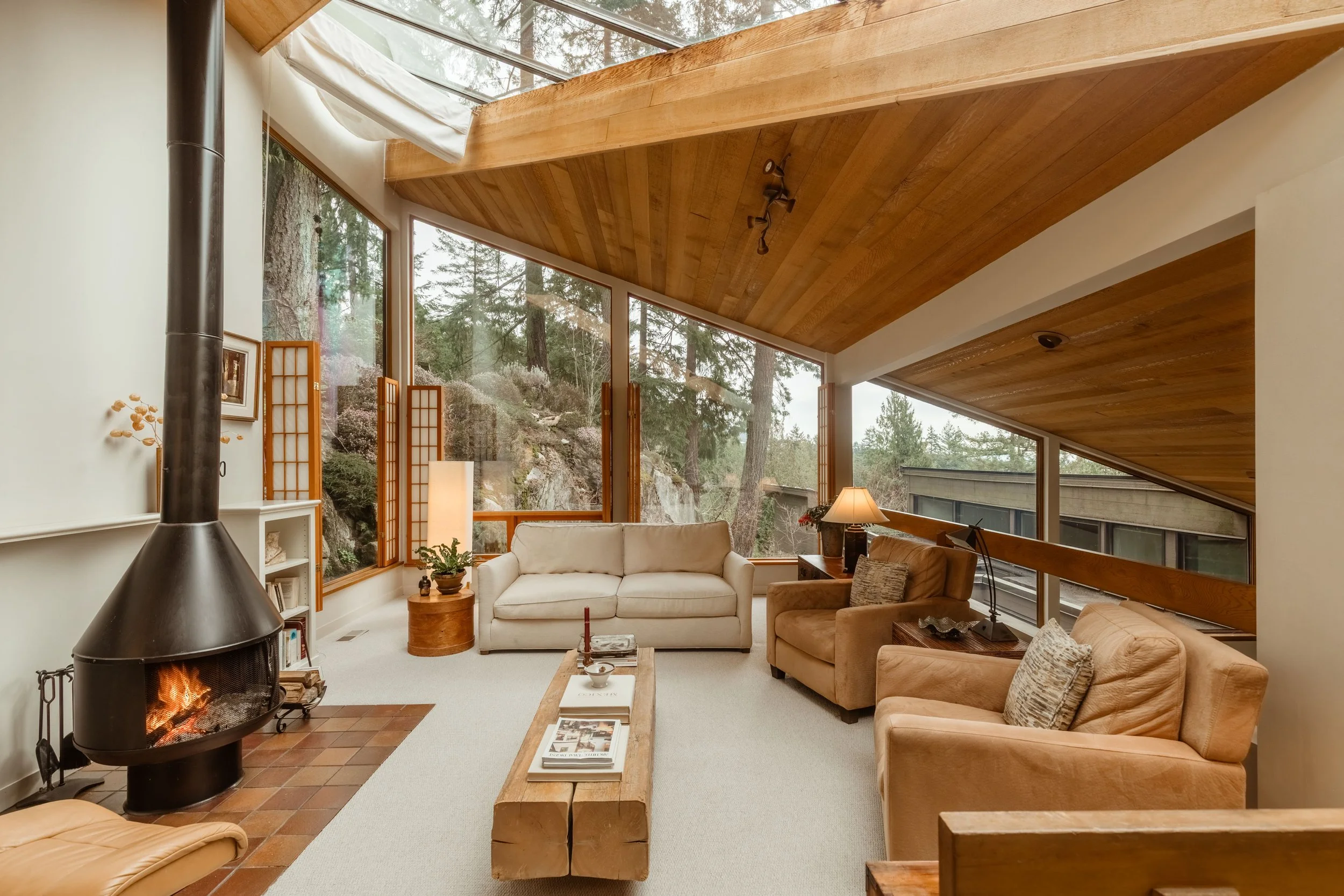
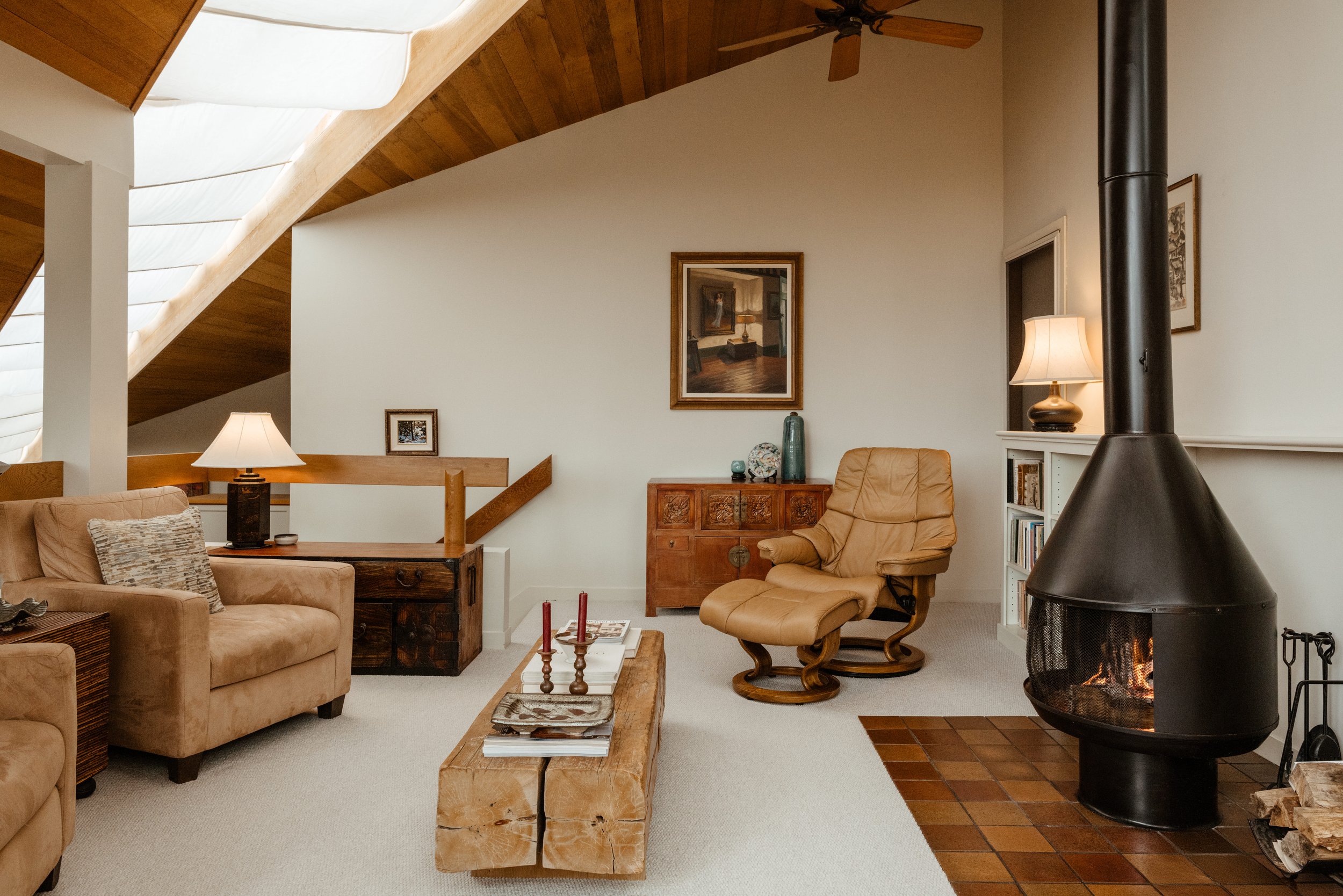
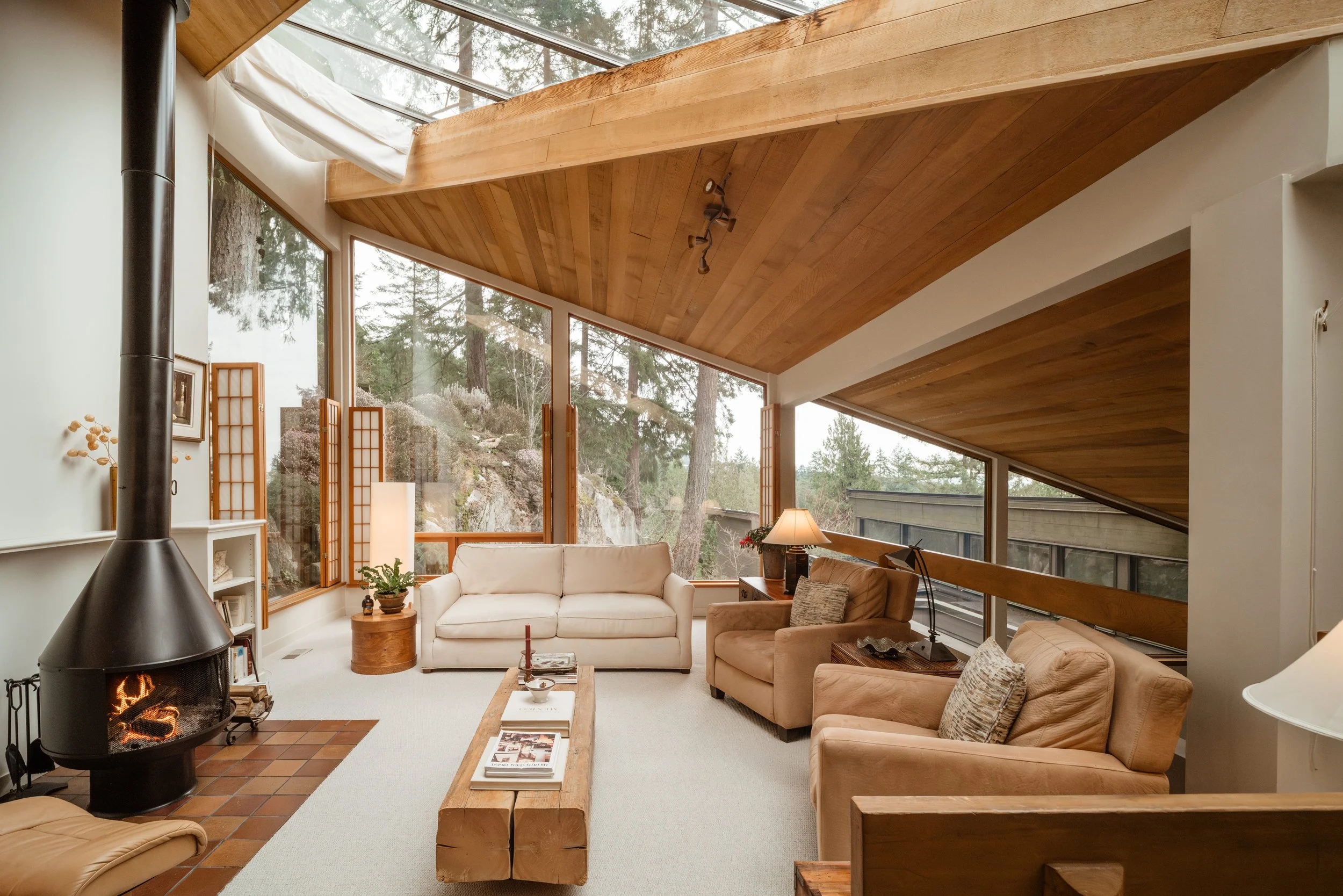
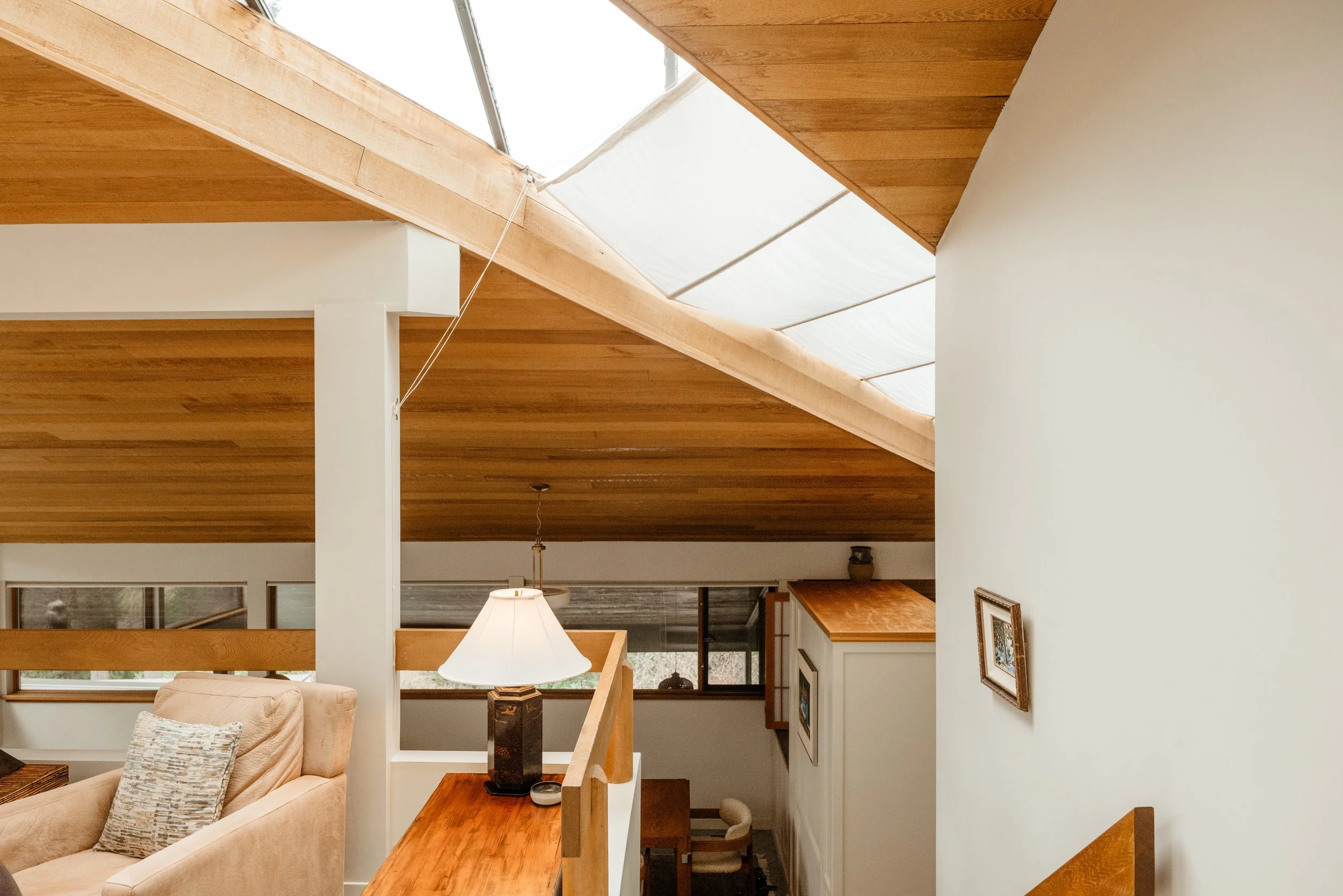
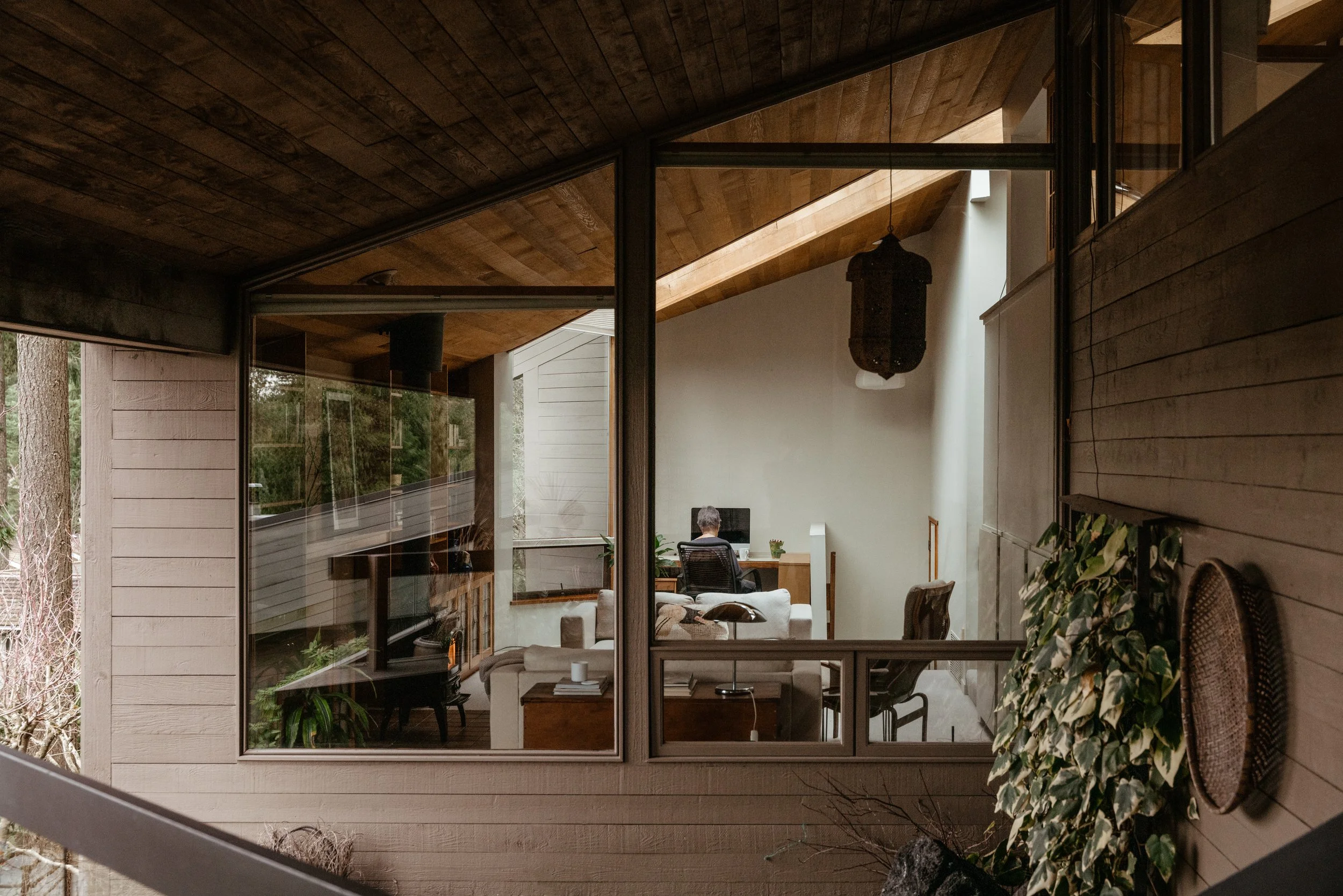
The tiered progression through the home’s short staircases creates an invigorating spatial flow, offering a variety of unique interior views both into adjacent rooms and outwards to the natural surroundings. This sense of openness is further articulated by the ceiling's geometry; tracing the roof's steep pitch, a dramatic skylight cuts diagonally across the entire length of the house. Drawing light downward, it casts an even glow deep into the core of the home.
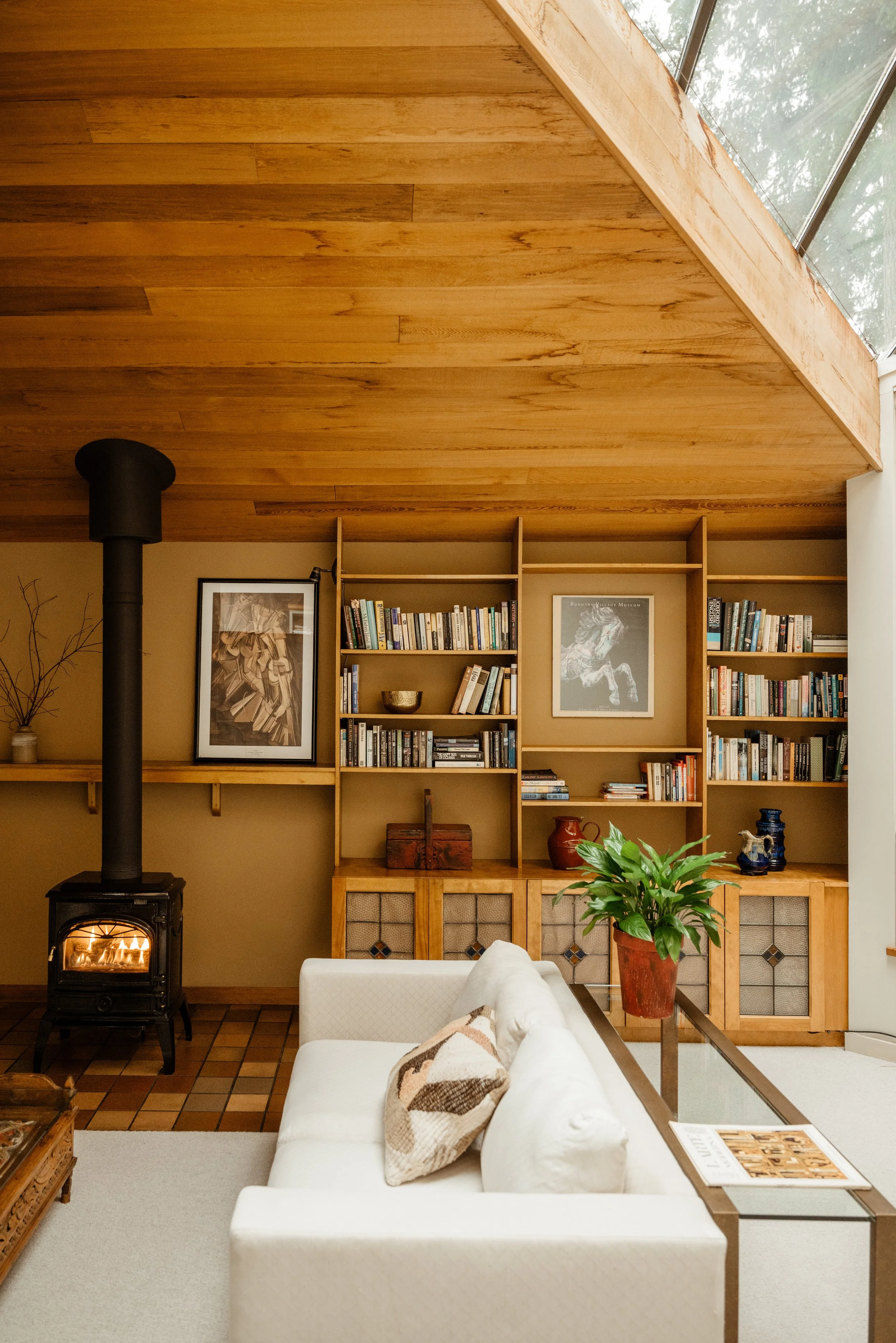
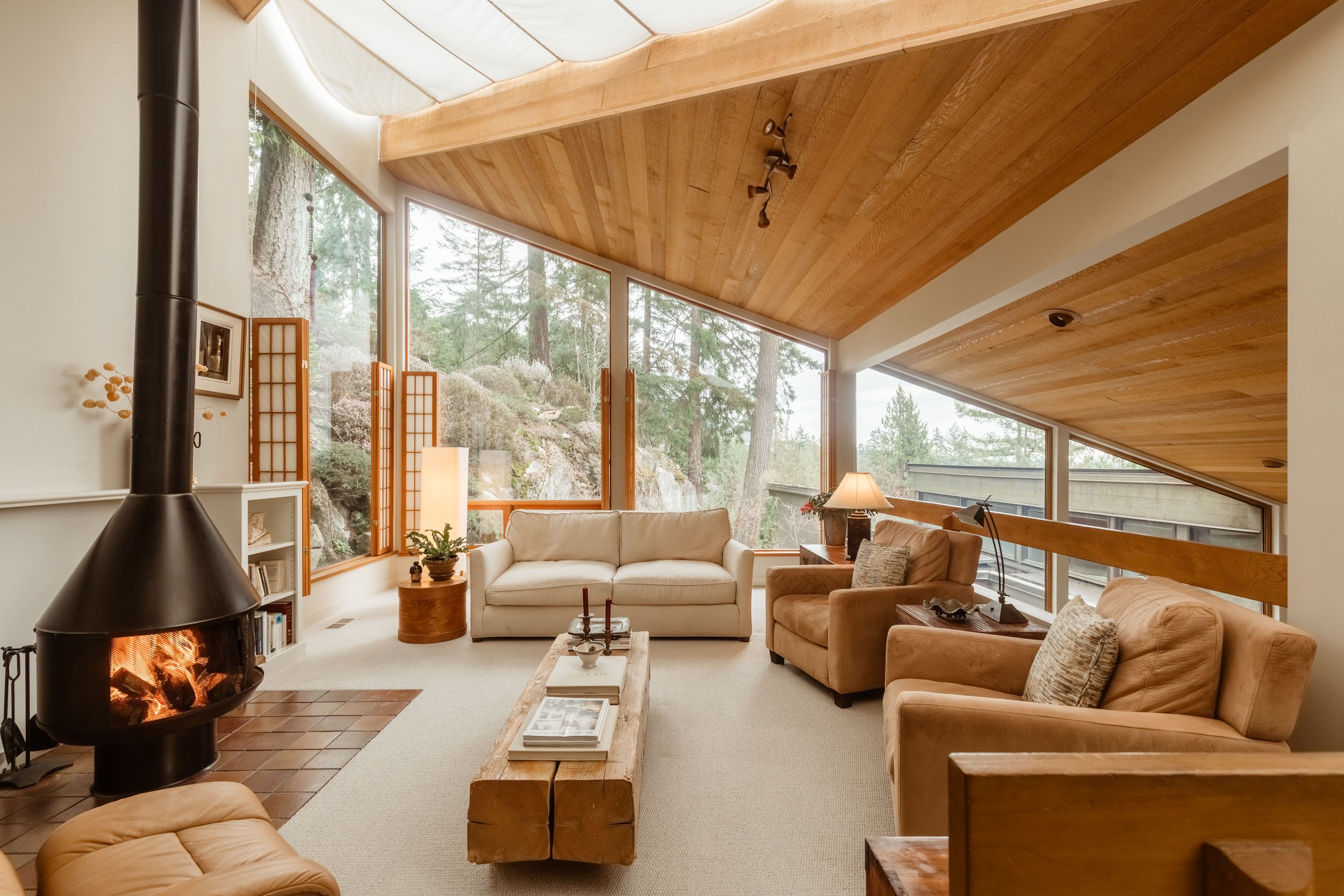
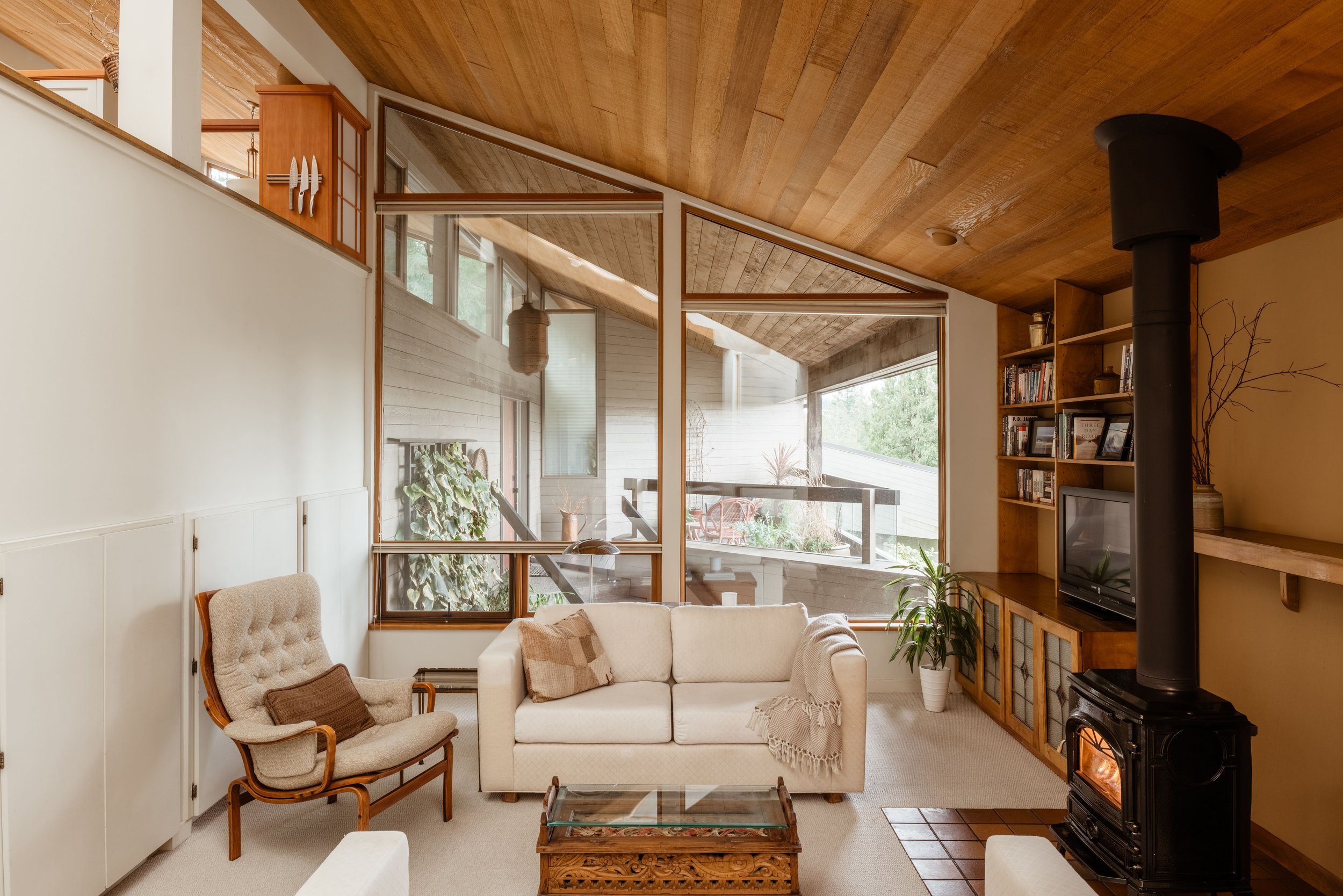
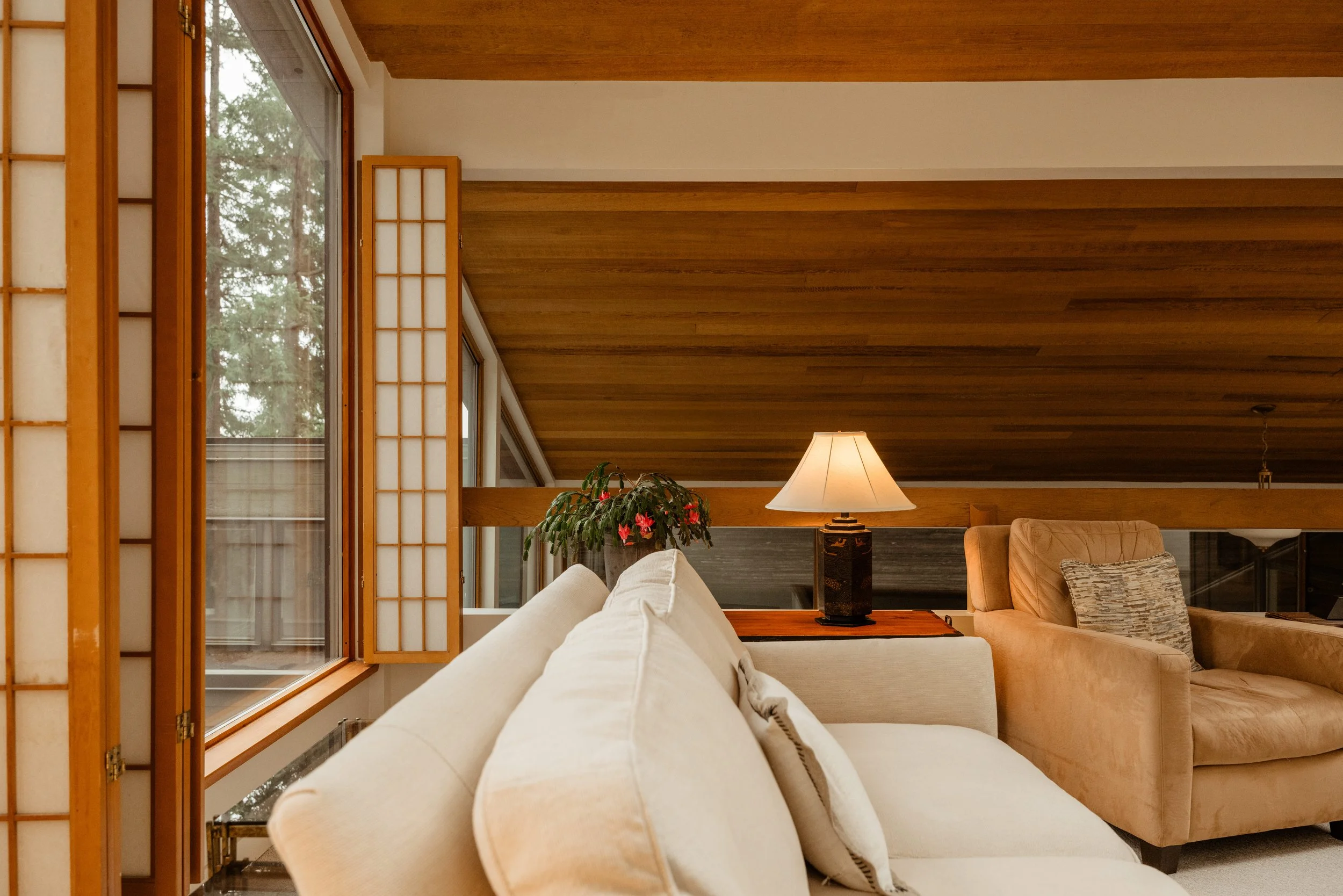
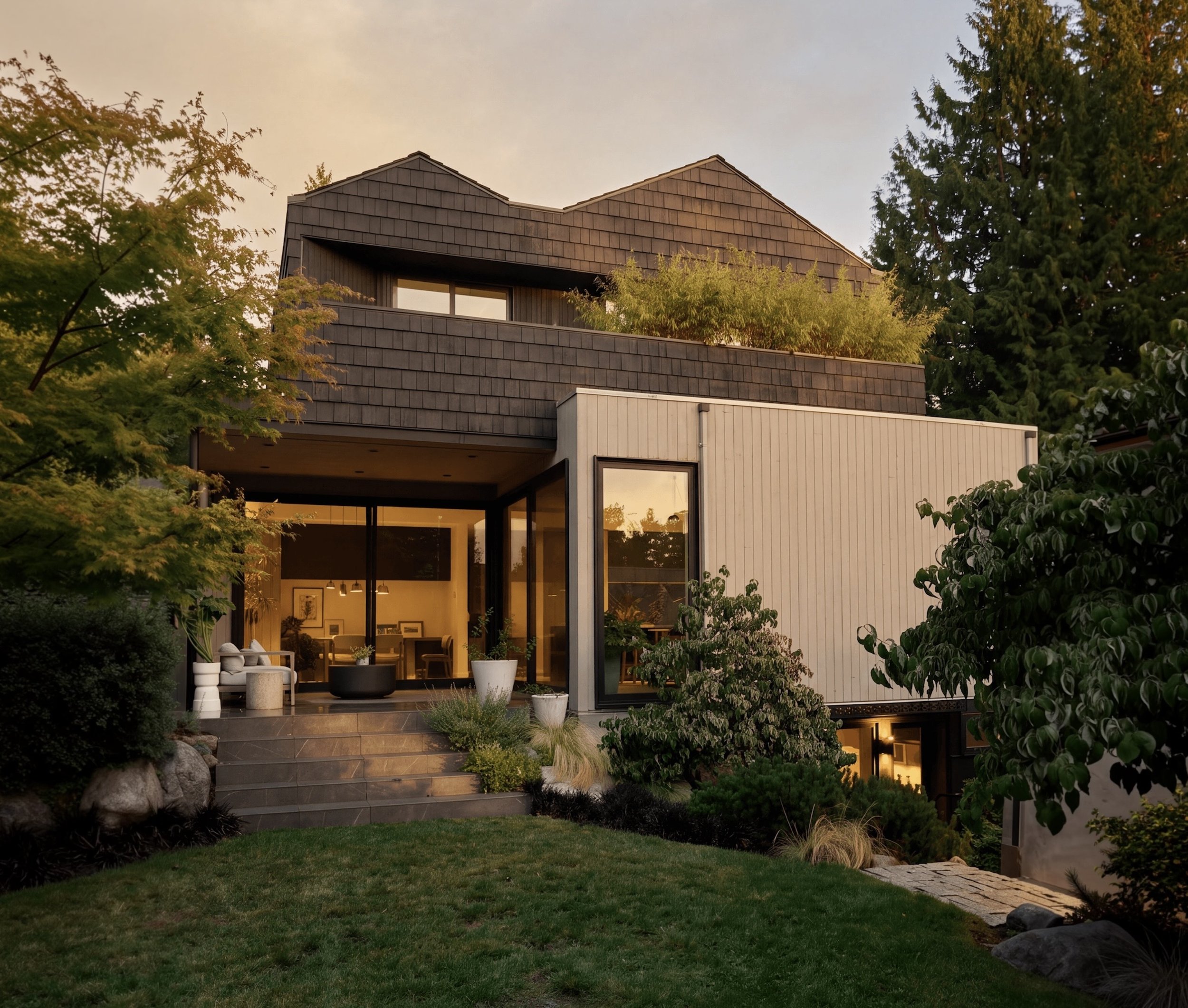
These design moves culminate in the living room, a beautifully realized space that defines the residence. Here, a warm, cedar-clad ceiling soars overhead, met by oversized windows that seamlessly follow the slope of the ceiling. An iconic mid-century freestanding fireplace anchors the room, fostering a feeling of being at one with the rugged granite outcroppings, mature gardens, and towering trees visible just beyond the glass.
Architecture for Memory
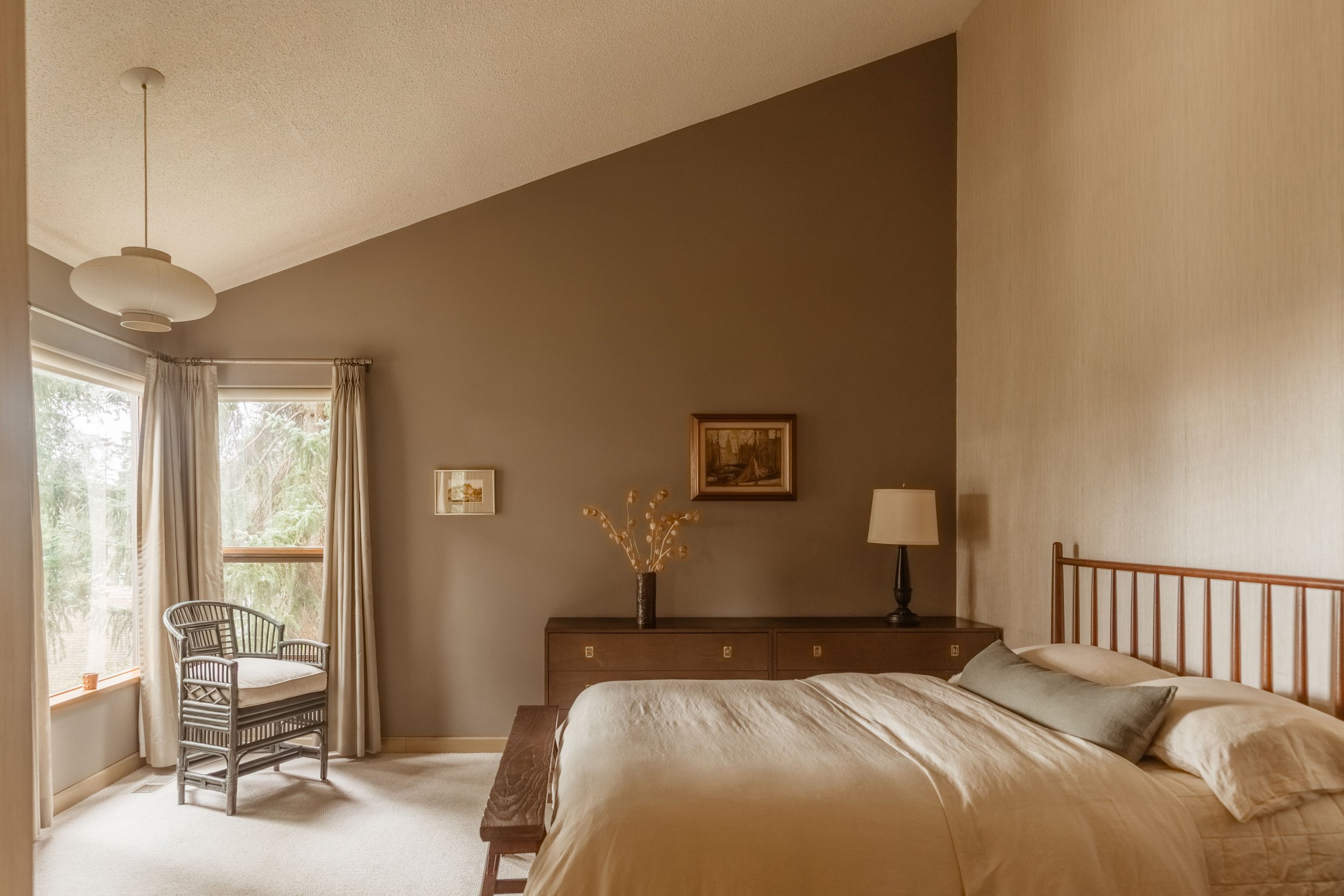
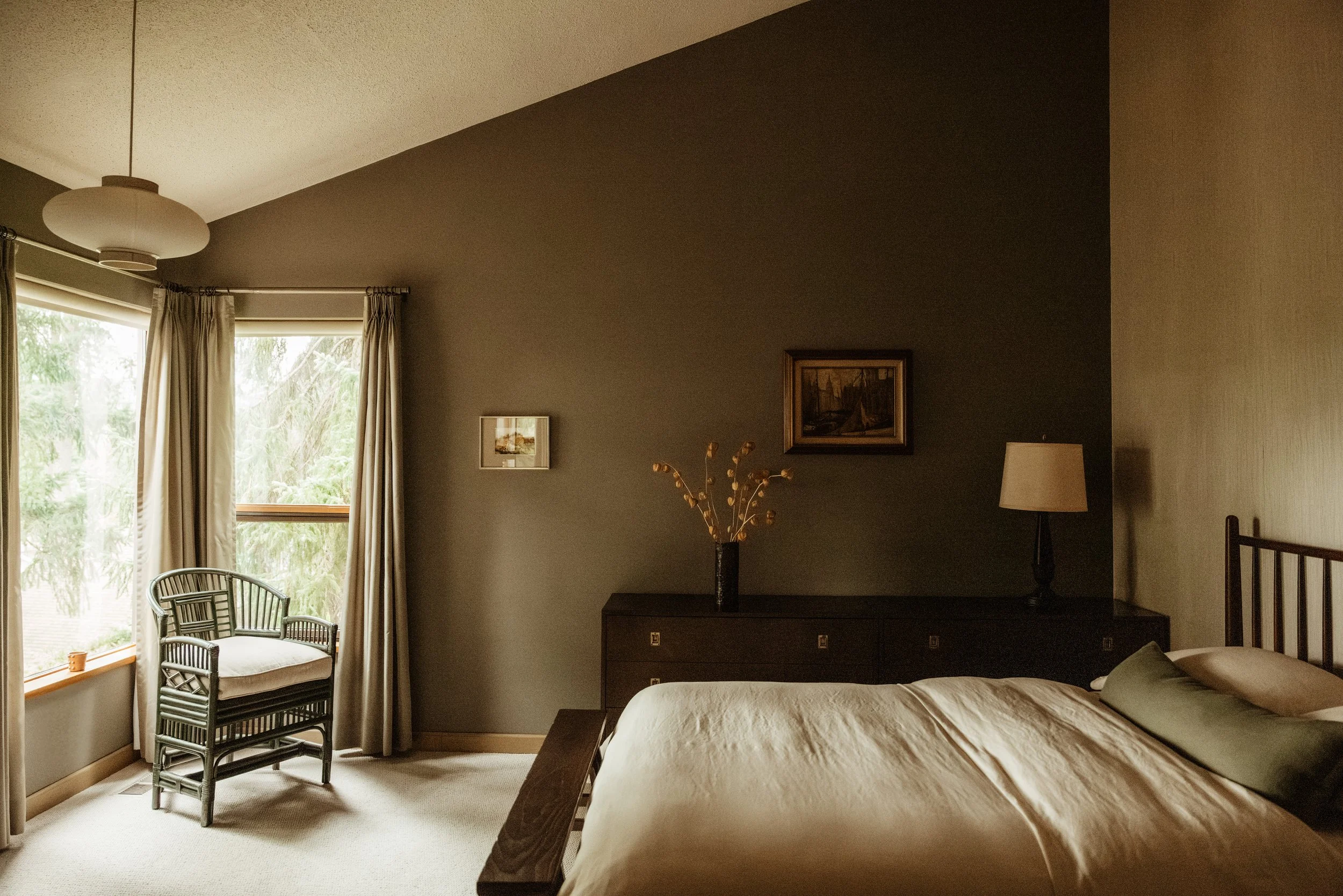
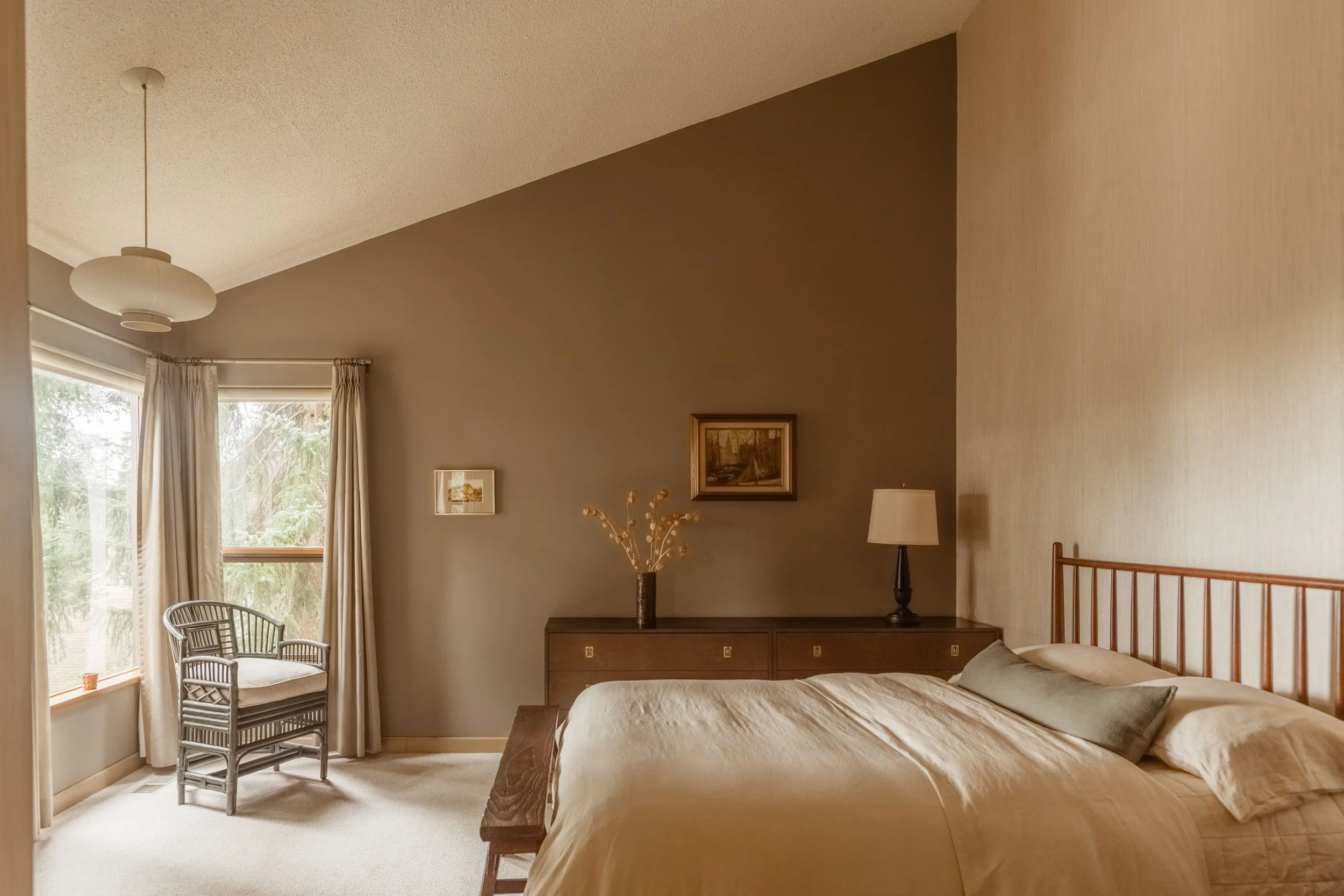
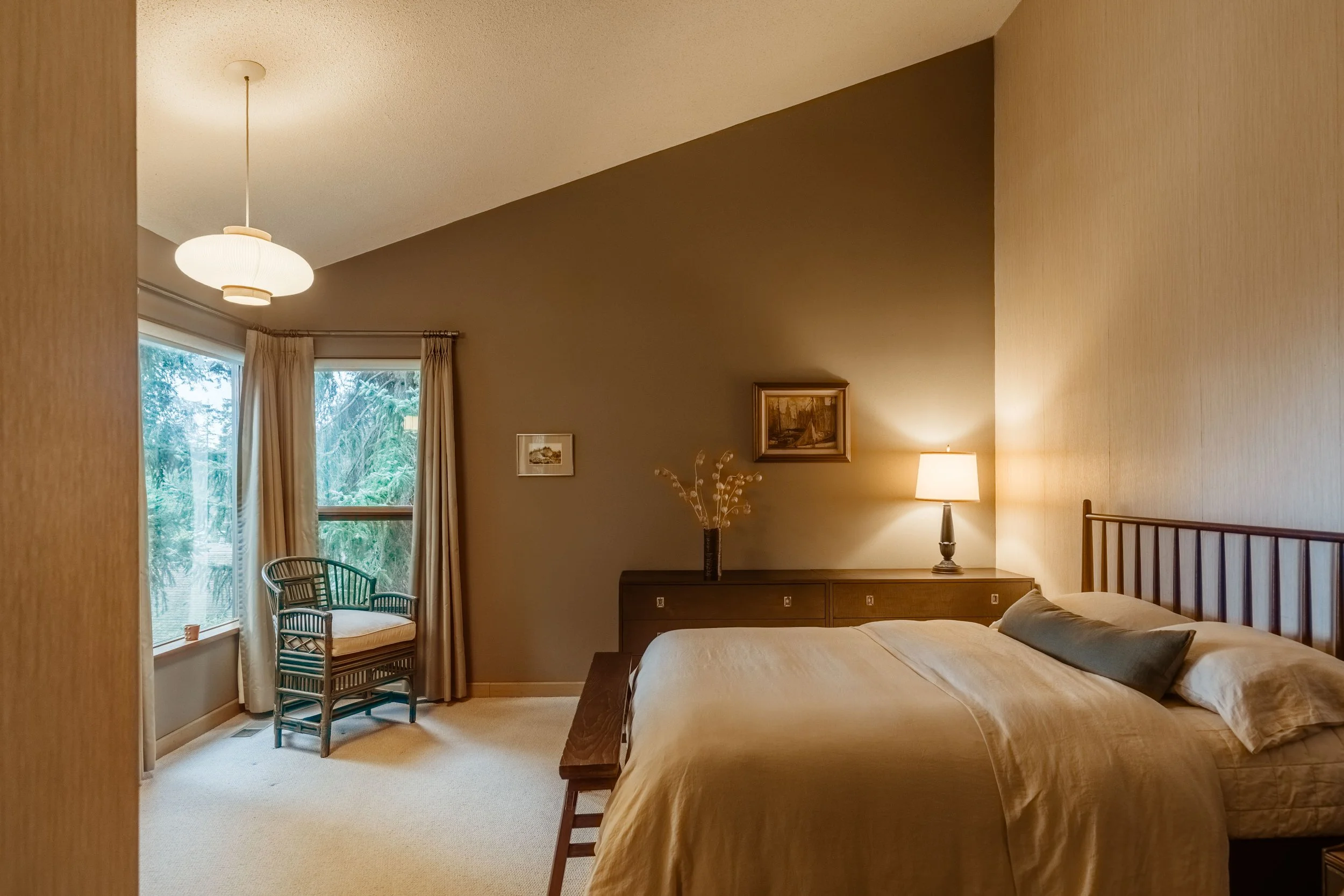
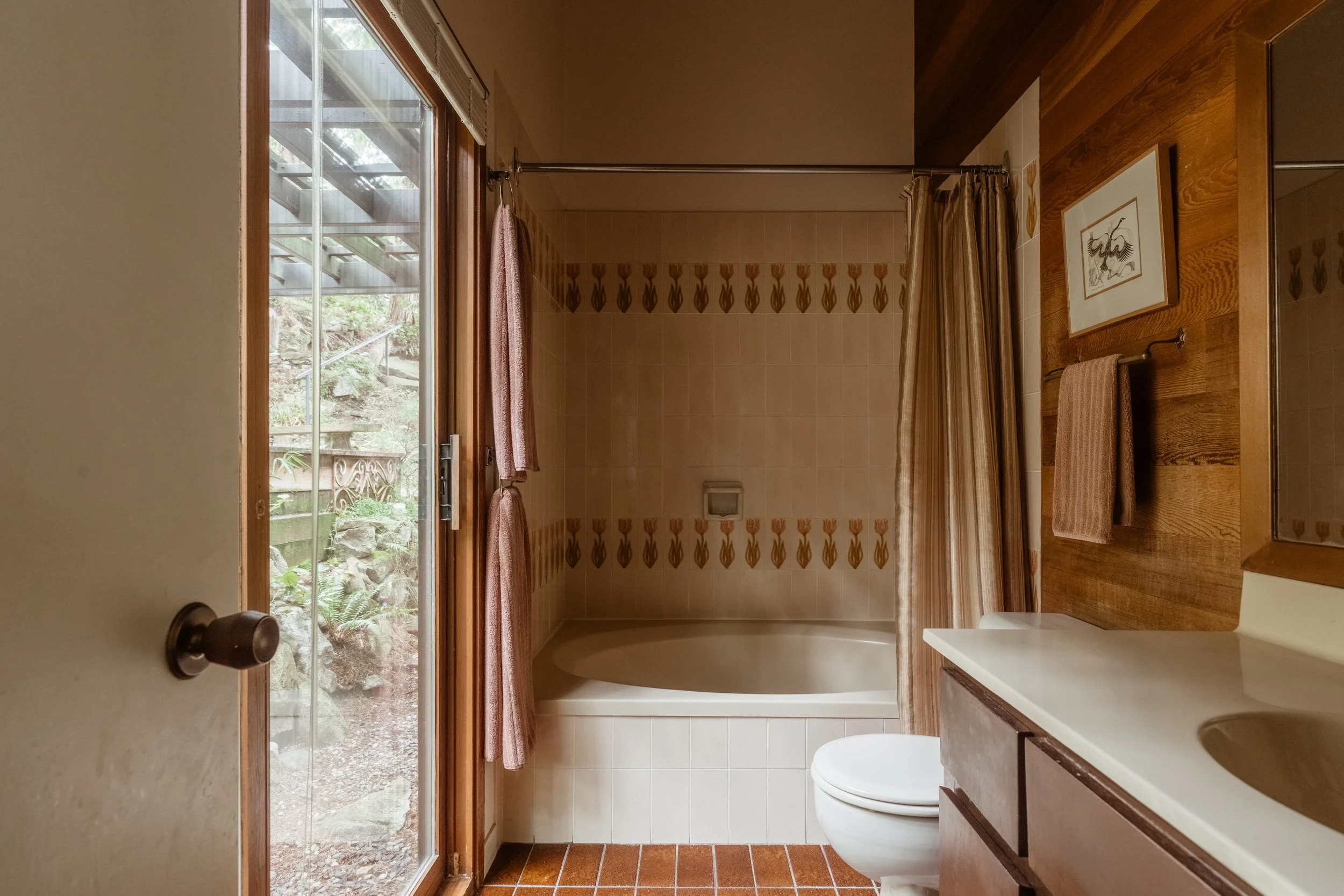
The private quarters echo this commitment to tranquility. The primary bedroom is quietly secluded, its discrete corner windows offering measured light while preserving intimacy. This immersion extends to the ensuite, where glazed sliding doors open directly onto a lush garden. On the lower level, a family room serves as a functional, grounded anchor at the base of the home’s cascading levels.
Tucked away on the lower level is a separate office suite complete with a dedicated photography darkroom and attached bathroom. The office itself frames a direct view of the courtyard’s gentle waterfall and reflecting pond, offering a serene space designed for quiet focus and inspiration.
Complementing these moments of intimacy, the home is further defined by thoughtful, human-scale details. Throughout the residence, custom millwork and strategically placed architectural niches provide dedicated moments for curation, allowing personal treasures to become an integral part of the home's fabric.
"Design is deeply important to us because it shapes how memories are made within a space - not only how it looks, but how it feels."
The Courtyard: Stone and Serenity
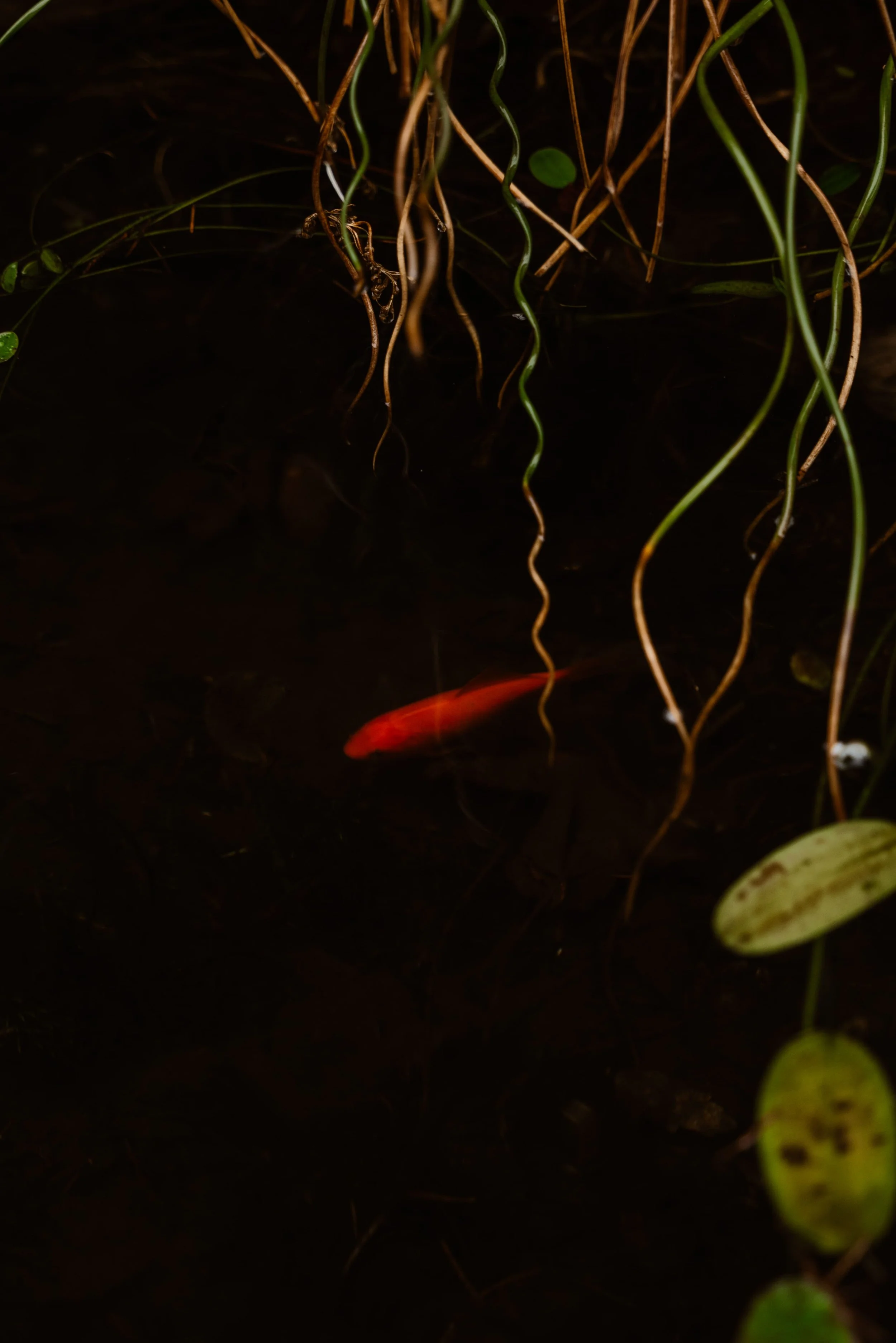
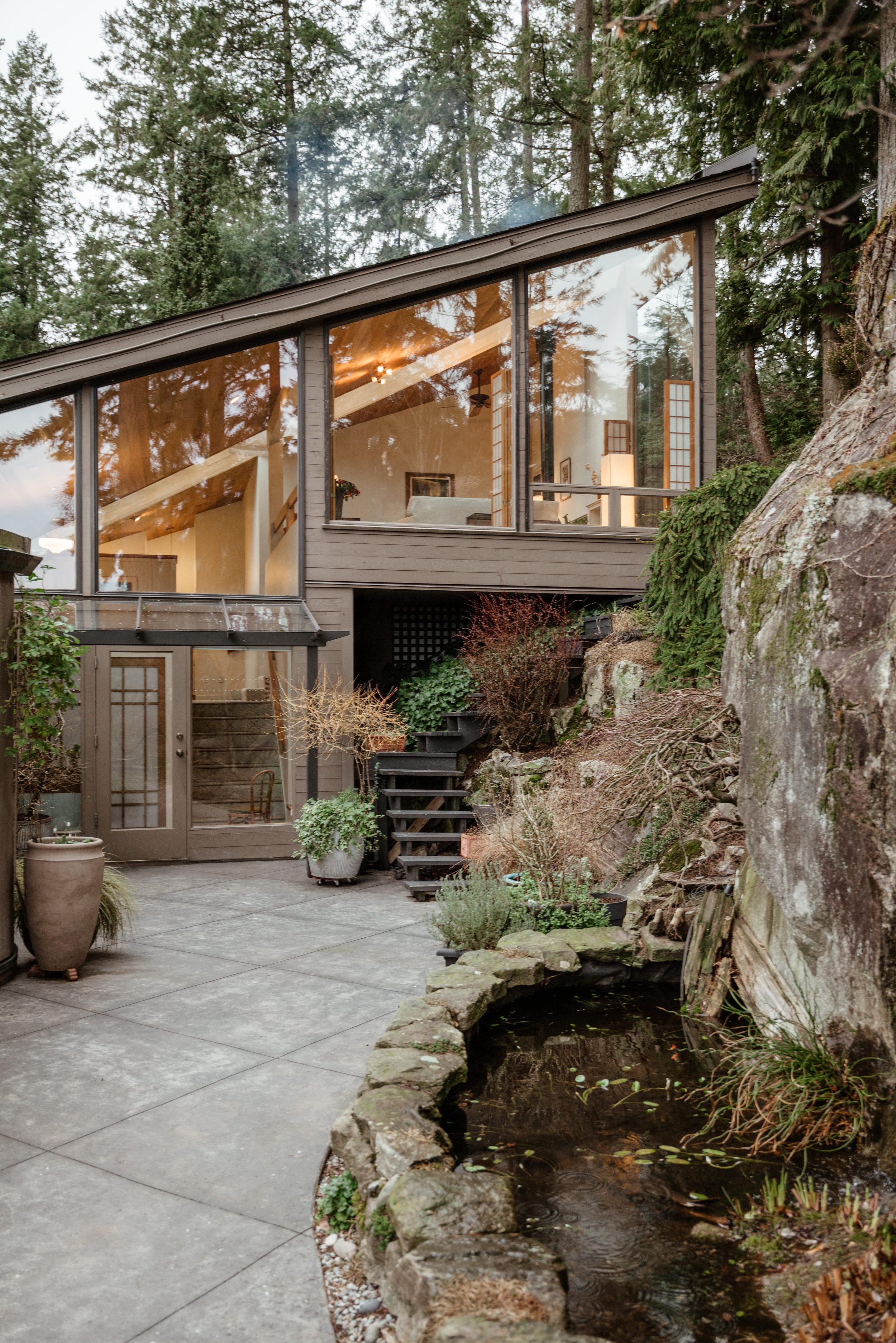
A defining feature of the home’s Japanese ethos is the serene outdoor courtyard, where the presence of the contemporary architecture and the permanence of the rocky landscape are felt. While the living and dining areas overlook this central space, a deliberate descent is required to reach the courtyard floor. This transition grounds the home’s social spaces to a quiet, contemplative level where a small, manmade pond reflects mossy flecks and exposed tree roots that cling to the nearby granite walls. It is a space that completes the home’s atmosphere of repose and sanctuary.
Awaiting Its Next Custodian
The residence serves as a clear expression of Japanese architectural principles, existing in continuous, intimate dialogue with the West Coast landscape. After decades of careful stewardship, the Arbutus House awaits its next custodian.
Home Facts
Name: Arbutus House
Address: 4639 Caulfeild Dr, West Vancouver, V7W 1E9
Neighbourhood: Caulfeild
Architect: Georg Koslowski
Builder: Bob Brody
Price: $2,398,000
Year Completed: 1979
Interior Living: Open concept with stepped living areas following steep landscape
Levels: 3
Bedrooms: 3
Bathrooms: 3
Interior Living: 2,423 sqft
Exterior Living: 1,329 sqft
Structural / Engineering Highlights:
- Built directly into steep landscape (no stilts)
- Minimal blasting during construction
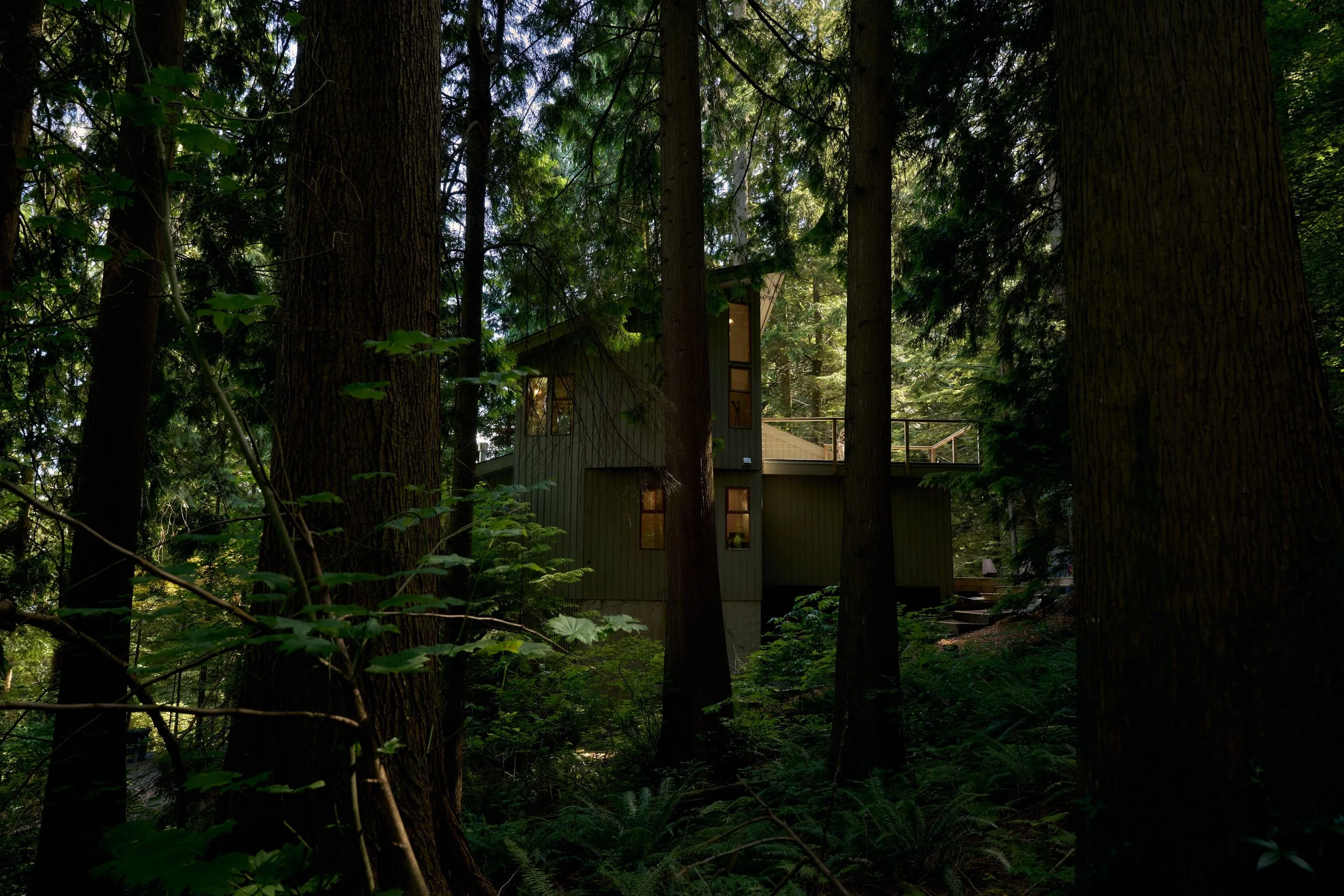
- Preserved existing trees and exposed root systems
- Continuous diagonal skylight running length of home
- Corner window connecting with skylight for uninterrupted vertical tree view
- Stepped floor plates following grade
Landscape and Planning:
- Designed to preserve existing mature trees
- Built into the land rather than over it
- Privacy-oriented siting
- Patio and courtyard shielded from neighbours
- Fish pond with waterfall in courtyard
- Mature fir, cedar, arbutus, and maple trees
- Full garden irrigation system
- Green belt setting
Key Materials:
- Glass
- Cedar siding
- Cedar ceilings
- Tile flooring
- Broadloom carpet (recently installed)
- Concrete kitchen countertops
- Glass and marble bathroom counters
- Original built-in millwork
- Custom kitchen cabinetry (early 2000s)
Views / Orientation:
- East-facing primary glazing
- Views to green belt
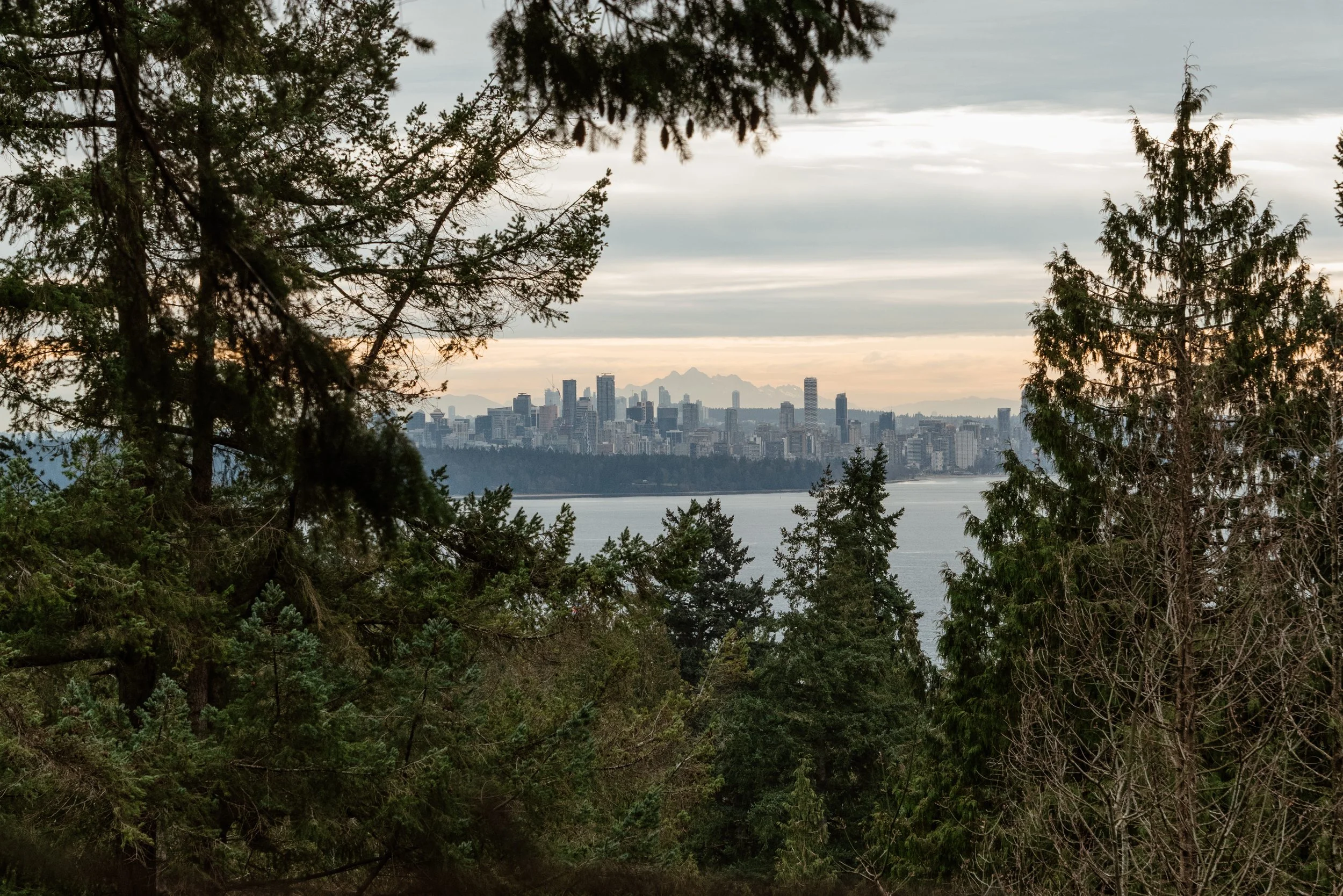
- Distant ocean views
- Continuous framed view of tall cedar tree
Features:
- High vaulted ceilings
- Diagonal skylight spanning entire home
- Mudroom with separate entrance
- Enormous natural light
- Extensive built-in storage
- Open-concept plan
- Double wall oven
- Gas cooktop with downdraft
- Panel-integrated refrigerator and dishwasher
- Original Scandinavian pendant in primary bedroom (purchased Gastown, late 1970s)
Now on Tour in West Vancouver
Reserve your private architectural tour.
Download the Story
Download a print-ready version of this feature.


Want to see more West Coast Modern homes?
Get Early Access to the Next West Coast Modern Home.