
Resort House
On the Market
Resort House by Bob Lewis, 1957
British Properties, West Vancouver
Photography by James Han
Story by Nadine Cuttingham
Where West Coast Modern met the good life, and never left.
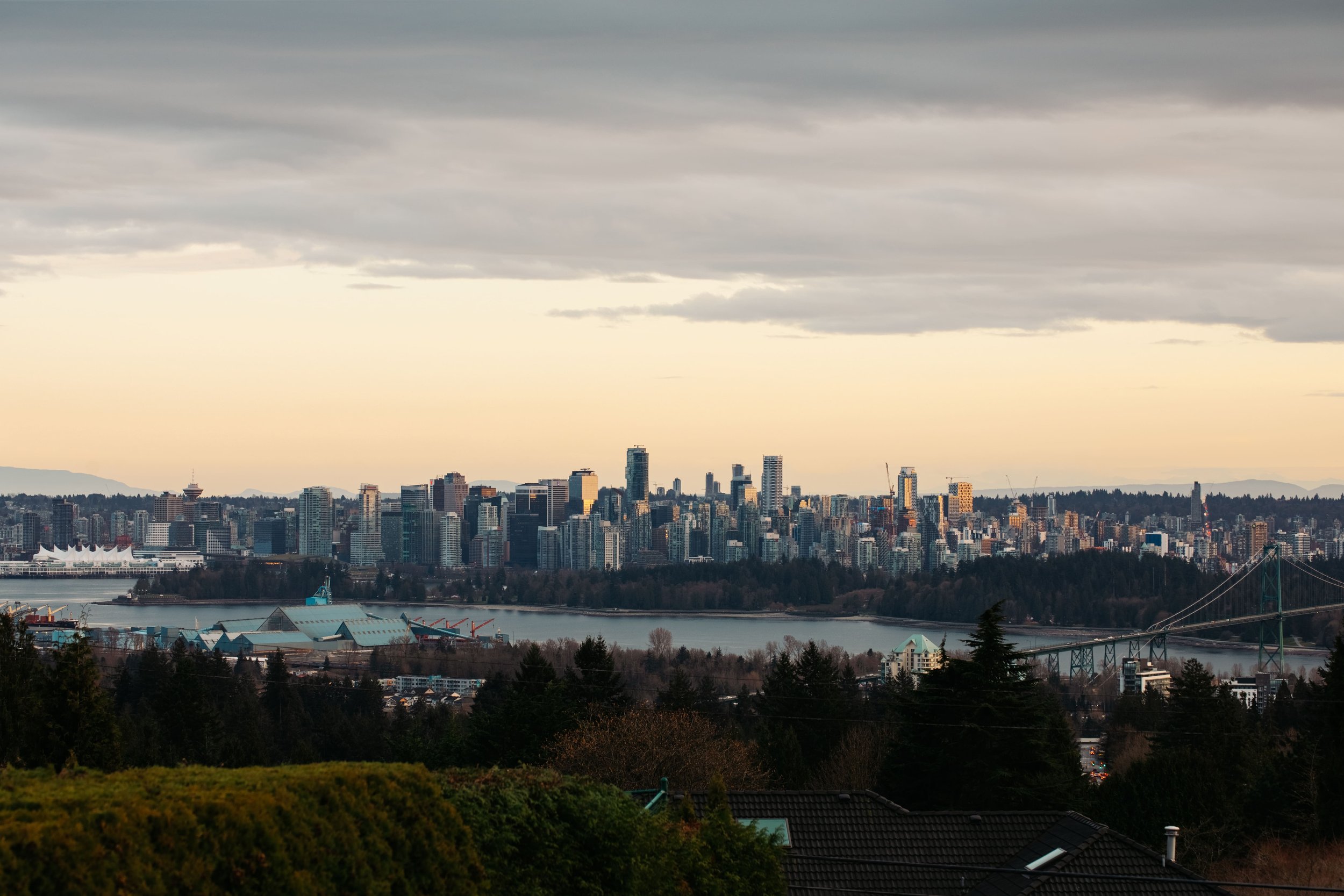
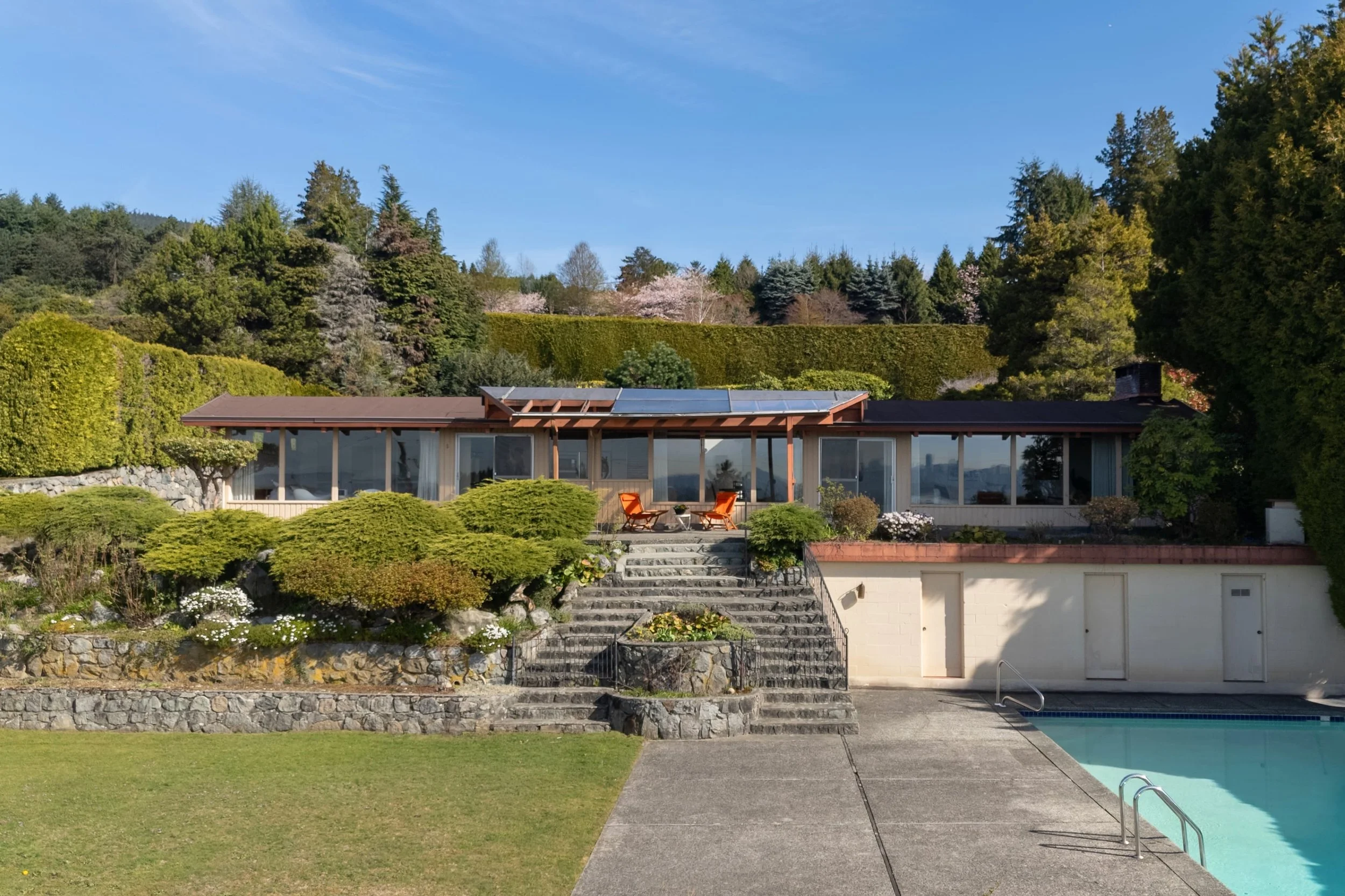
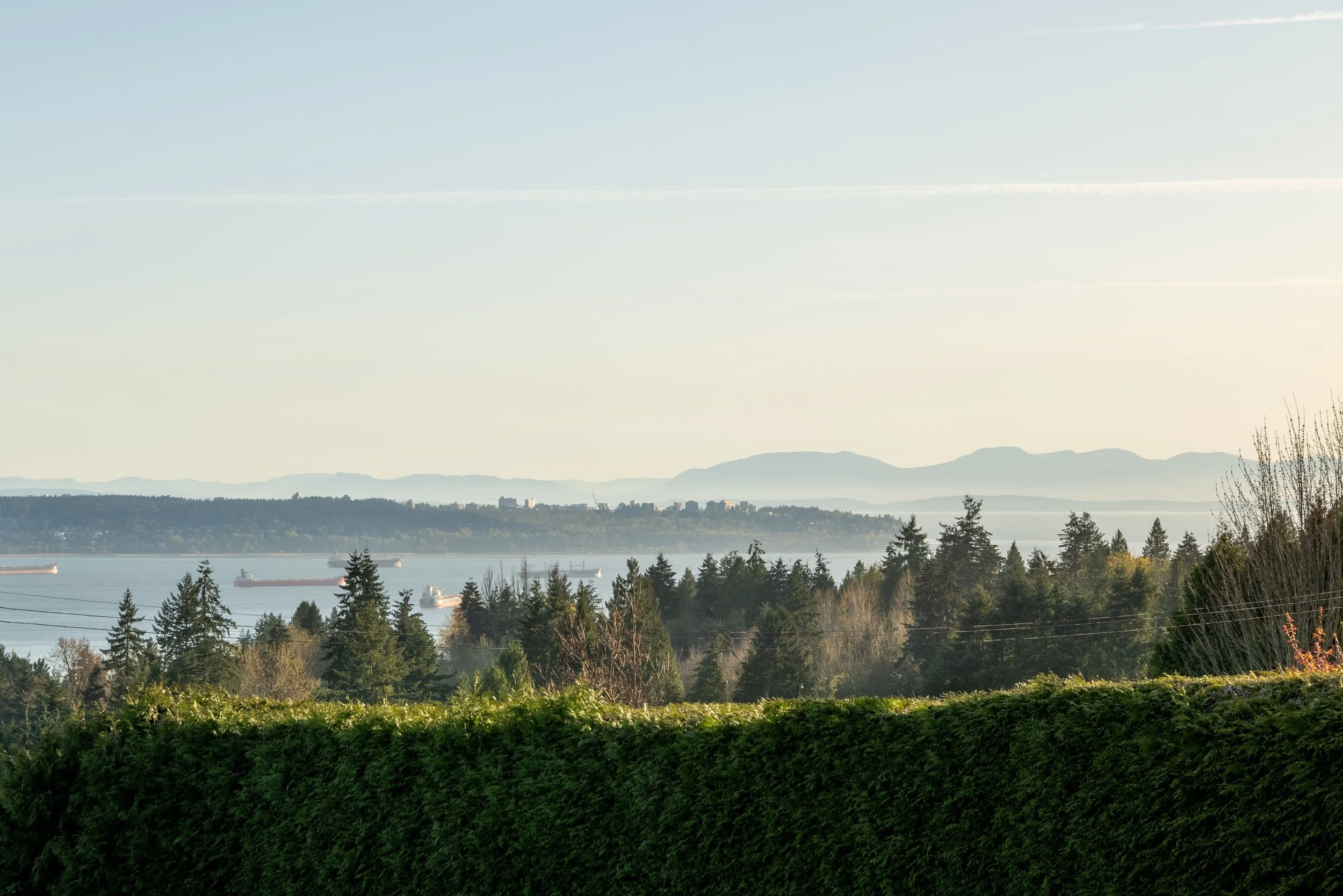
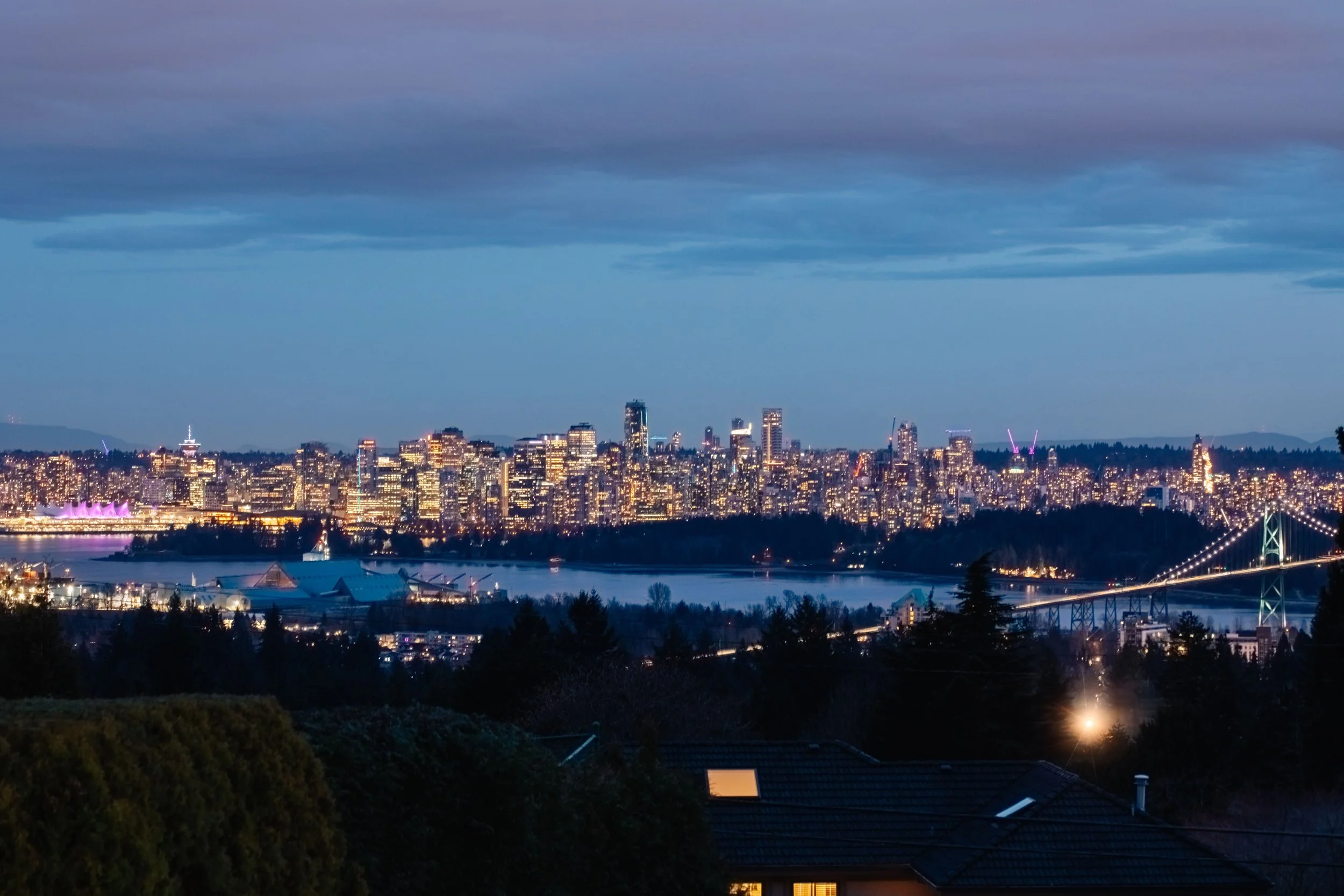
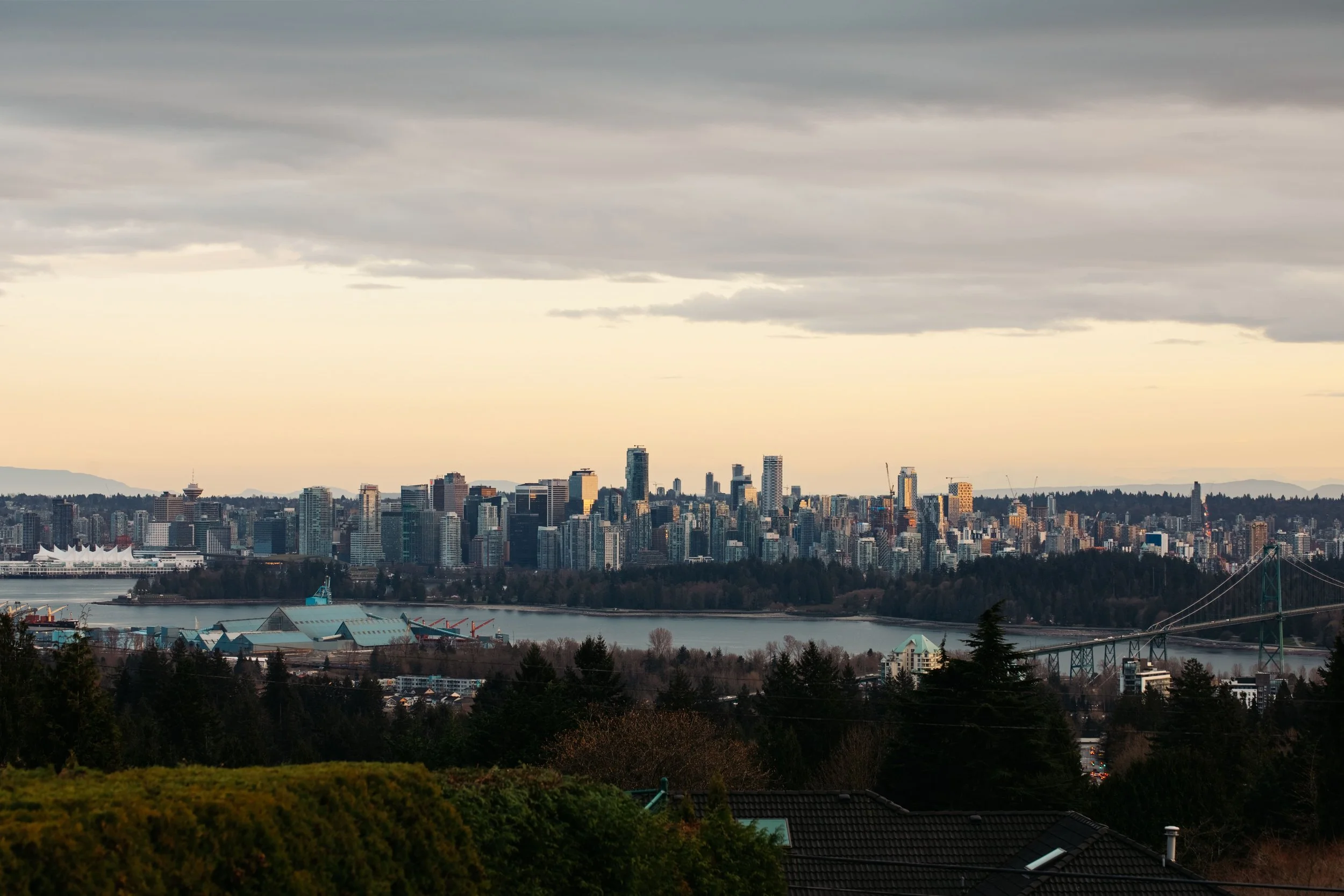
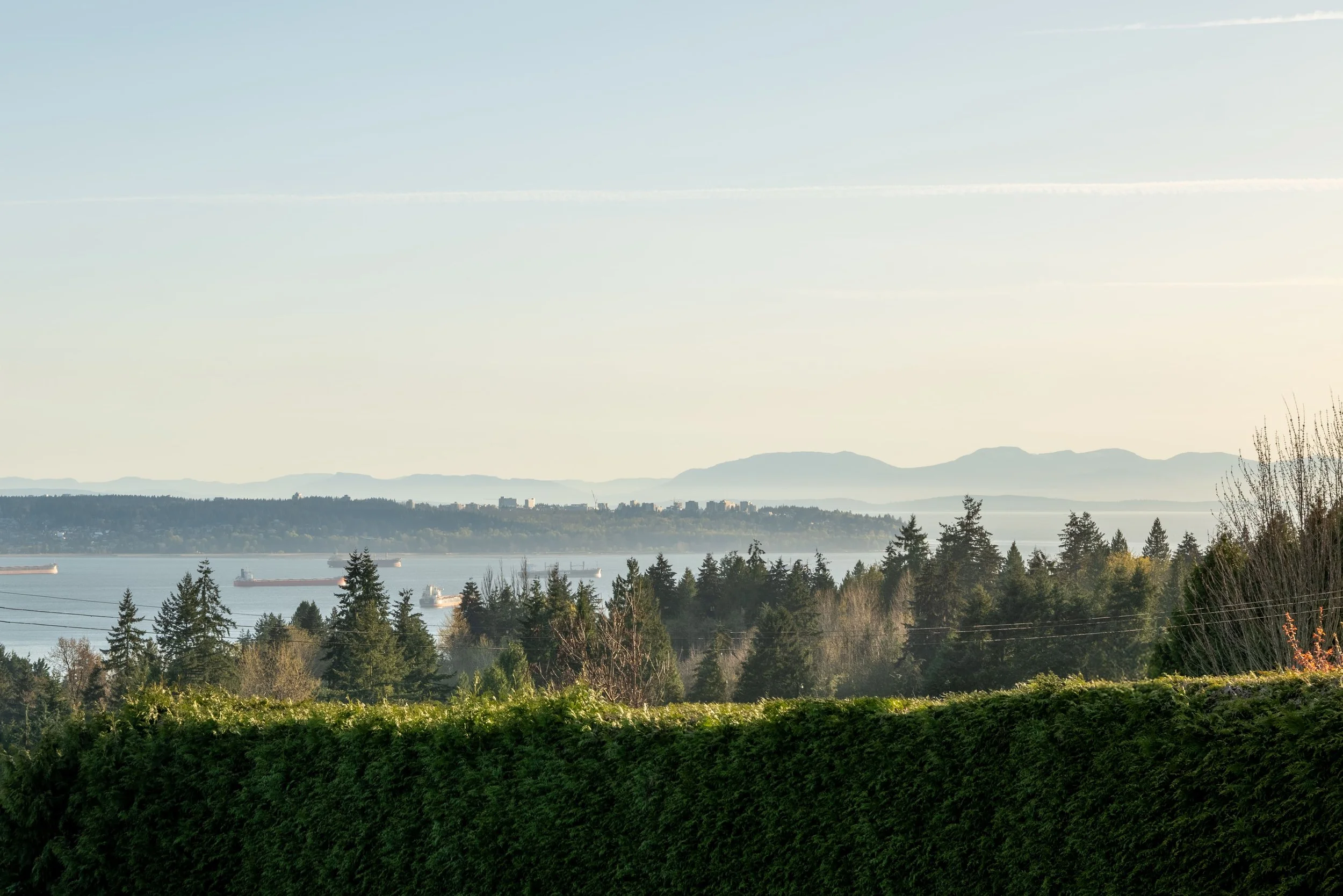
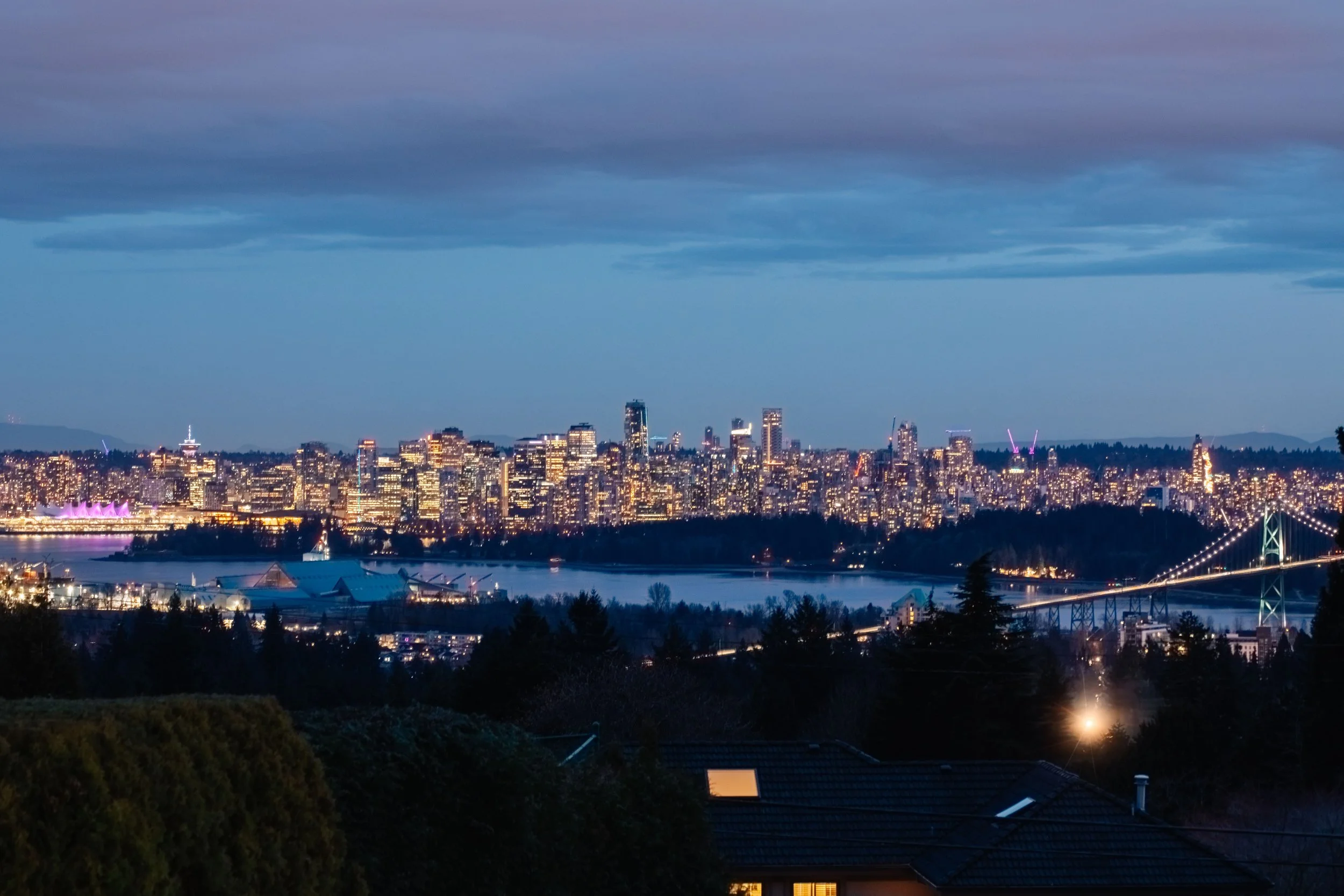
At the end of a quiet driveway on one of West Vancouver's most storied streets sits a house that is largely concealed and yet has been hiding in plain sight for nearly seventy years. Built in 1957 by Bob Lewis, the pioneering builder whose post-and-beam homes did more than any other to bring West Coast Modernism to a mainstream audience, the Resort House is at once a landmark of mid-century domestic architecture and something rarer still: a home shaped as much by a passion for living well as by the hand of its builder. Set on 0.6 acres, the property contains a world unto itself: views stretching from Mount Baker to Vancouver Island, taking in the entire downtown skyline a pool, a tennis court, and six decades of a single family's life, a family that called it the Resort, and built a life here defined by health, vitality, and a genuine love of living well.
Bob Lewis and the Golden Mile
To understand the Resort House is to understand the man who built it. Robert Gordon Lewis was a Vancouver native whose early career led him to the shipyards of Burrard Dry Dock, where he worked as a welder during the Second World War. It was a practical education, one that shaped the directness and material honesty that would come to define his architecture. By 1954, Lewis had founded Lewis Construction, and within a decade the firm was building upwards of a hundred homes a year. To date, the North Shore Heritage have identified some 750 homes bearing his name across the southern coastal regions of British Columbia, a body of work that made him arguably the single most important figure in bringing West Coast Modernism from the studios of its pioneers into the fabric of everyday domestic life.
Lewis's method was as economical as it was elegant. His post-and-beam homes were laid out on a four-foot structural grid of solid wood posts and beams, a system that eliminated load-bearing walls, permitted generous expanses of glazing, and allowed the plan to be adapted freely to the needs of each family. Floors and roofs were constructed of tongue-and-groove cedar boards, carried beyond the exterior walls to create deep overhangs that materially bridged the indoors and outdoors. The result, repeated across hundreds of homes, was never repetitive: each house took on an identity shaped by its site, its owners, and the rhythms of the family within.
The Resort House sits on Fairmile Road, within the stretch of the British Properties known colloquially as the Golden Mile, one of the most exclusive addresses in West Vancouver. In the 1950s and 60s, these same hillsides were a proving ground for West Coast Modernism, where architects of the stature of Arthur Erickson, Ned Pratt, and Fred Hollingsworth were developing the principles of site integration and truth to materials that would define the movement. While the architectural ambitions of the neighbourhood have since shifted toward the opulent and the classical, the Resort House stands as a quiet counter-argument: a reminder that the most enduring homes are not always the largest, and that the West Coast Modern rancher, modest in its street presence and generous in everything else, has lost none of its relevance.
Beyond its architectural significance, the Resort House enjoys a setting of rare convenience and character. The seaside communities of West Vancouver are moments away, as are some of the region’s most respected schools including Westcot and Collingwood. Also close at hand are the Hollyburn Country Club and Capilano Golf and Country Club, both longstanding pillars of the West Vancouver community. It is a neighbourhood that has long attracted those who understand the relationship between a well-designed home and a well-lived life.
House Form
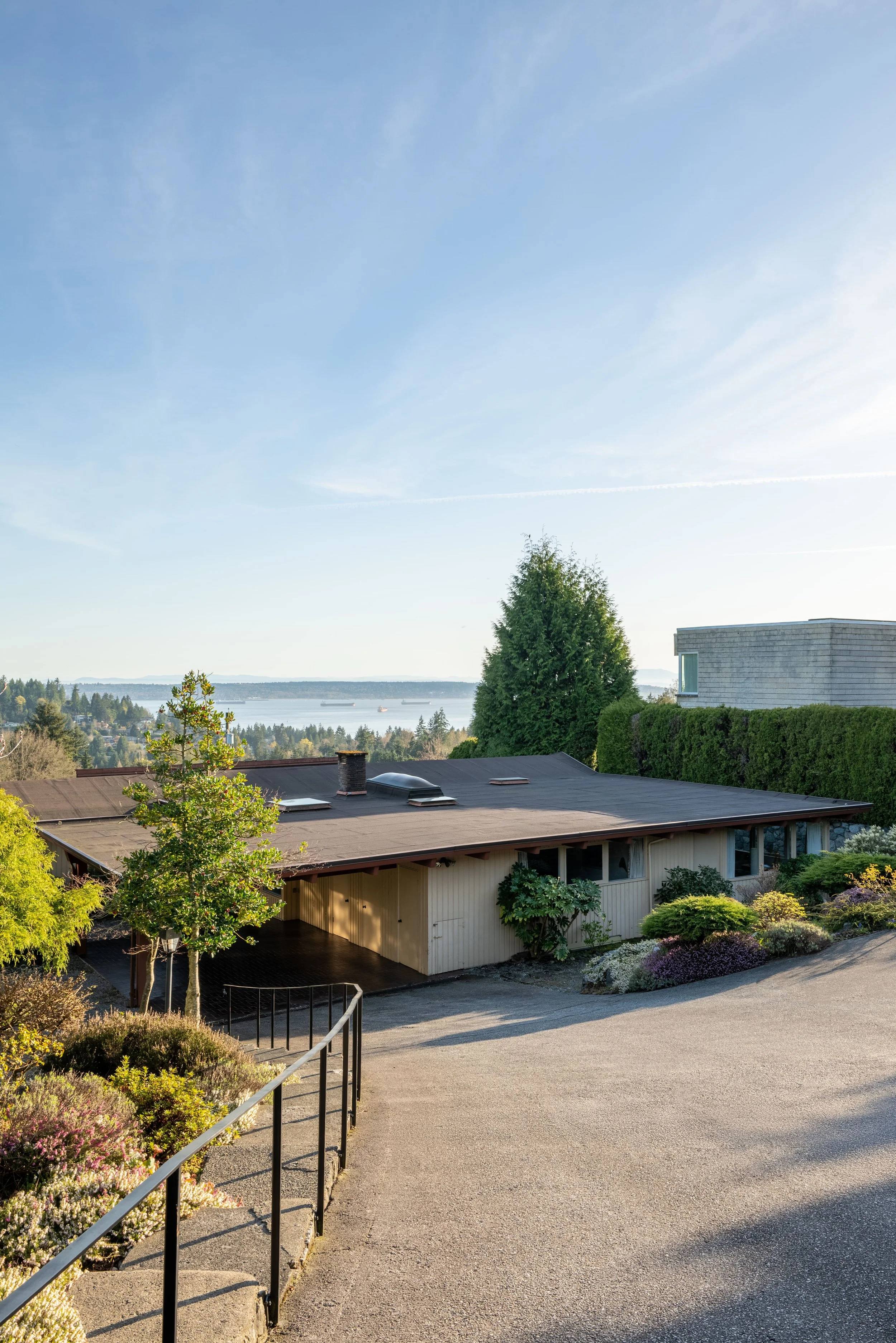
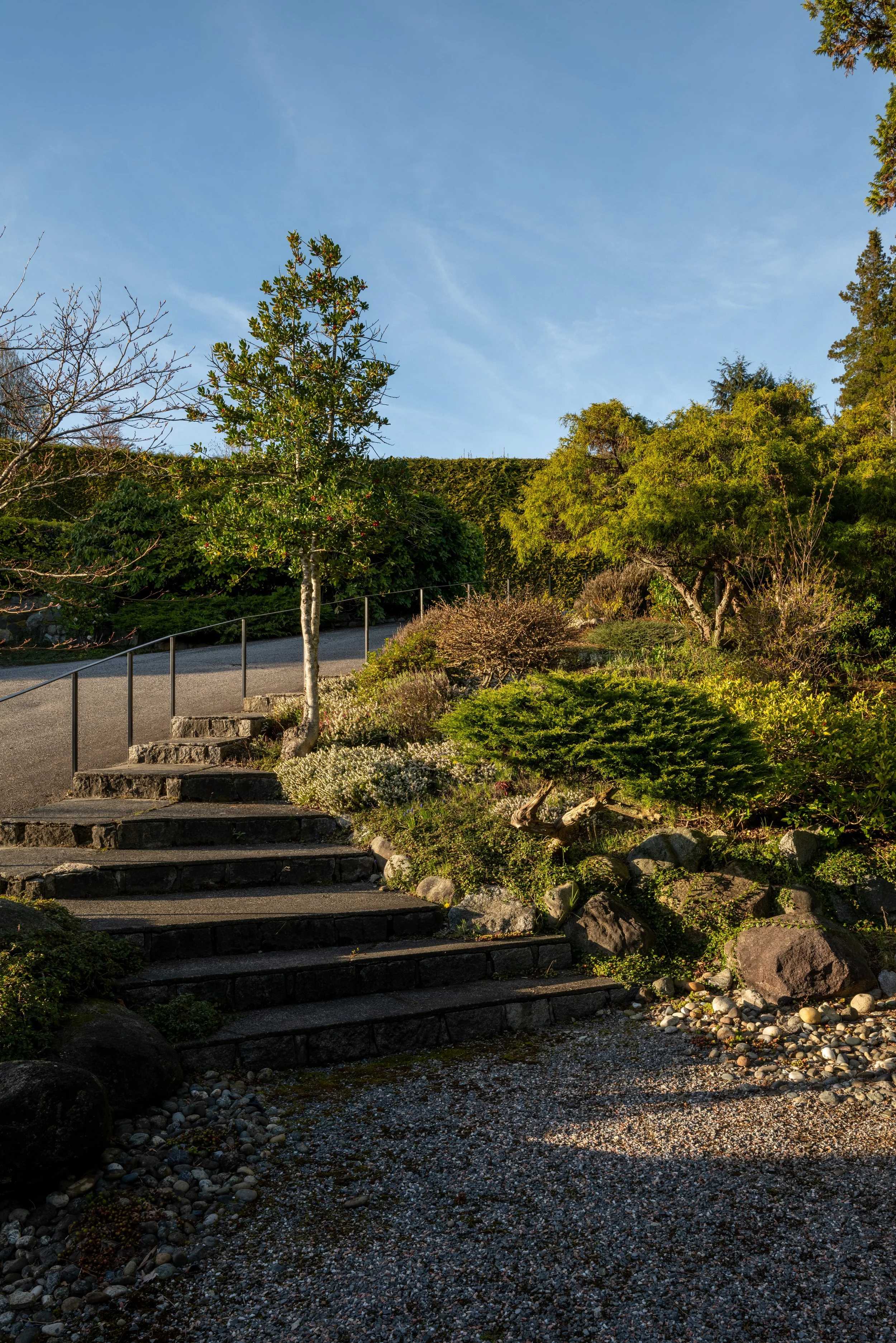
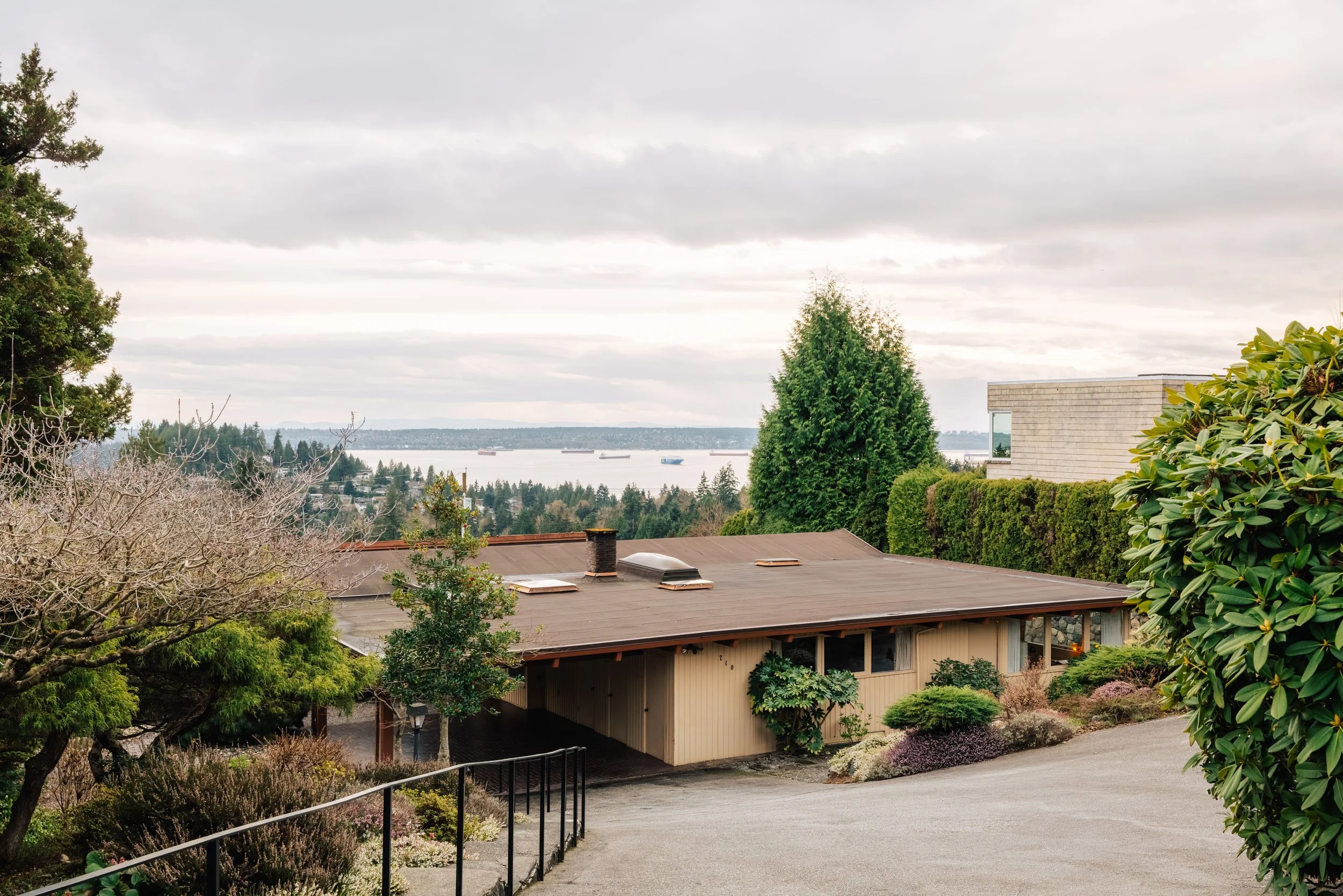
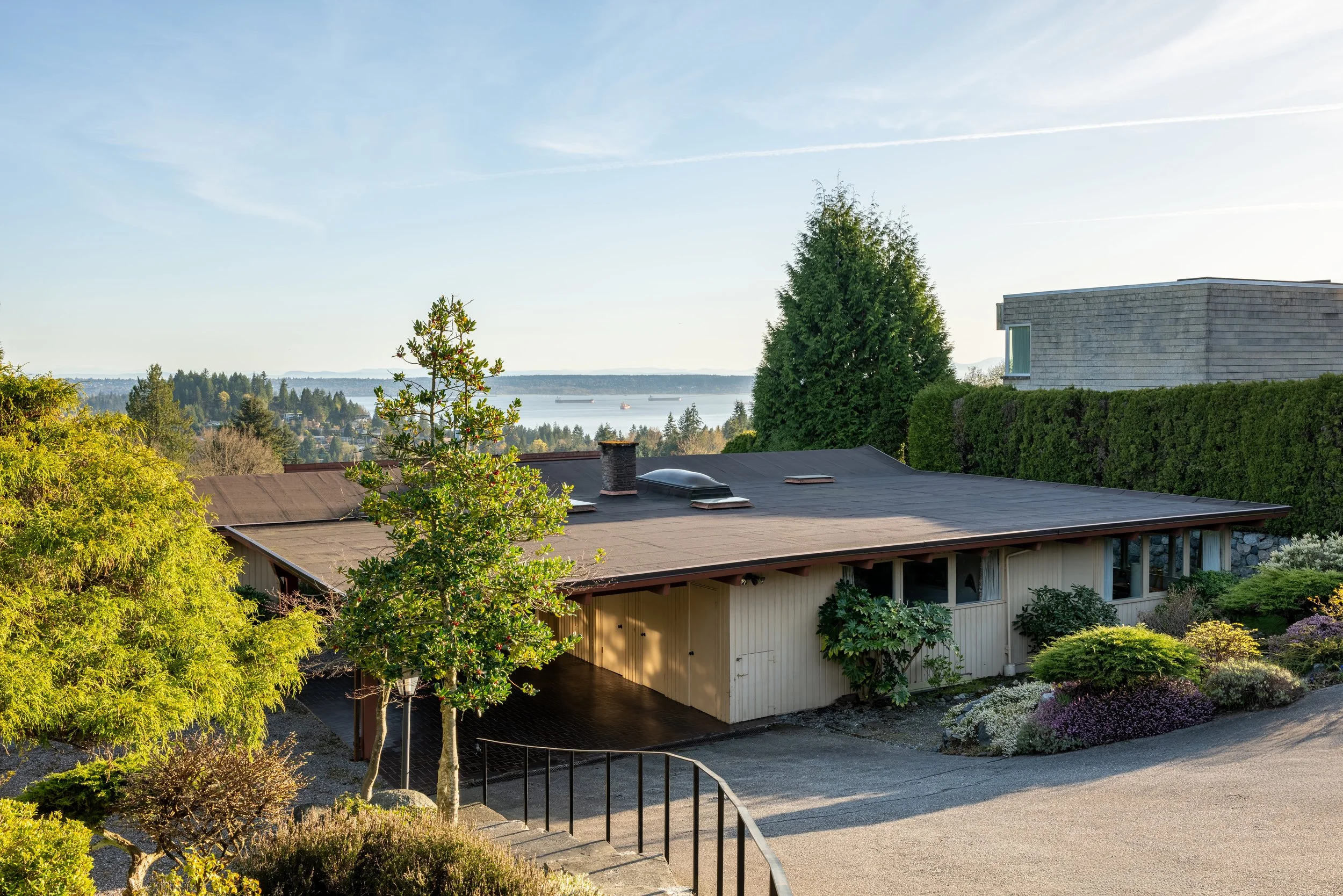
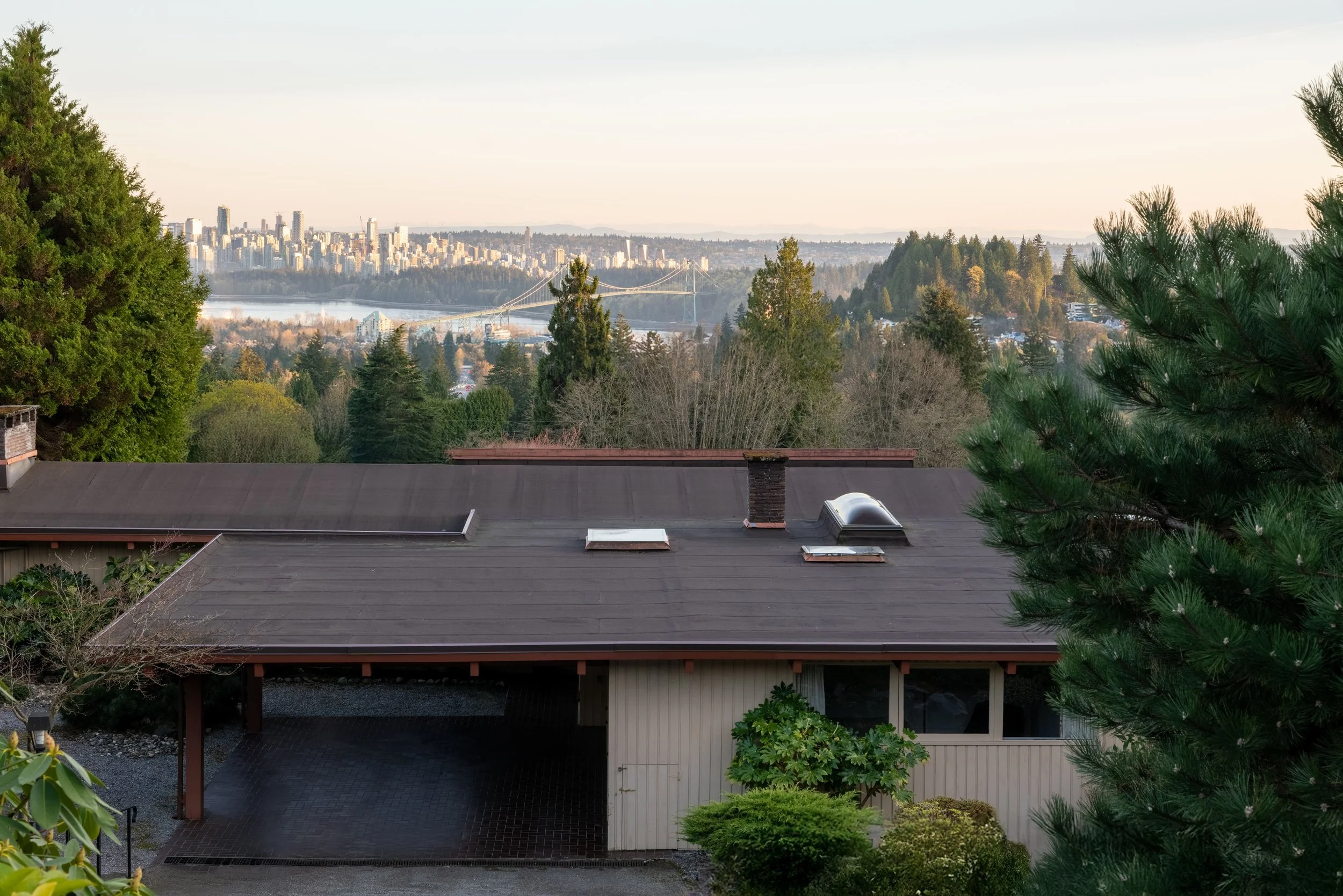
From Fairmile Road, the Resort House reveals almost nothing of itself. Positioned below the street on a gently descending lot, the home sits low enough that only its roofline is visible from the road, a single horizontal plane that gives no indication of the spaces below or the landscape beyond. It is a quality the home shares with the finest examples of its type: the conviction that arrival should be earned, and that restraint at the street makes everything that follows more generous by contrast.
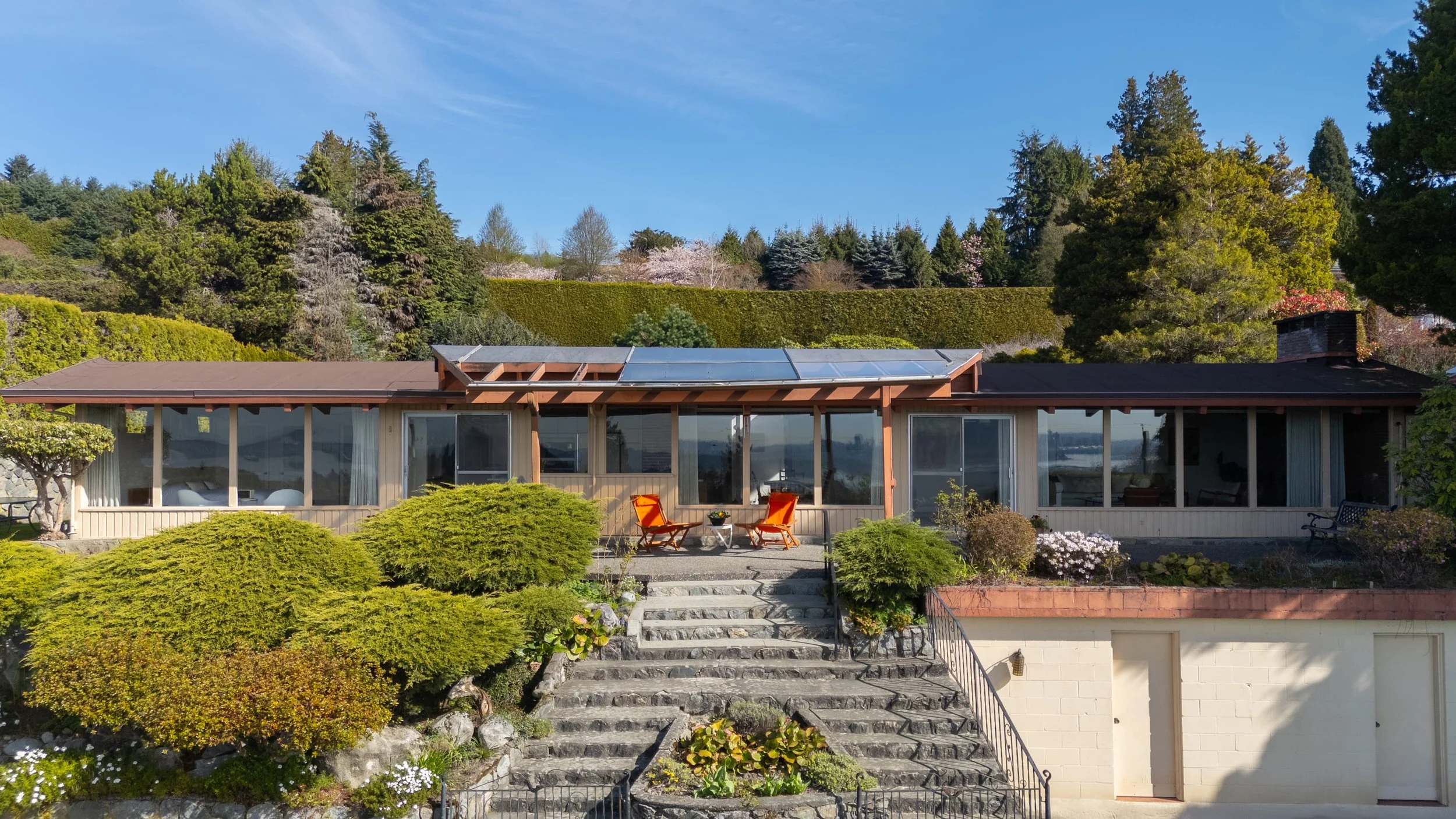
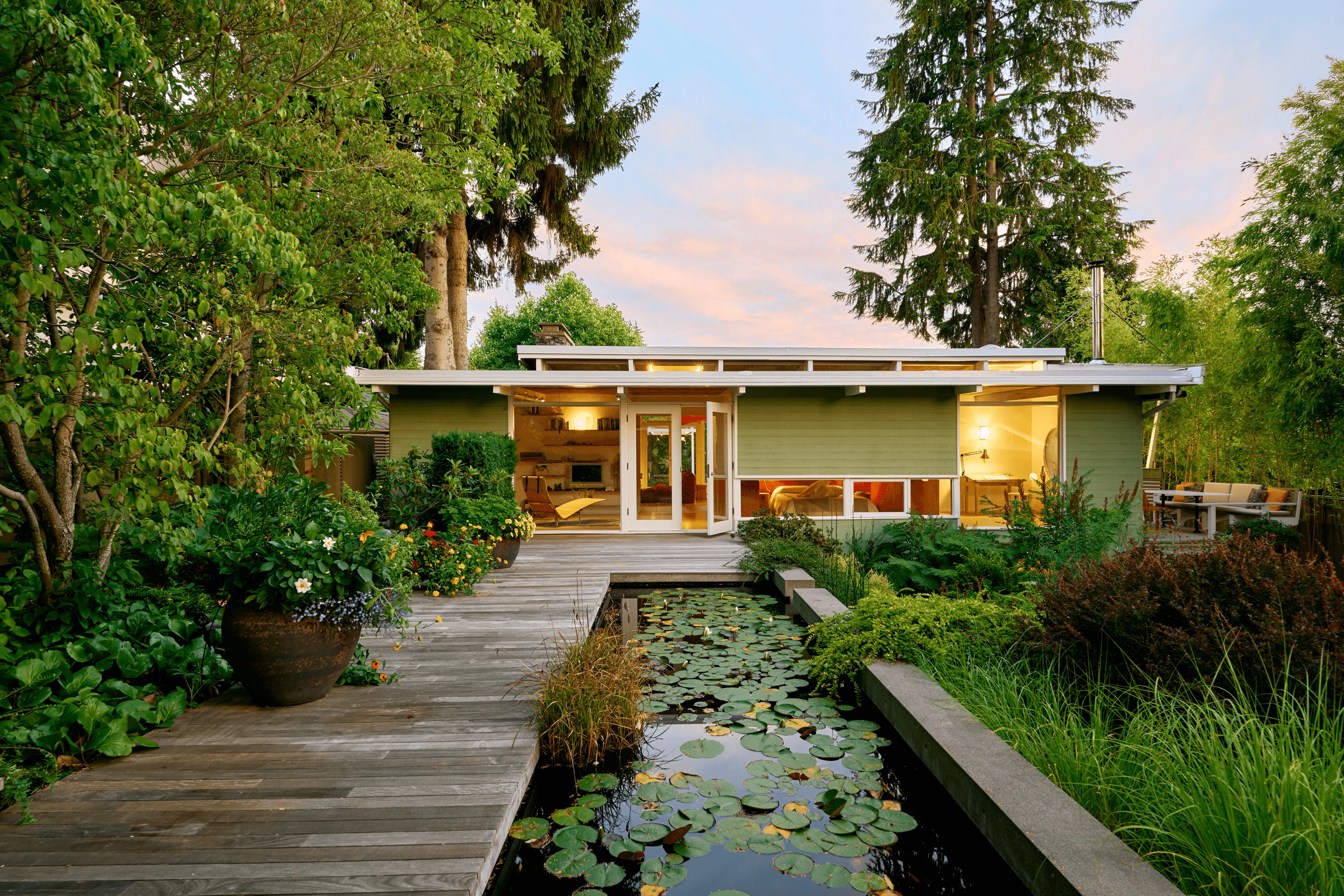
The home is organized as an L-shaped rancher, single-storey and spread deliberately across the northern portion of its lot. Where a lesser response to this site might have sought height, Lewis chose breadth, allowing the plan to extend laterally and the landscape to do the work of elevating the experience. The result is a home whose form is quietly confident, its cedar-clad exterior and deep overhanging rooflines expressing the structural logic within without announcing it.
Arrival
The approach to the Resort House begins with a quiet surprise. Descending the driveway from Fairmile Road, the waters of Burrard Inlet come into view above the roofline before the house itself is fully revealed, a glimpse of the landscape that awaits on the other side. It is a moment of anticipation that the architecture handles with characteristic restraint, allowing the setting to announce itself before the building does.
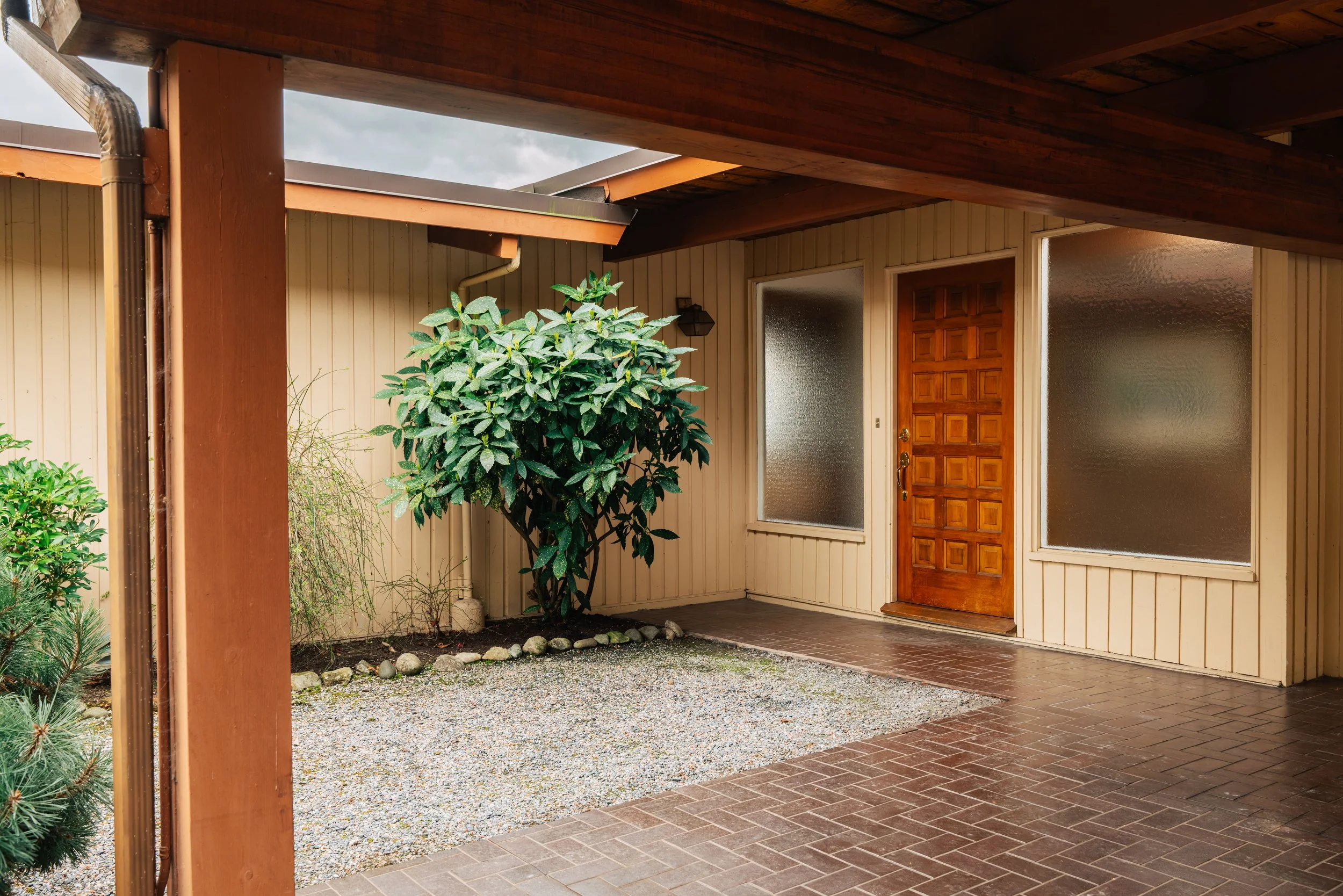
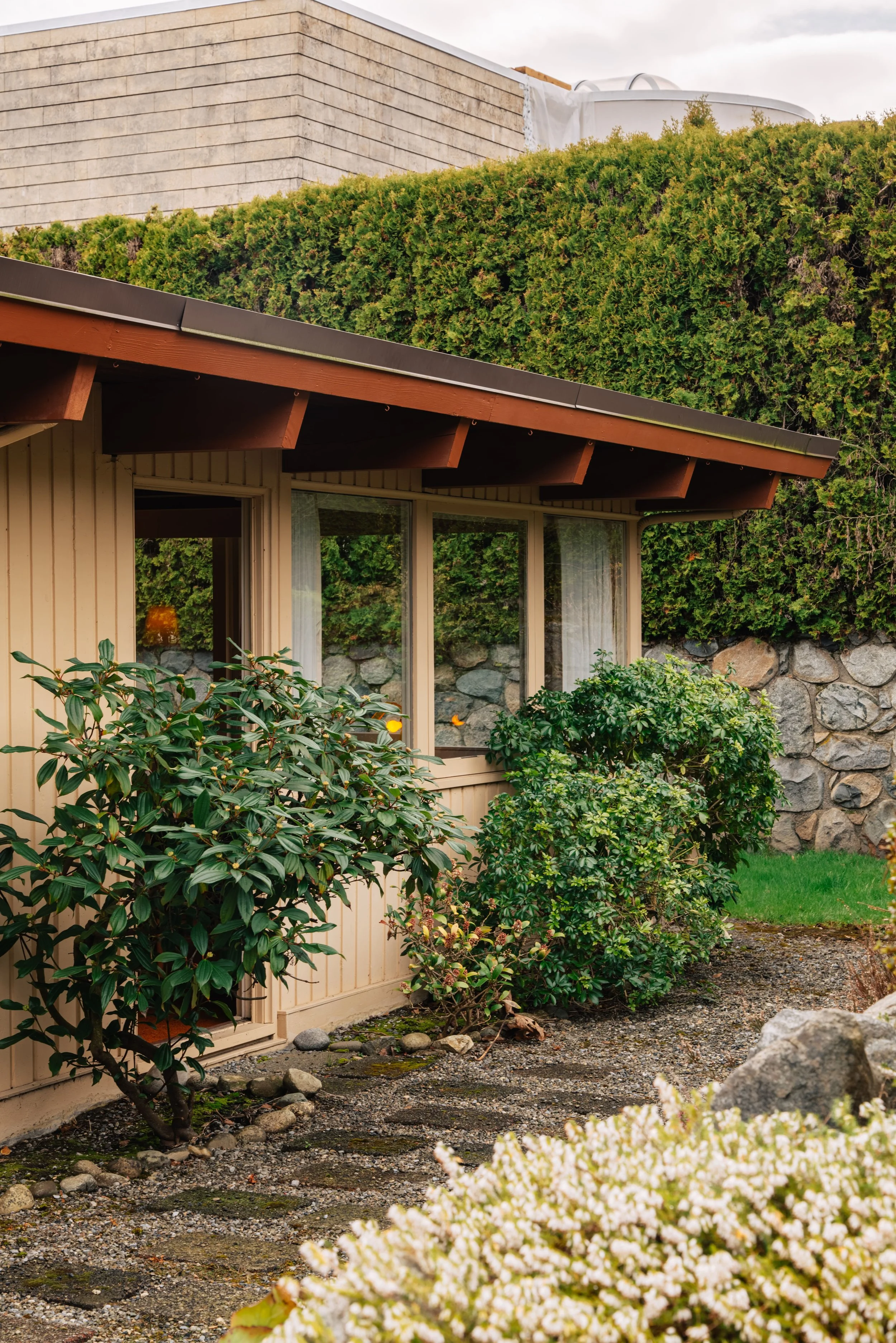
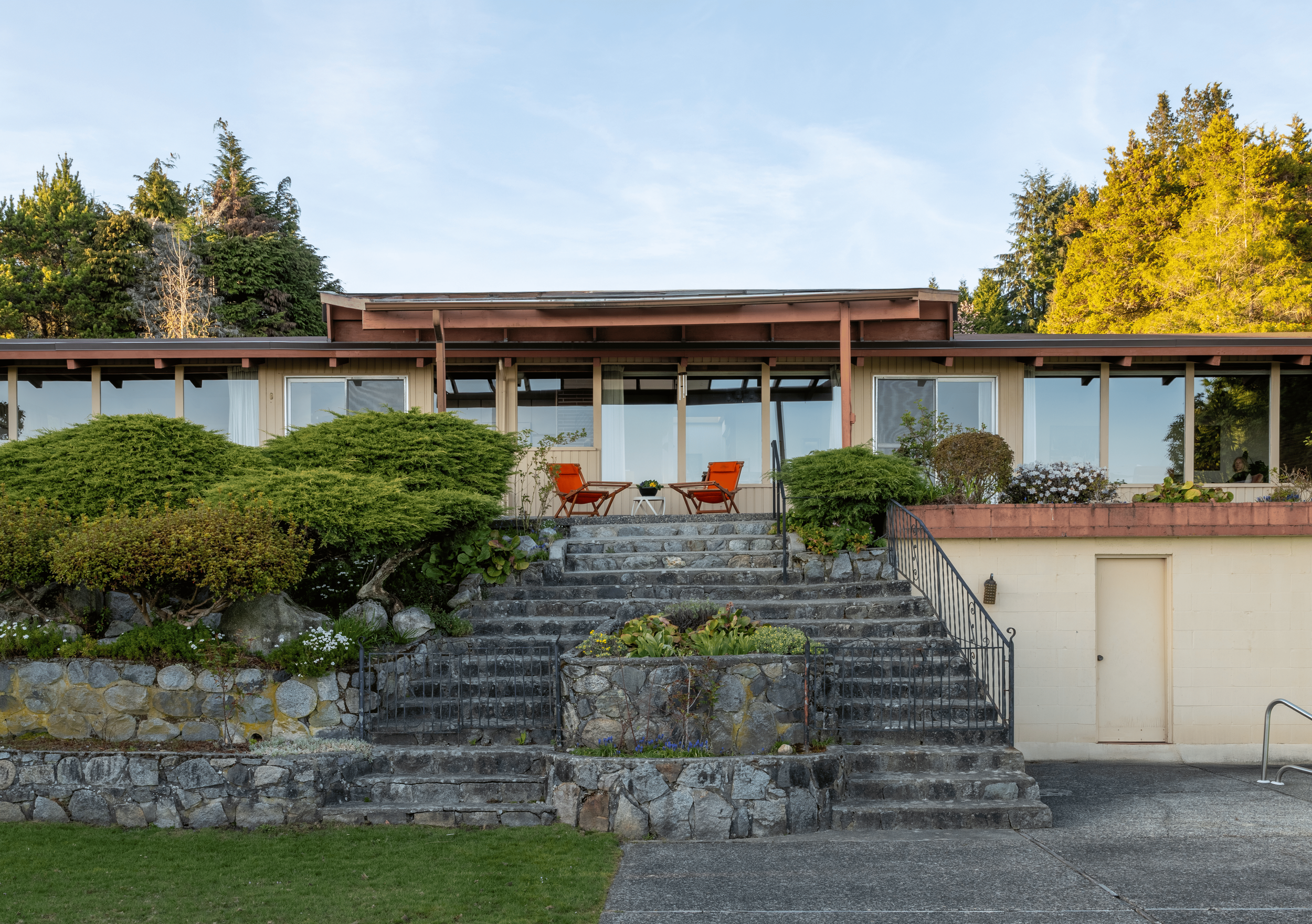
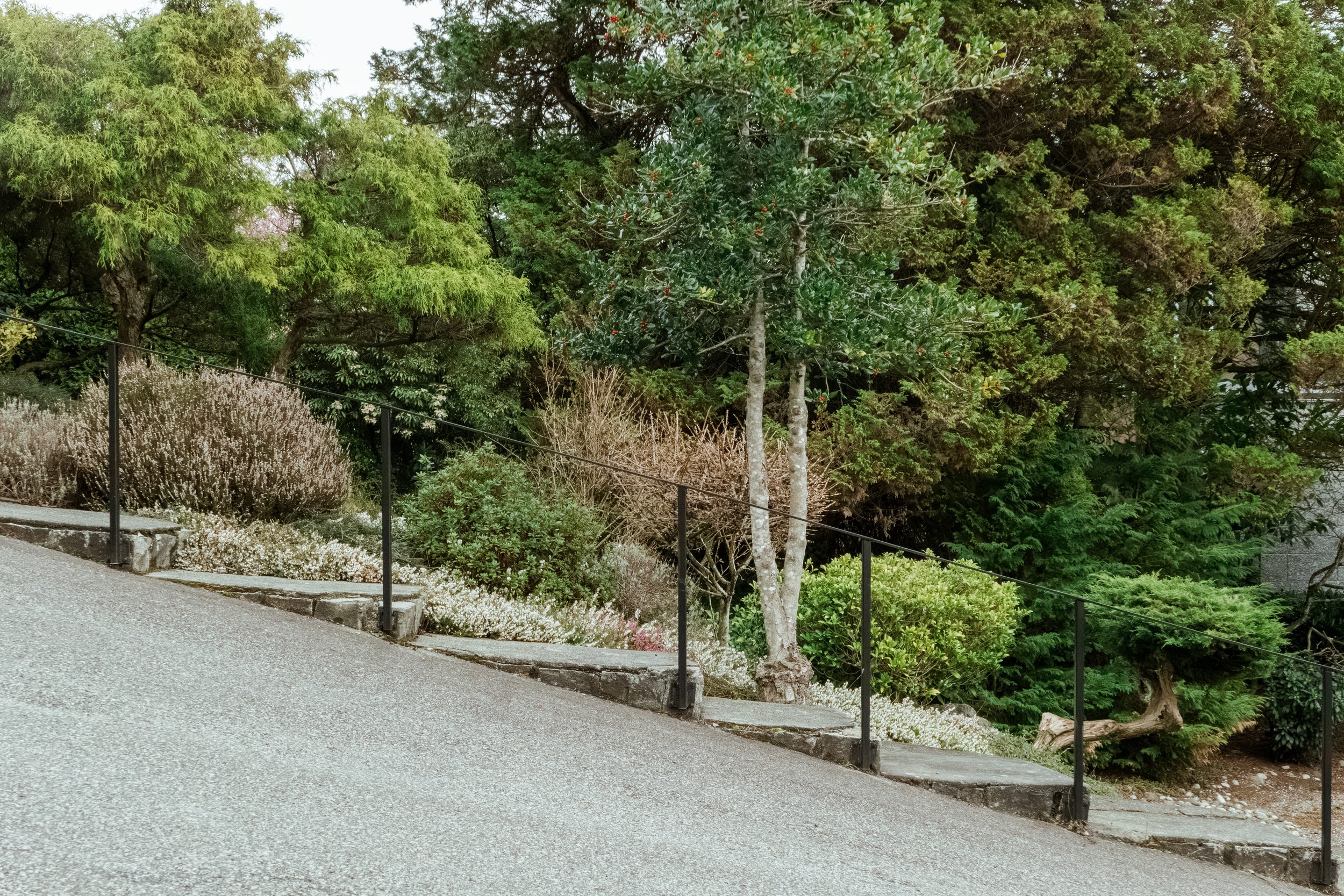
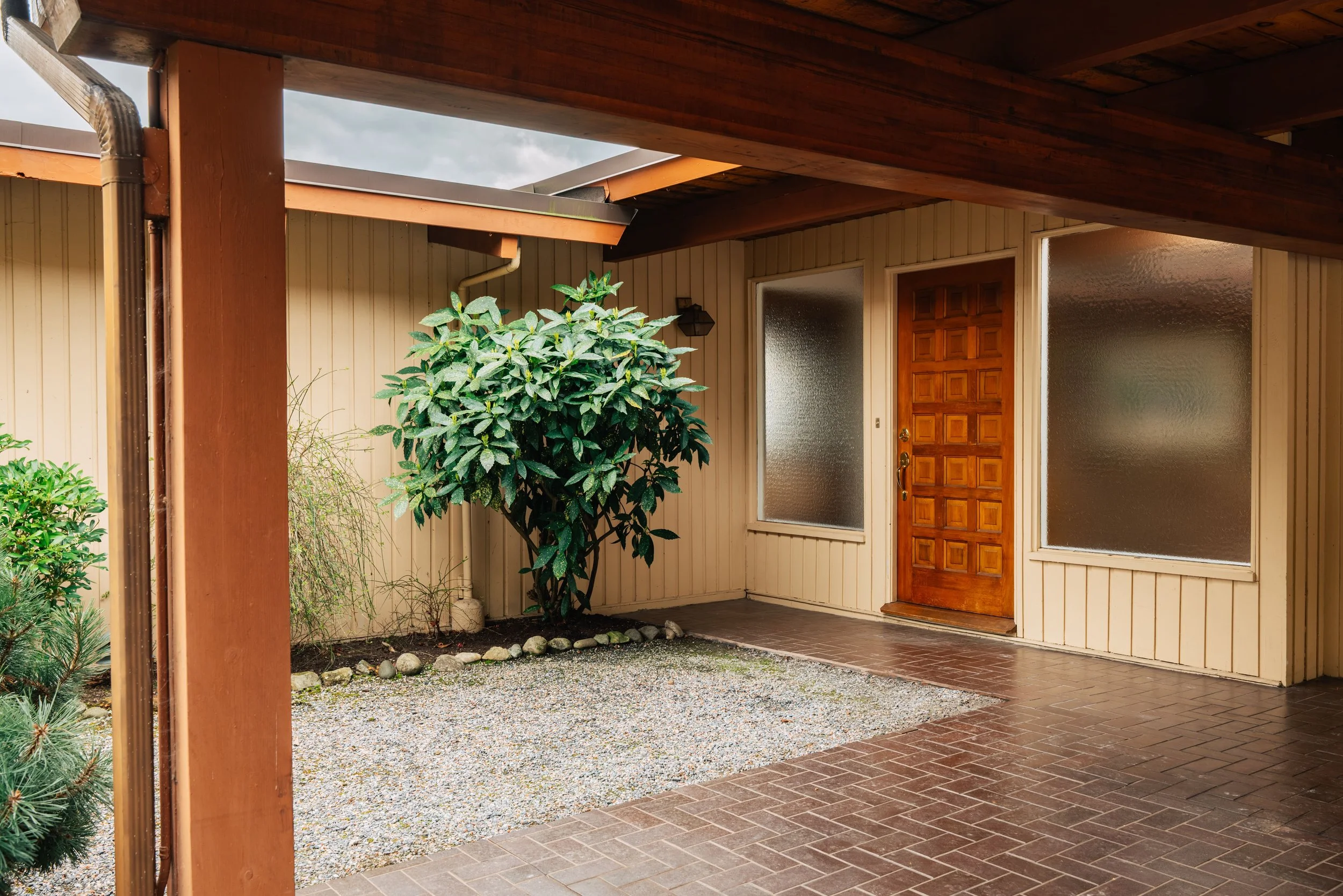
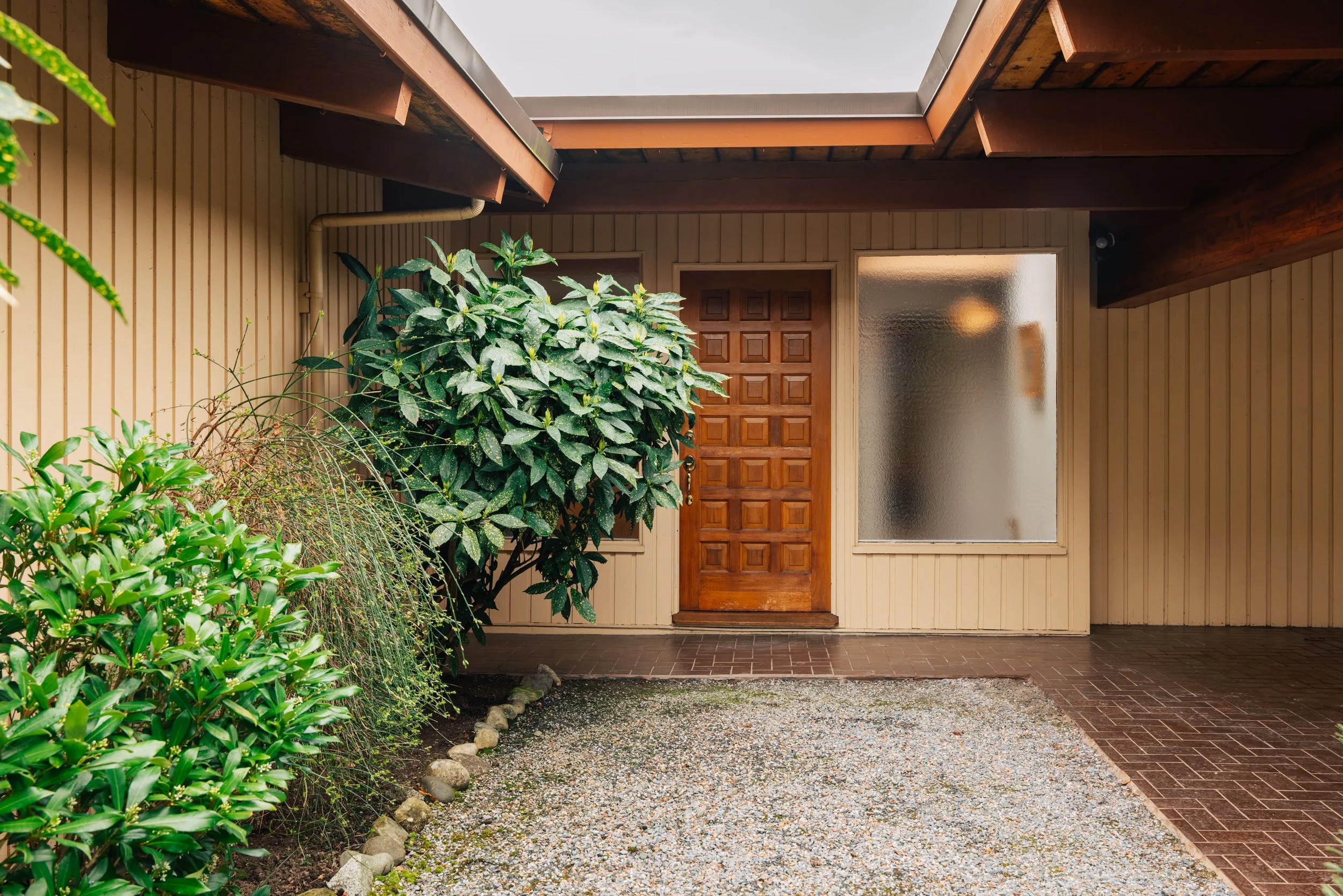
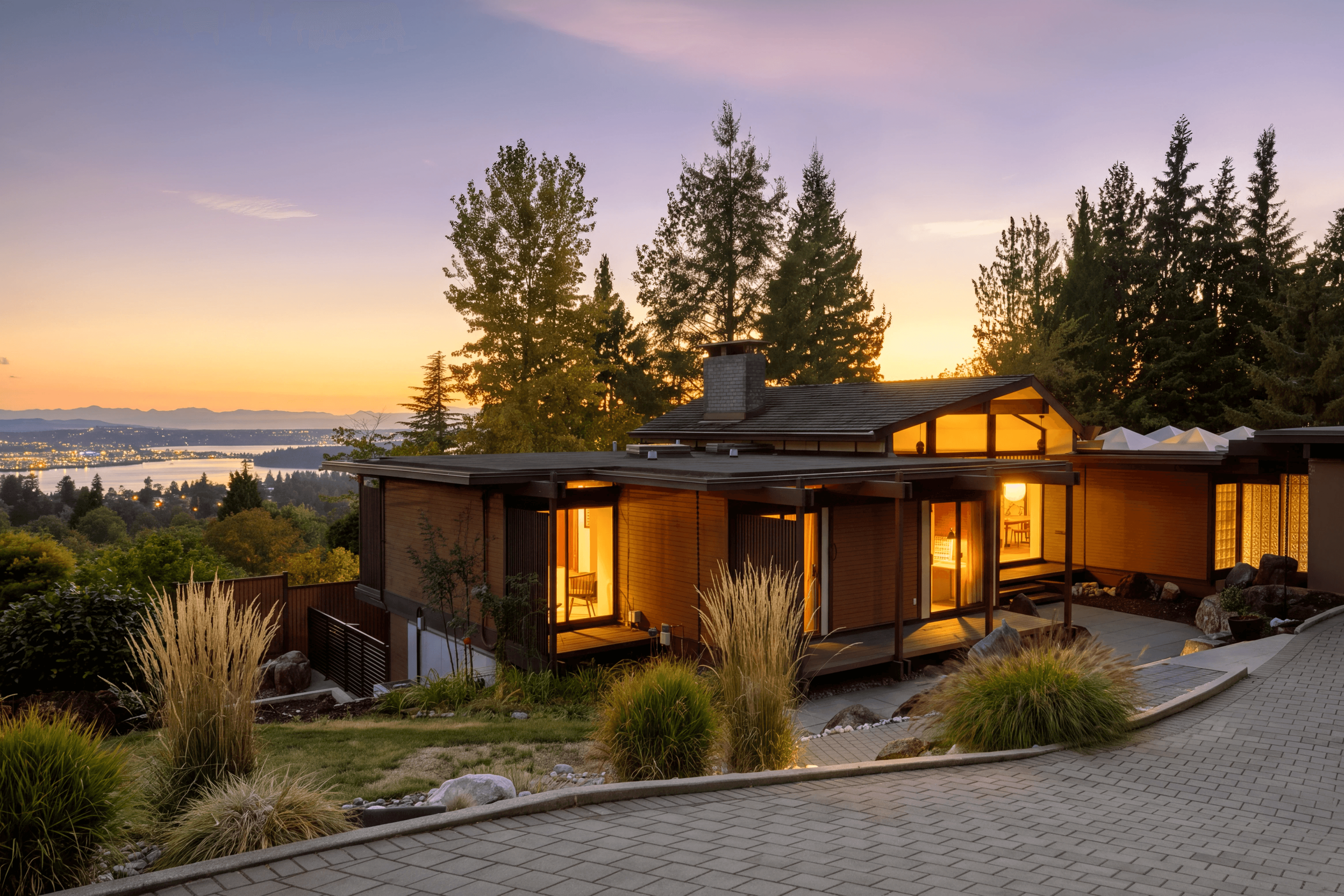
As the driveway levels and the home comes fully into view, the naturalistic plantings that frame the entry begin to make their presence felt. The sound of gravel underfoot, the play of light and shadow against the cedar siding and exposed soffit, the sharp rooflines, heavy timber beams, and exposed rafter tails all accumulate into a sense of arrival that feels both sensuous and considered. The post-and-beam logic of the structure is legible here from the outside, making clear what the interior will reveal: that this is a house built with complete conviction in its own material language.
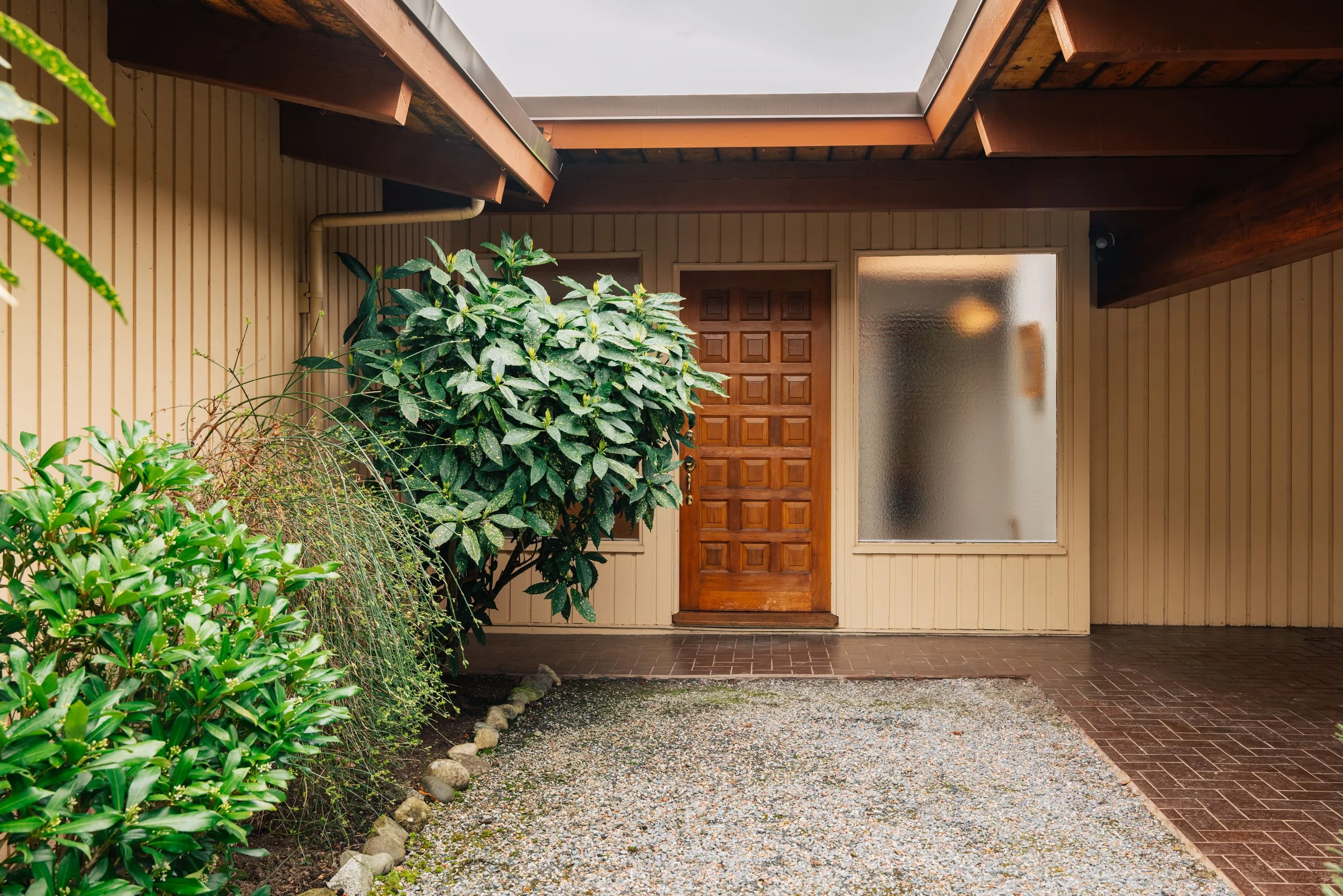
The front door is a piece of craft in its own right. A solid wood panel intricately detailed with a grid of carved square recesses, it is flanked on either side by panels of textured glass that admit light while preserving privacy. It is the kind of detail that rewards attention: modest in scale, quietly inventive, and entirely in keeping with a builder who understood that the smallest elements of a home are often the ones that reveal the most about its maker.
The Plan
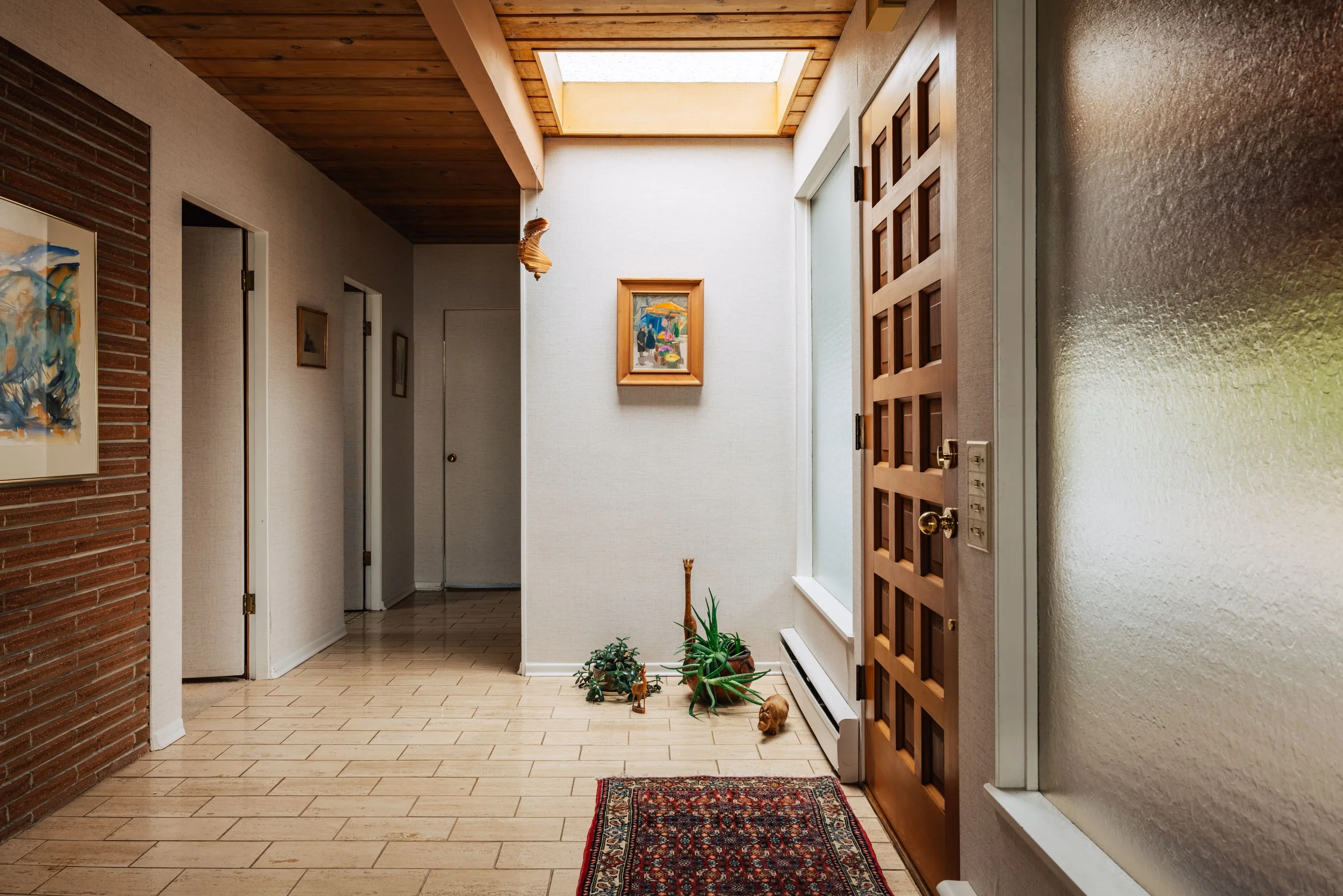
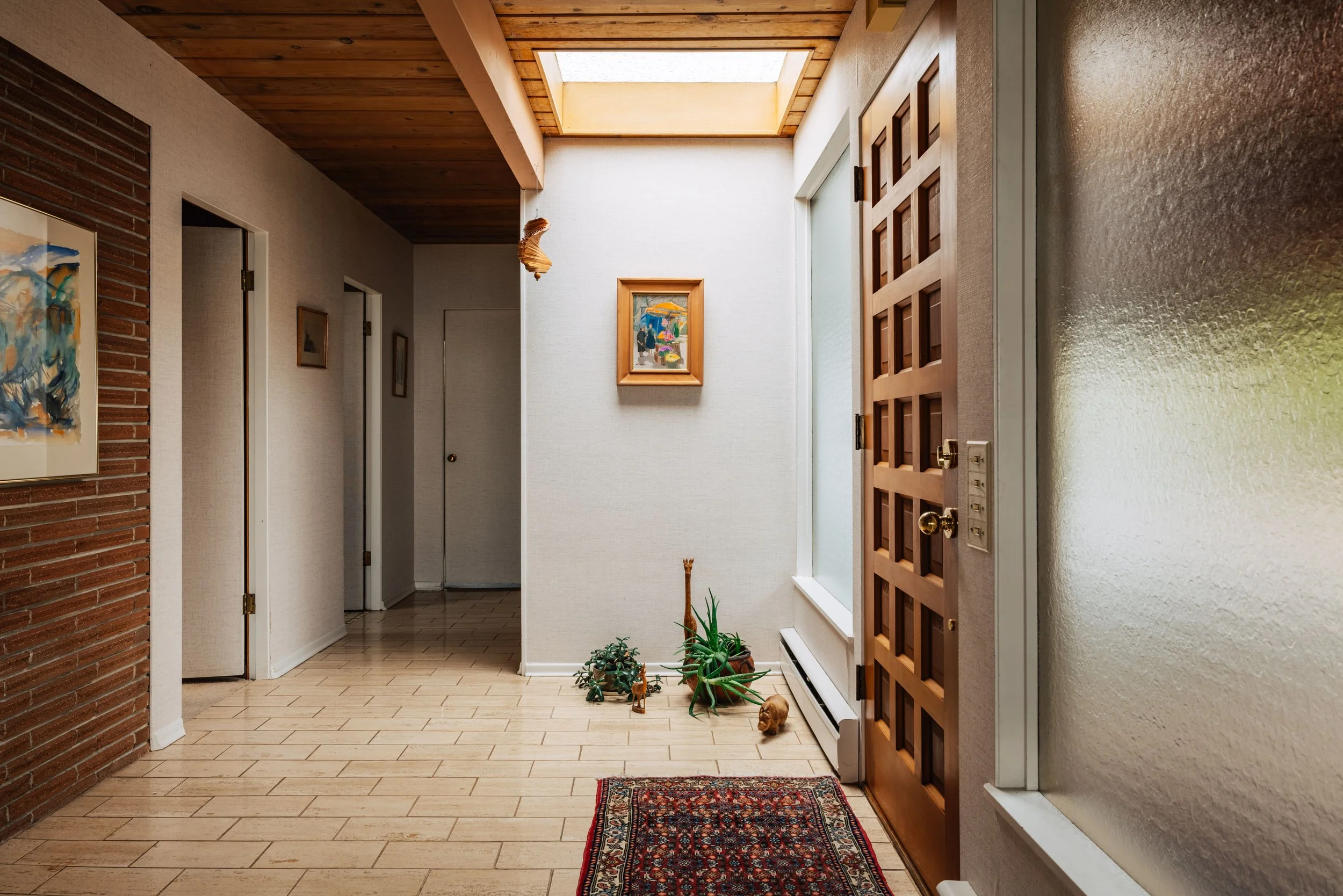
Stepping inside, the entry vestibule immediately sets the tone for what follows. Bright, airy, and luminous, it is a space that announces the home's intentions without overstating them. A skylight punches light downward through the cedar-clad ceiling above, illuminating the tiled floor below and drawing the eye toward the clay brick wall that faces the entry, a first hint of the material richness to be found further within.
The home unfolds as an L-shaped rancher across a single level, with 2,492 square feet of living area organized around the twin principles that guided Bob Lewis throughout his career: family life and connection to the outdoors. The plan is generous without being excessive, its spaces partitioned in a way that creates privacy where needed while always maintaining a relationship to the surrounding garden and greenery. What is perhaps most remarkable is the consistency of natural light throughout. Wherever a space cannot access a window directly, Lewis introduced a skylight, ensuring that the ever-changing quality of the West Coast sky is present in every corner of the home. Laid over the warmth of the natural materials deployed throughout, this quality of light gives the house an atmosphere of abundance that sets it apart from more conventional approaches to domestic design.
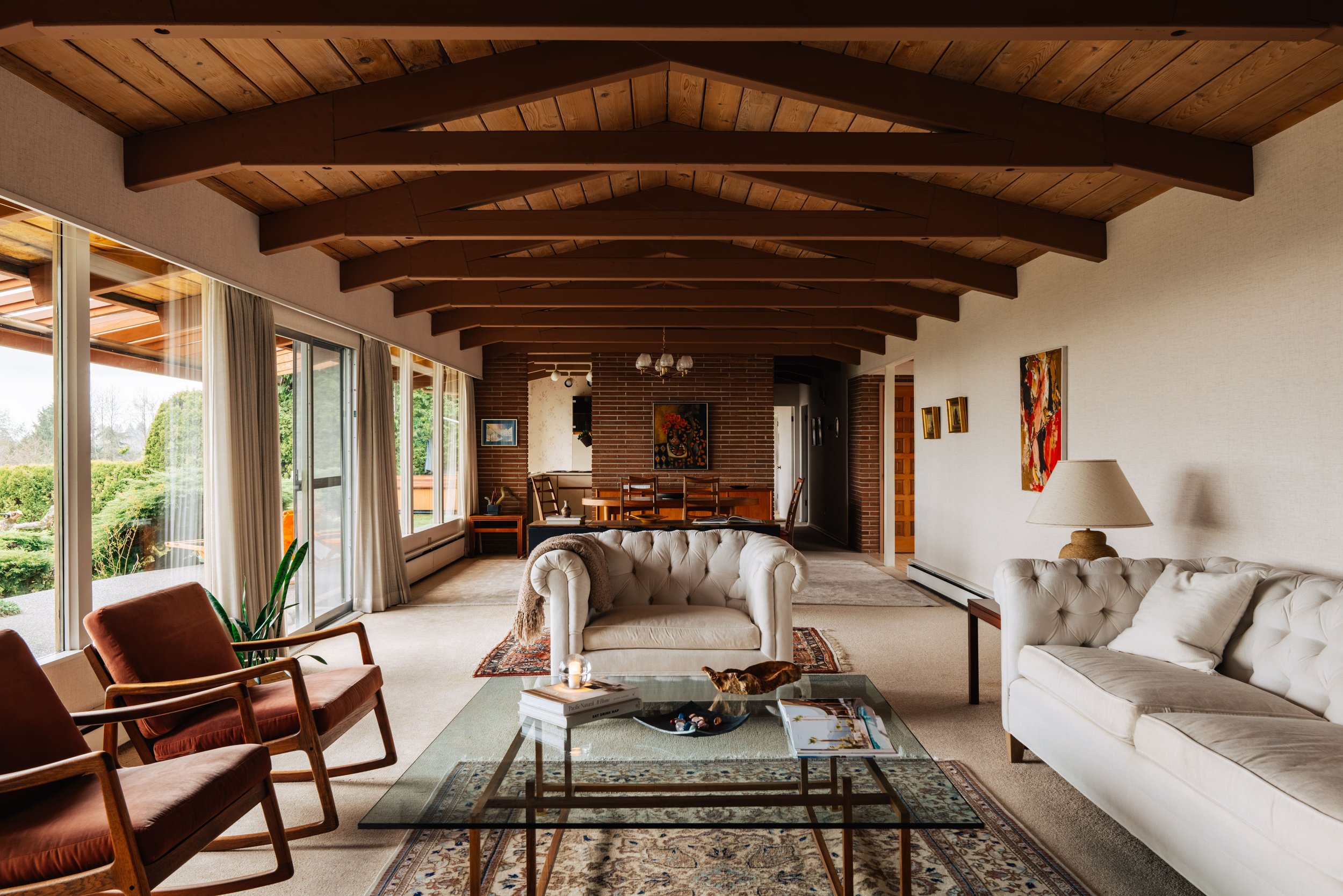
The living spaces occupy the southern and eastern portions of the plan, oriented to capture the panoramic views that define the property. The more private rooms, including the bedrooms, studies, and playroom, are arranged to the north and west, each connected to the garden in its own way and each offering a distinct spatial character. The flexibility that was the hallmark of Lewis's building system is evident throughout: spaces can be opened or closed, connected or separated, adapted to the rhythms of a family's life as easily today as they could have been in 1957.
The Living and Dining Room
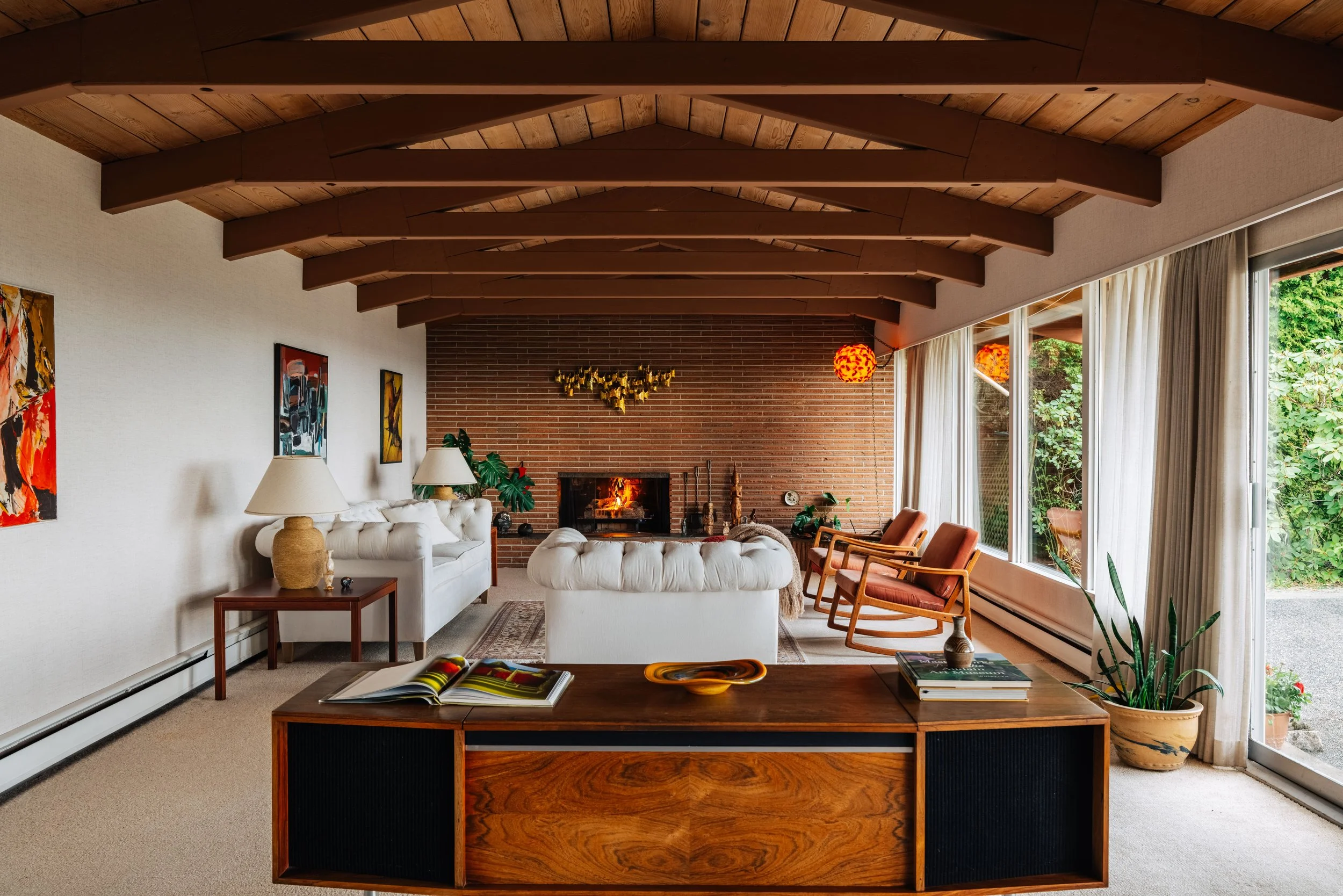
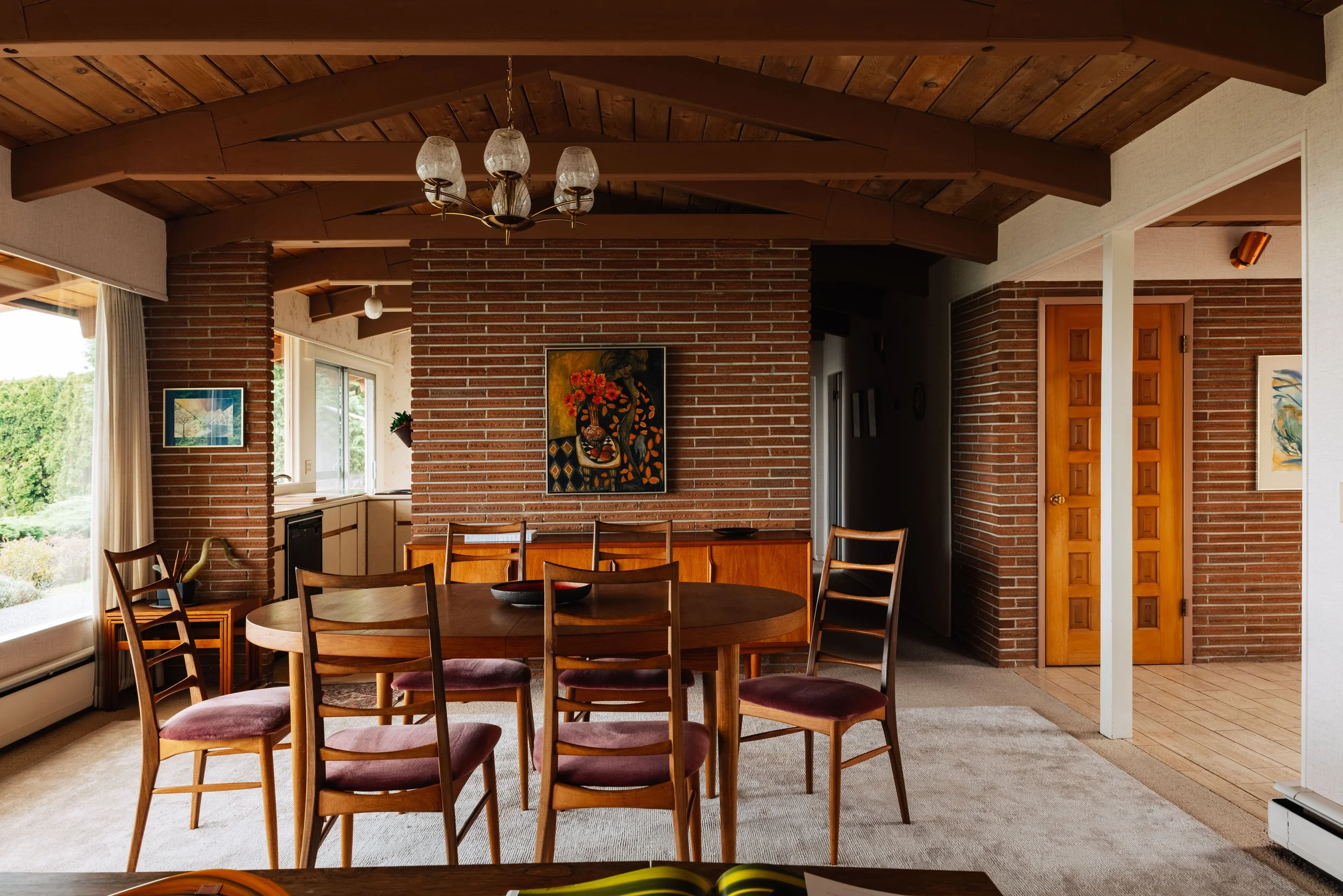
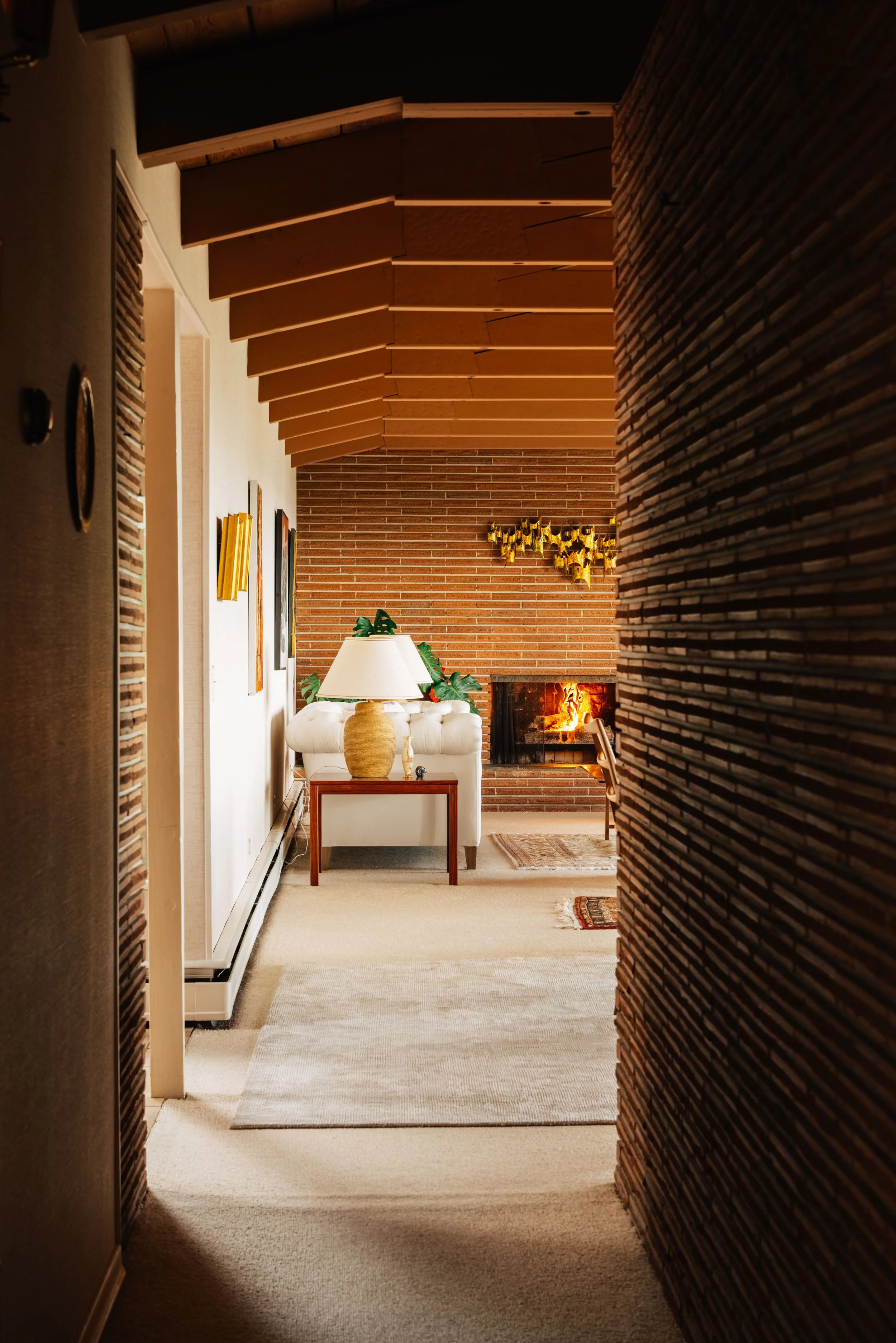
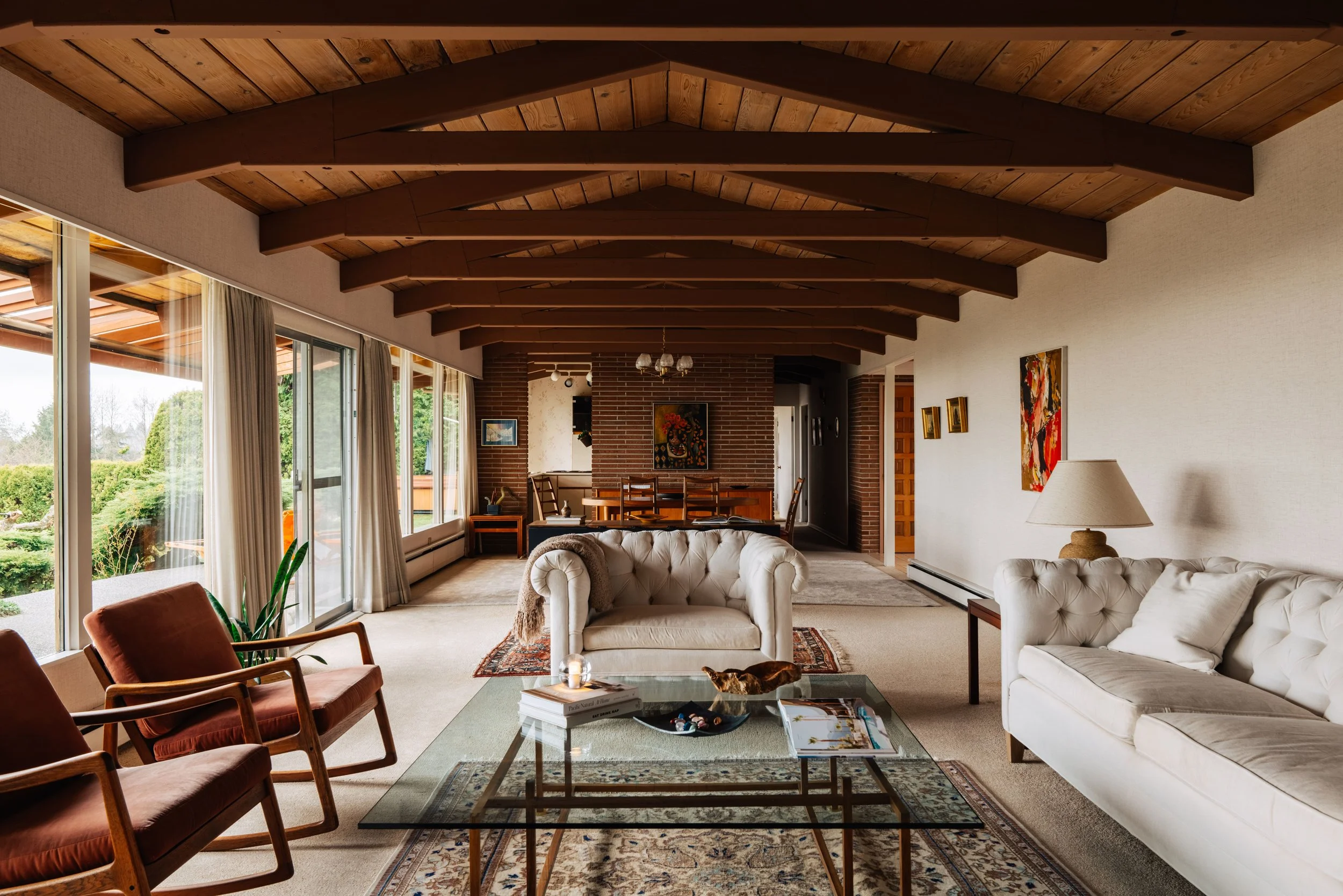
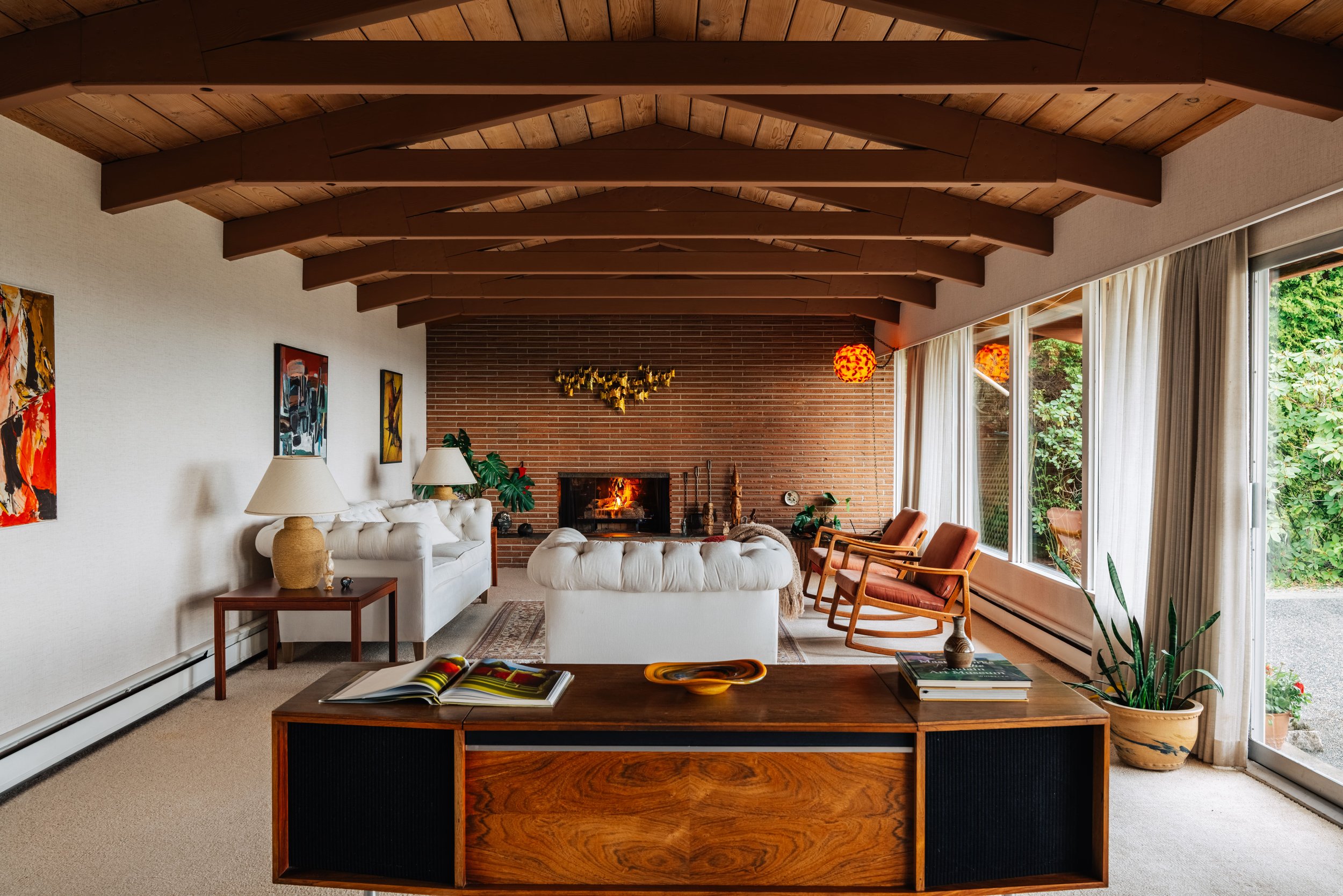
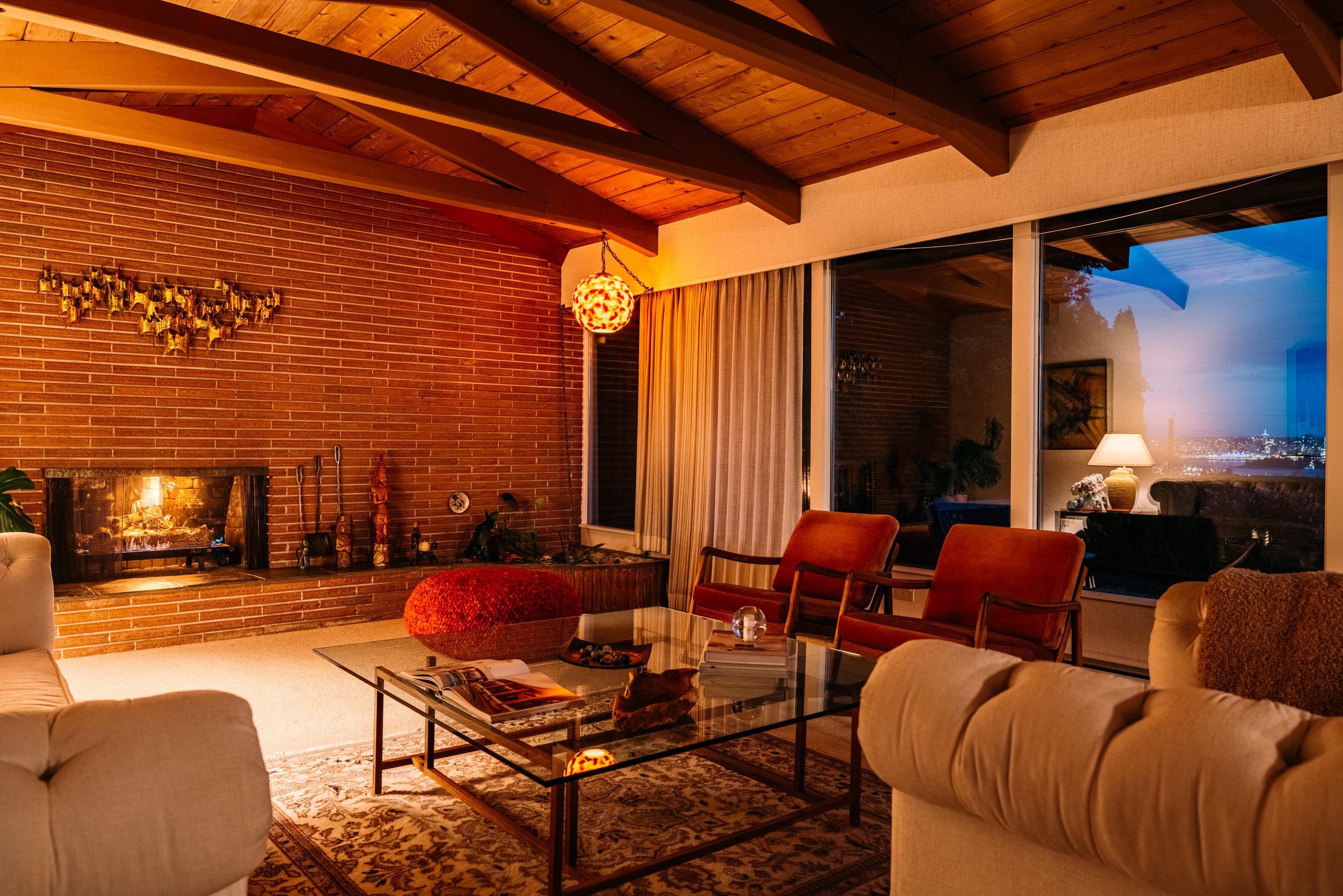
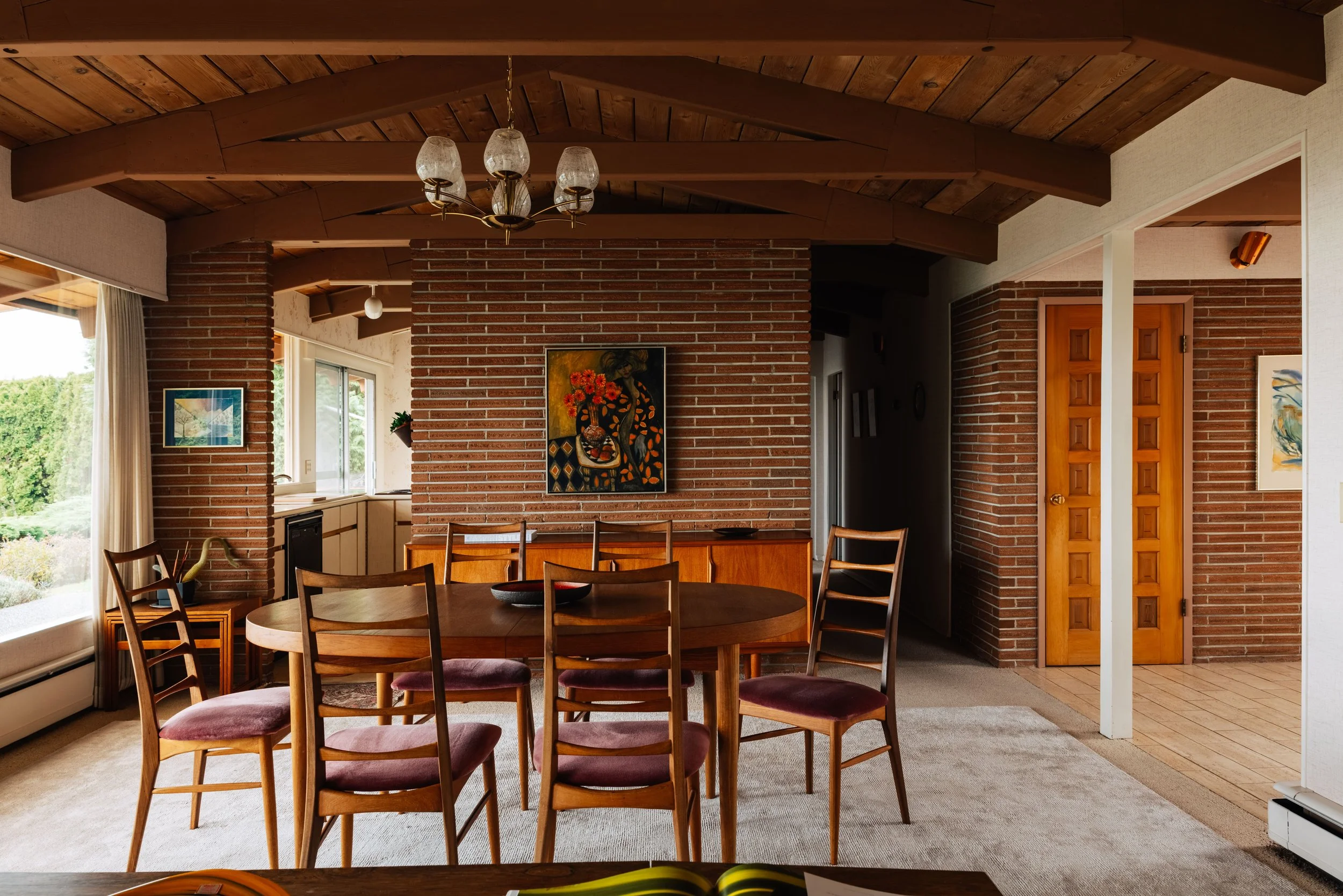
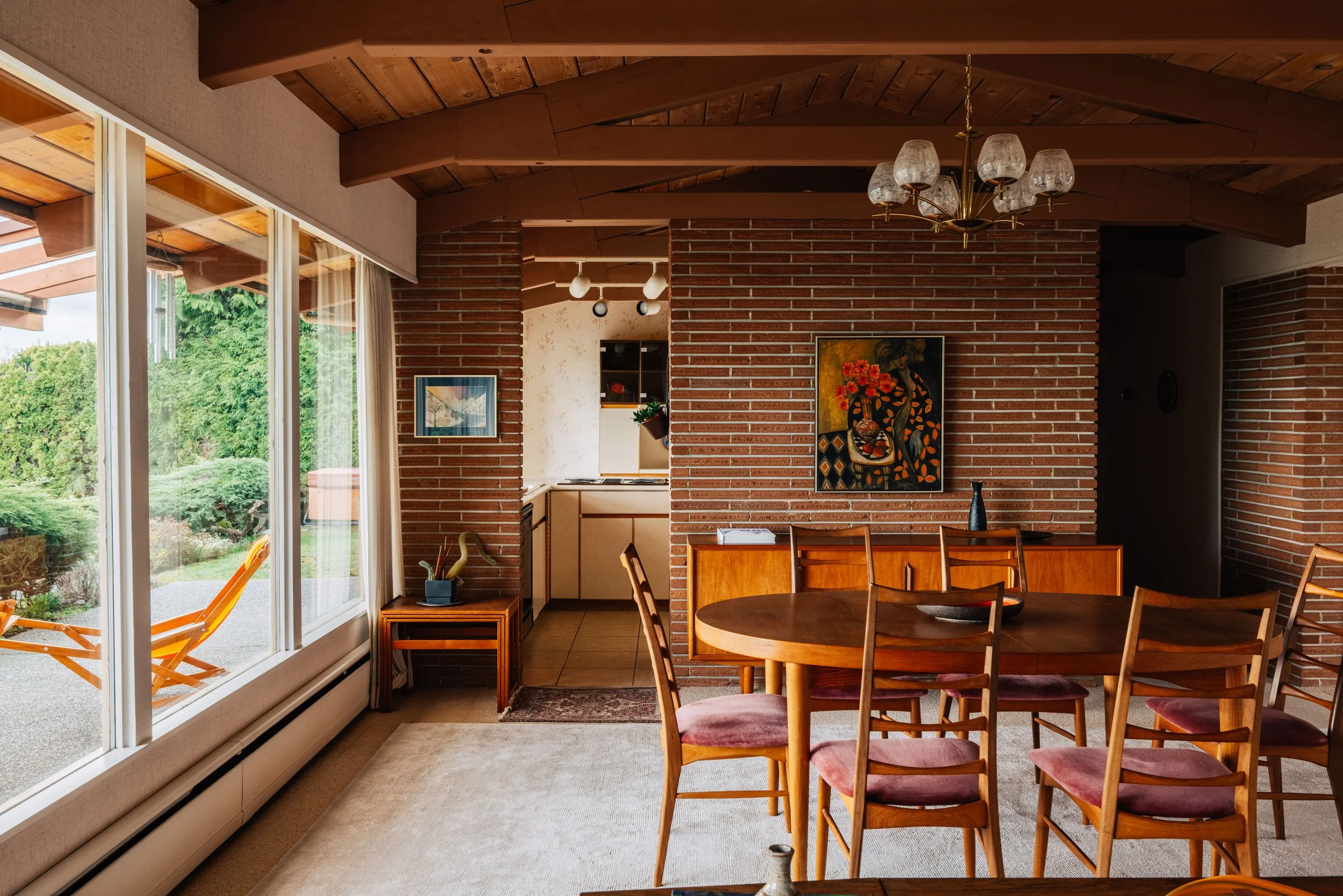
The living and dining room is the heart of the Resort House, and the space where Bob Lewis's design philosophy finds its fullest expression. It is a long, generous room, bookended at either end by two noble walls of elongated clay brick laid in a running bond pattern, their warm terracotta presence grounding the space with a solidity that the surrounding glazing only amplifies by contrast. Spanning between them, a series of sloped timber beams march with quiet regularity across the full width of the room, rising to form a vaulted cedar-clad ceiling above and creating a fifteen-foot clear span that frees the living and dining spaces below from any sense of enclosure.
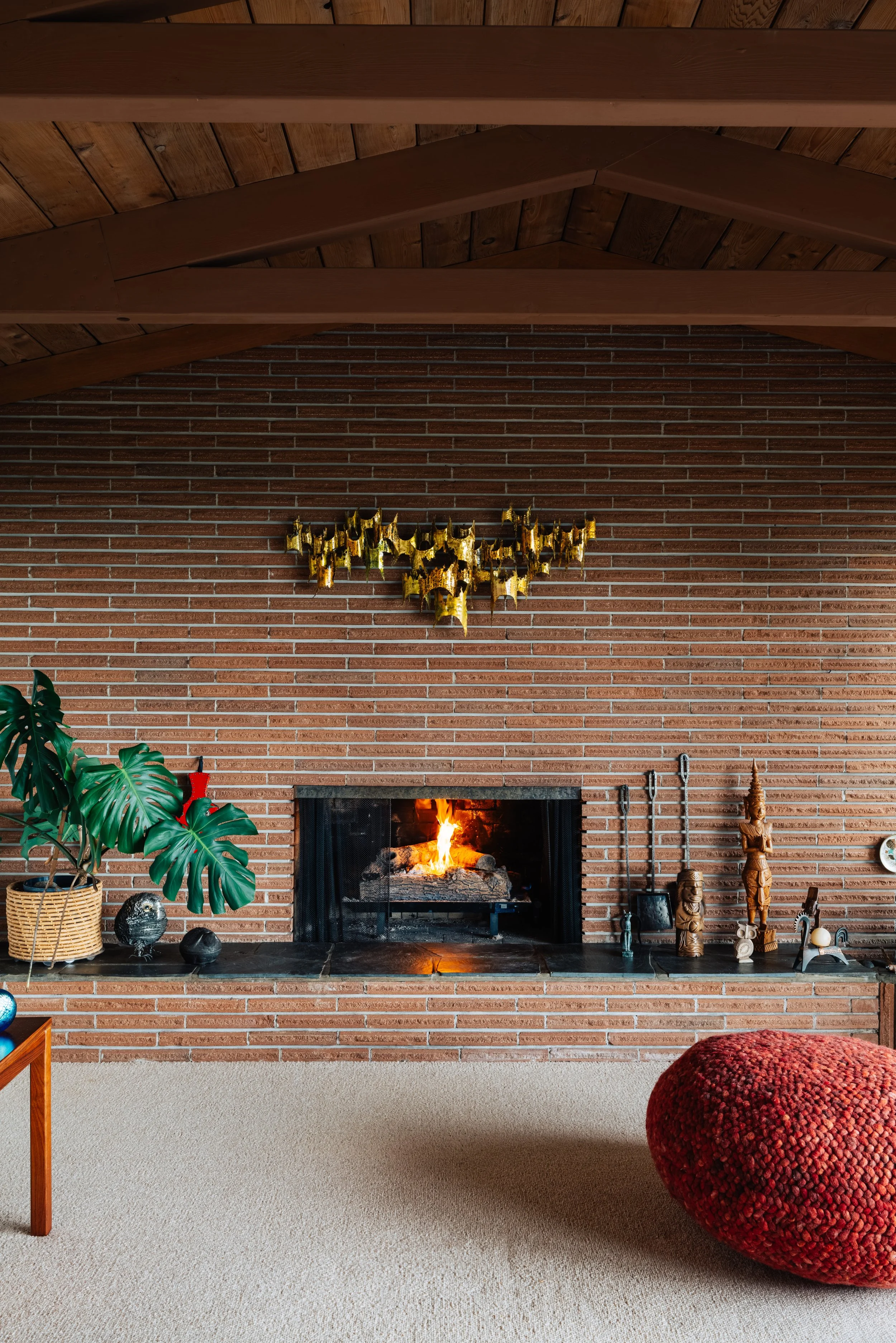
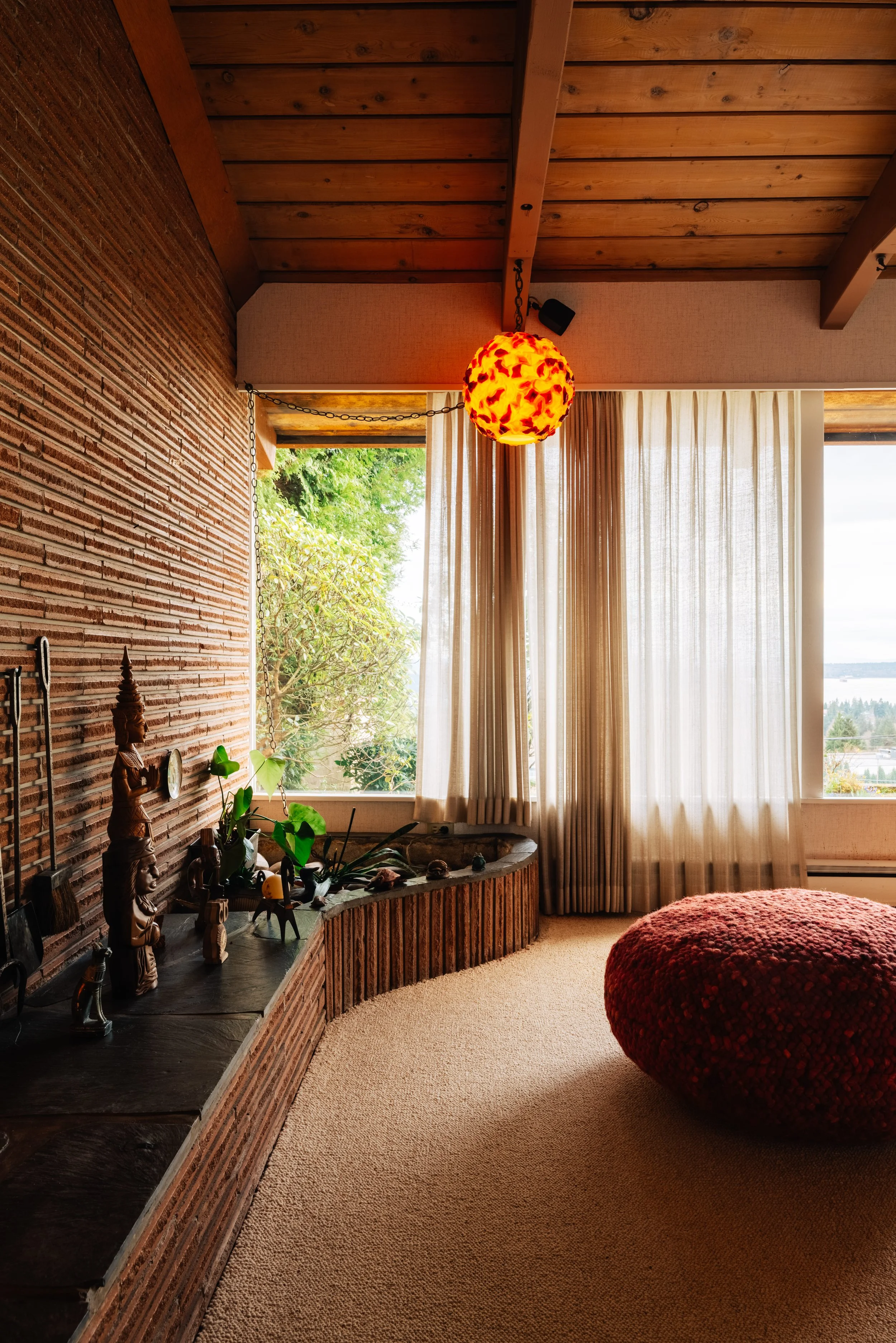
The east brick wall features a fireplace that feels surprisingly contemporary in its composition, its asymmetric placement and minimal detailing as considered today as it would have been in 1957. Where the full-width elevated brick hearth meets the window line, Lewis made a quietly remarkable decision: rather than terminate it cleanly, he expanded and curved it slightly to create a small rock garden, an organic moment that recalls the natural geography of the property and introduces a moment of softness into an otherwise rigorously logical space. It is the kind of detail that reveals the depth of thinking behind the design, present not because it was required but because it was right.
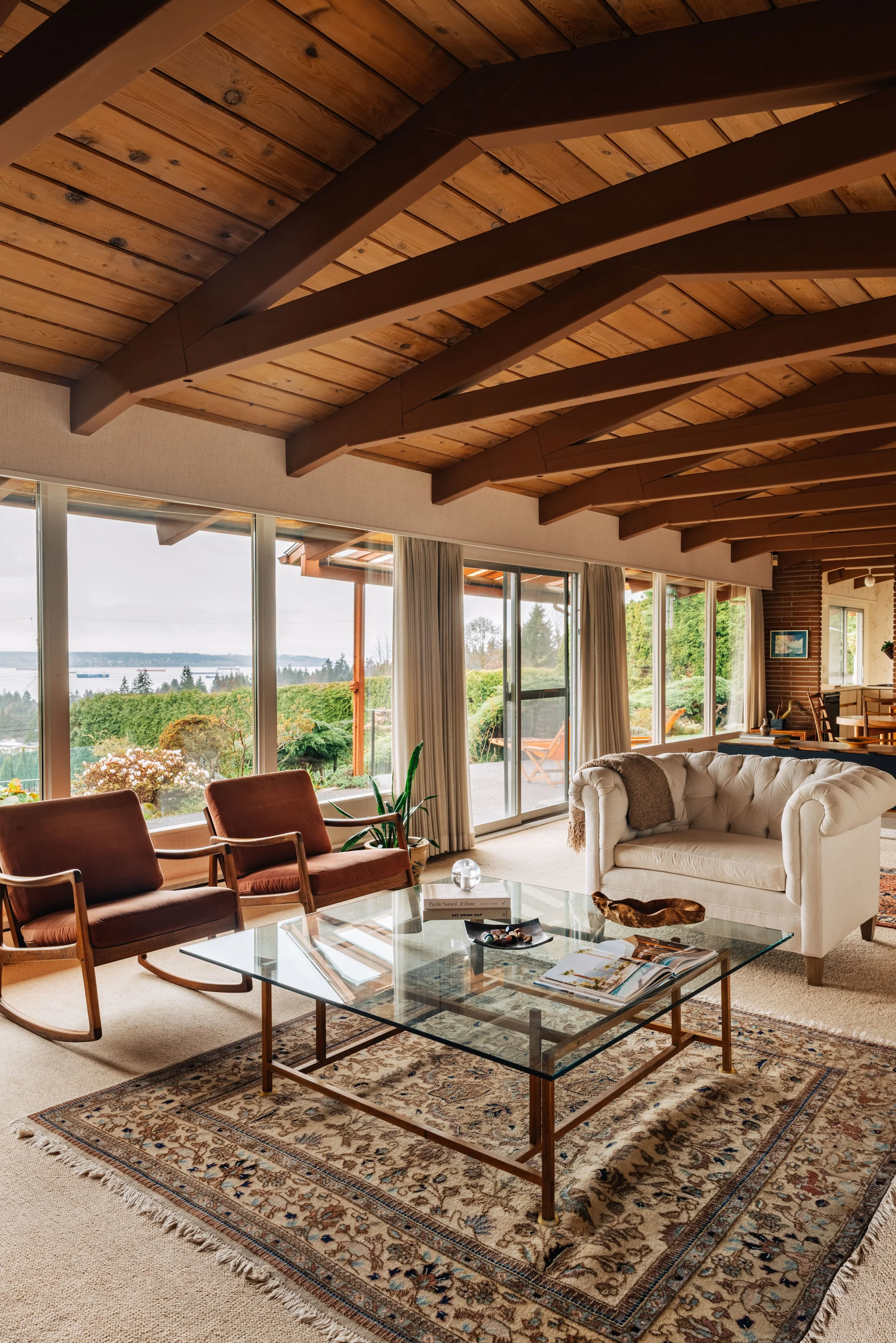
Opposite, an uninterrupted thirty-nine-foot run of south-facing glazing draws the eye the full length of the room and beyond, to the deck, the garden, and the shimmering waters in the distance. The light that enters through this wall of glass bathes the vaulted ceiling and warm brick surfaces in an even, shifting glow that changes with the hour and the season. Standing at one end of the room and looking toward the other, the view encompasses in a single composition everything that Bob Lewis believed a home should offer: structure honestly expressed, materials generously applied, and the natural world held always in sight.
The Kitchen
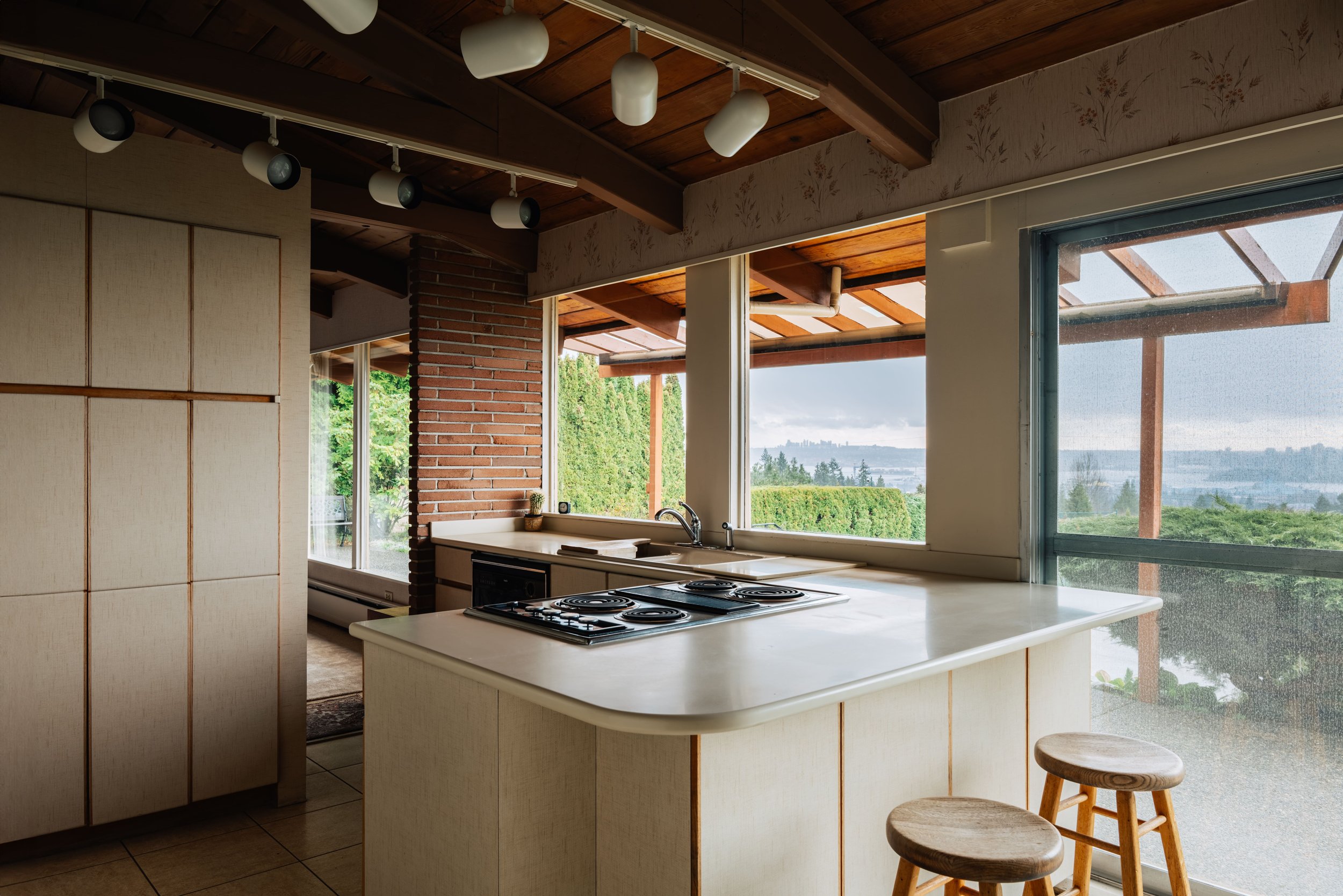
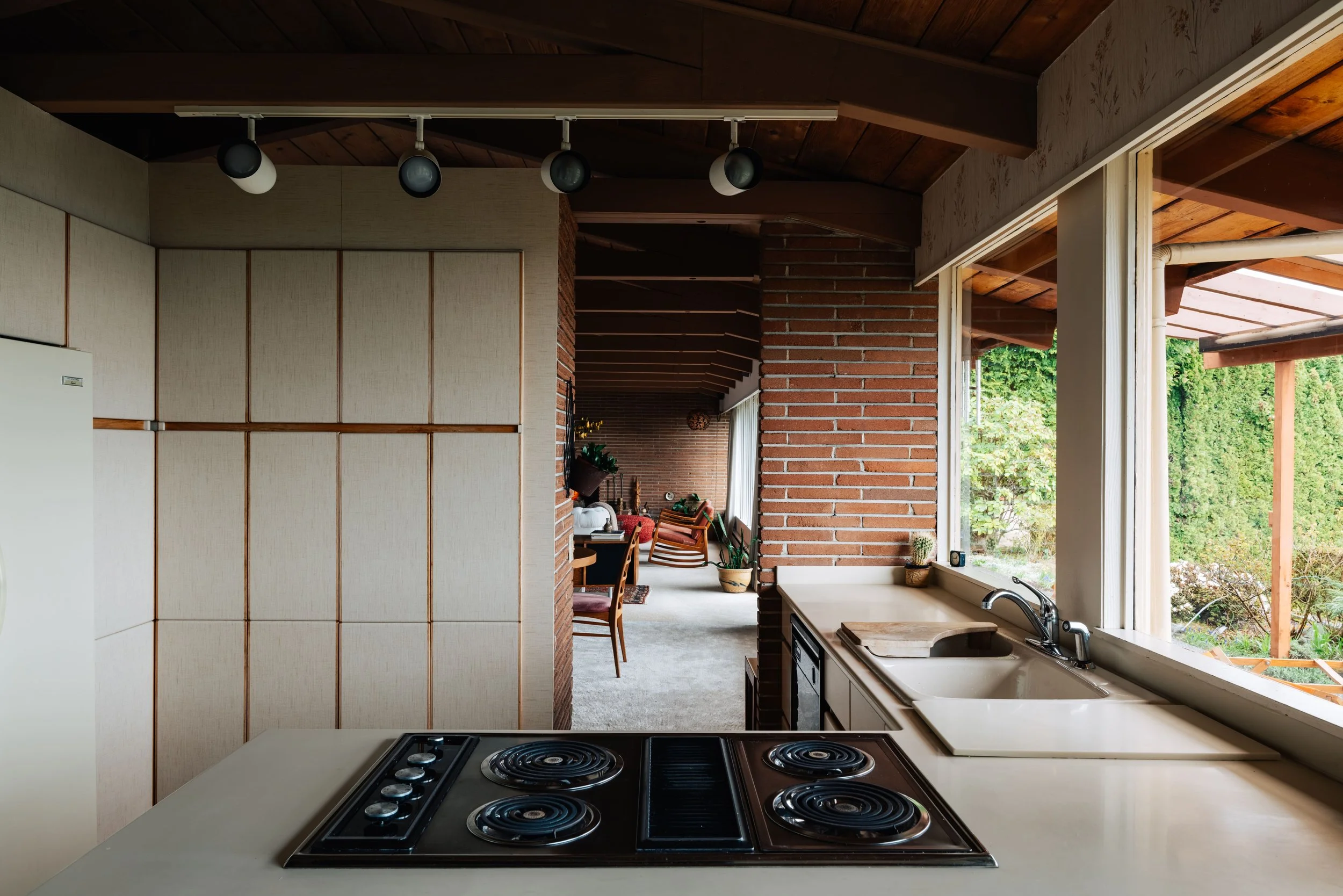
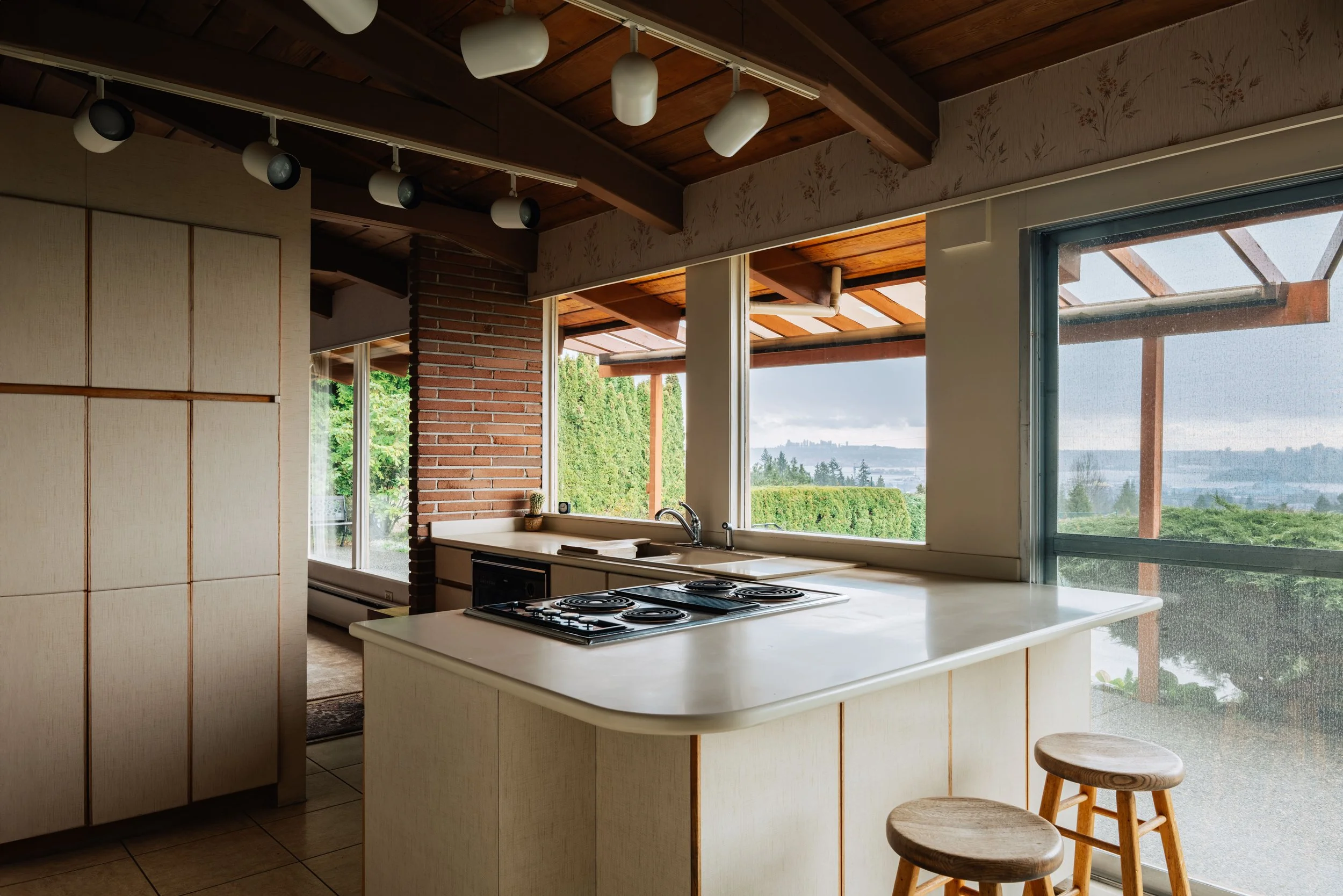
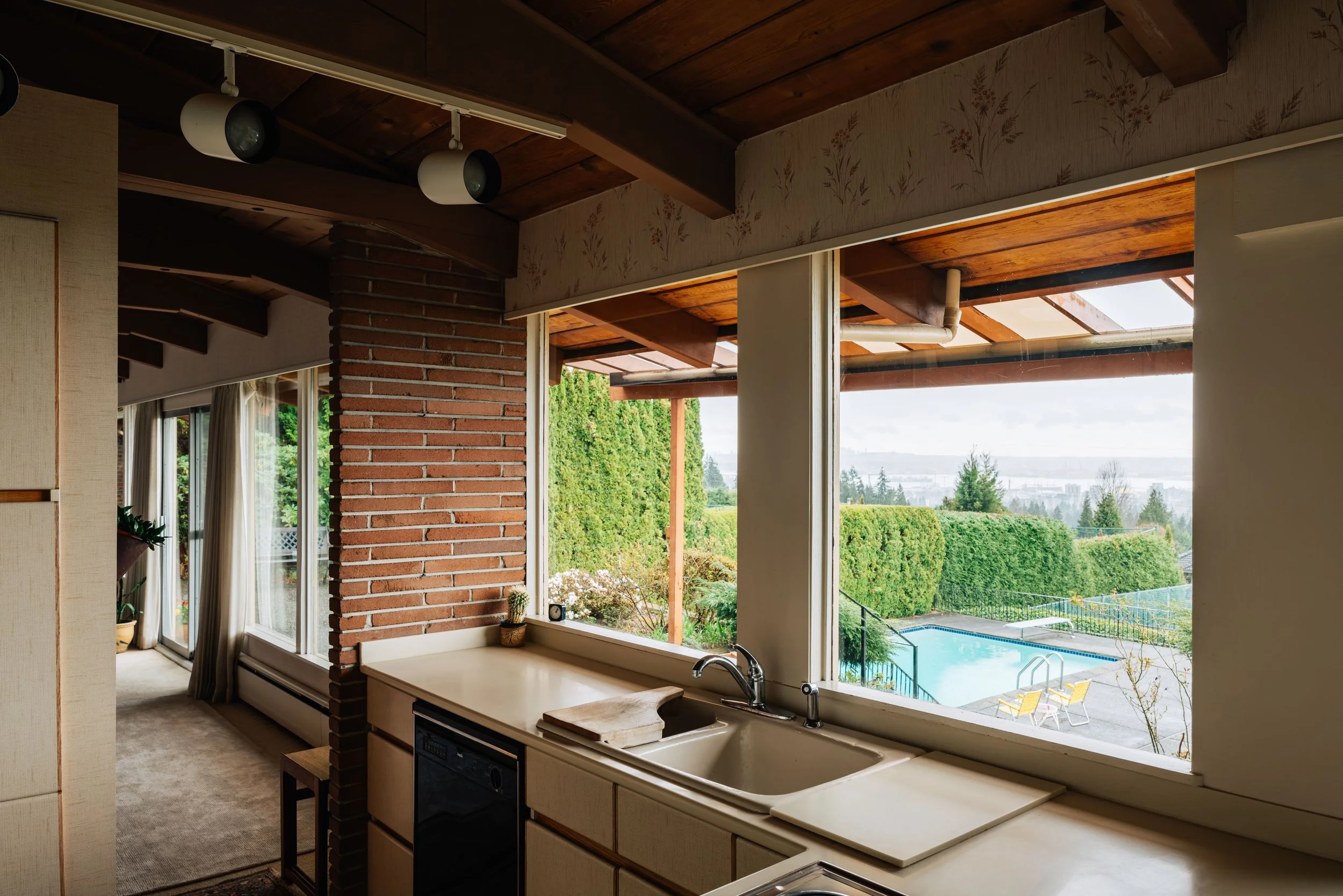
Tucked behind the west interior wall of the living and dining room, the kitchen occupies a position at the heart of the home's social life. Though enclosed, it is anything but isolated. A wide peninsula with bar seating creates an easy connection to the dining area, while a run of windows along the southern wall opens directly onto the patio, ensuring that the cook is never far from the conversation or the view. The waters of Burrard Inlet are visible from the kitchen counter, a reminder that in this house, no space was considered too utilitarian to share in the views that define the home.
The kitchen's relationship to the patio is one of the more considered moves in the plan. The roofline extends outward above the patio creating a covered outdoor room that shelters the space from coastal rain and ensures the connection between, kitchen, dining area, and the outdoors remains uninterrupted through every season. It’s a gesture that captures something essential about Lewis’ approach: that the boundary between inside and outside was never meant to be a hard one.
The Private Rooms
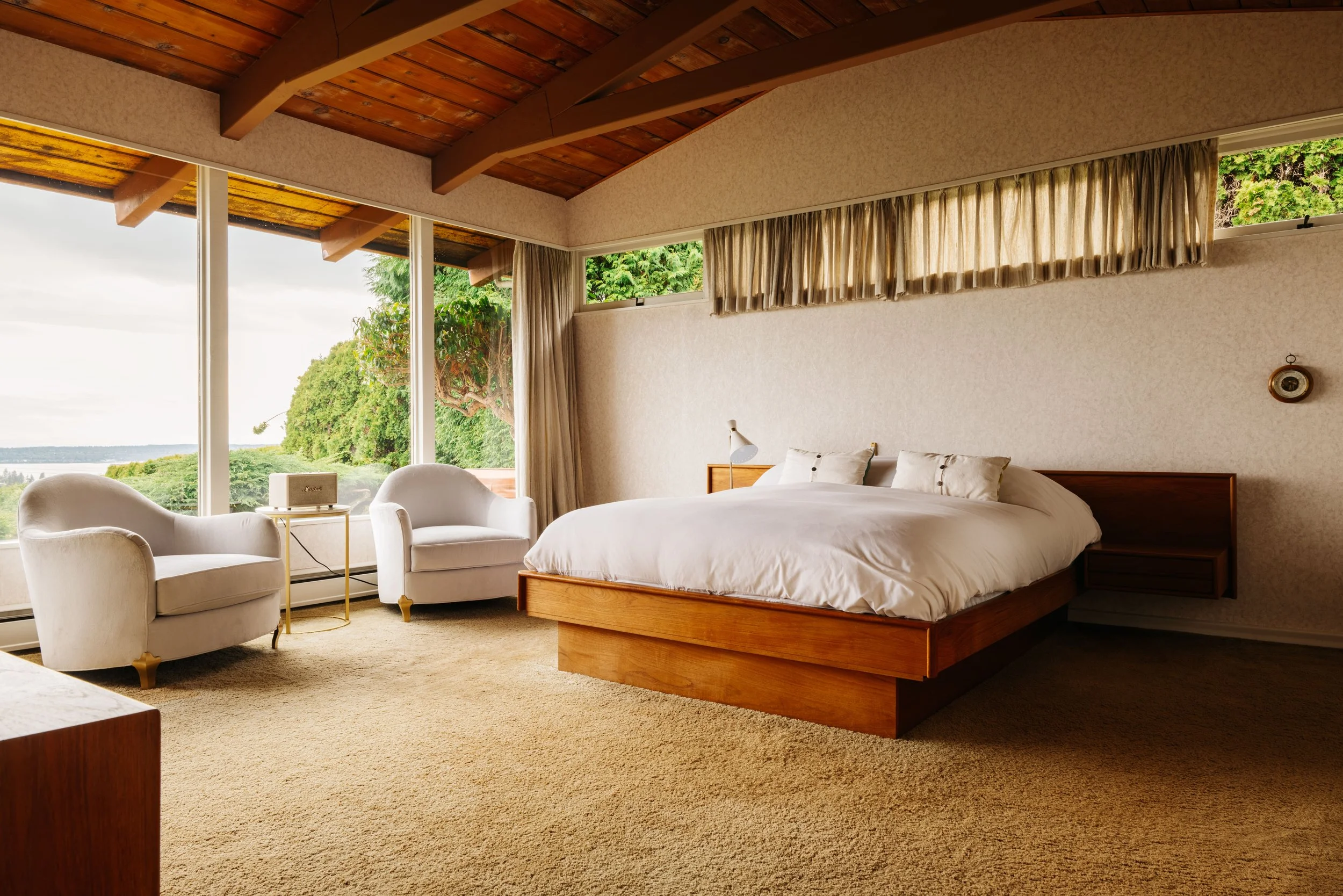
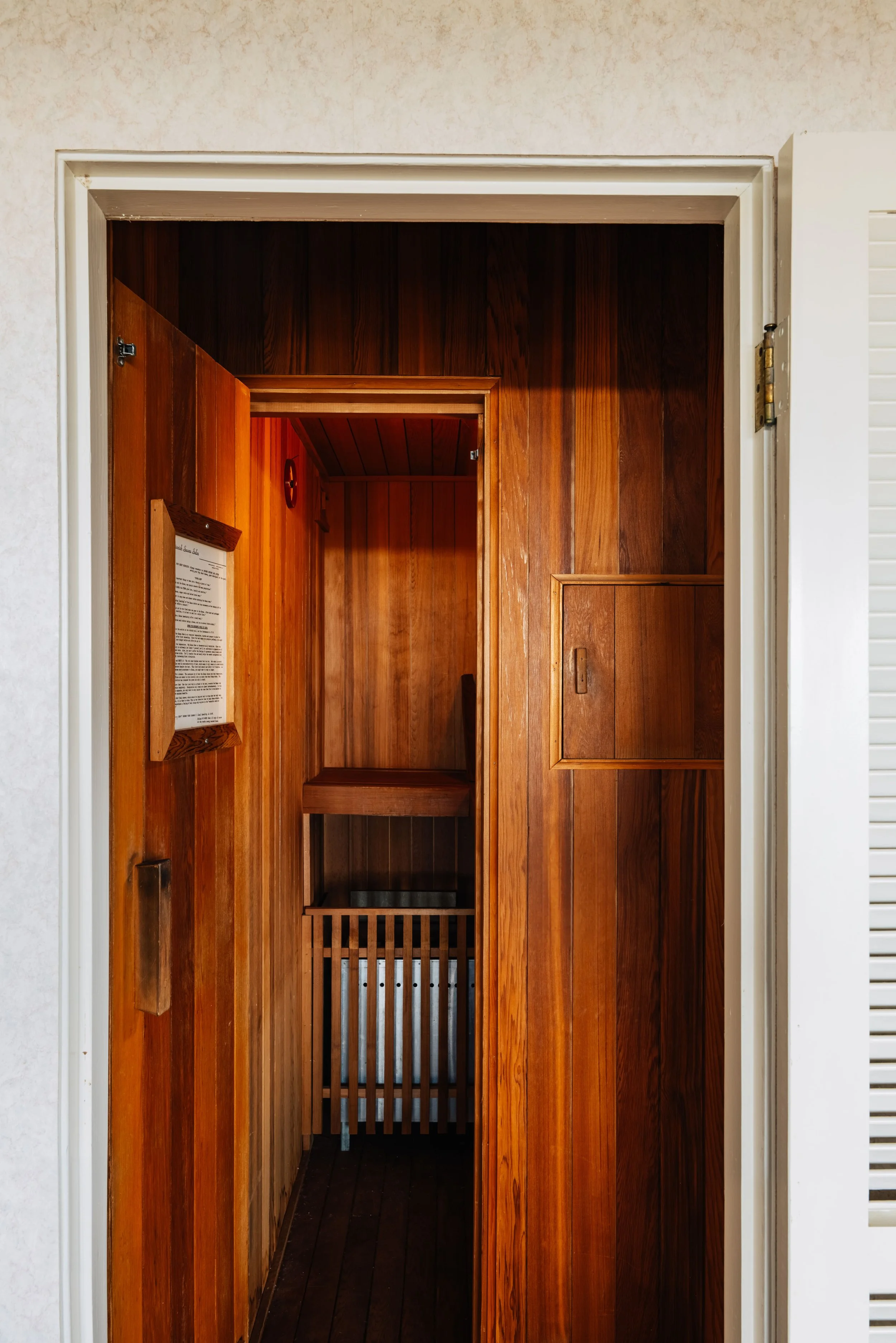
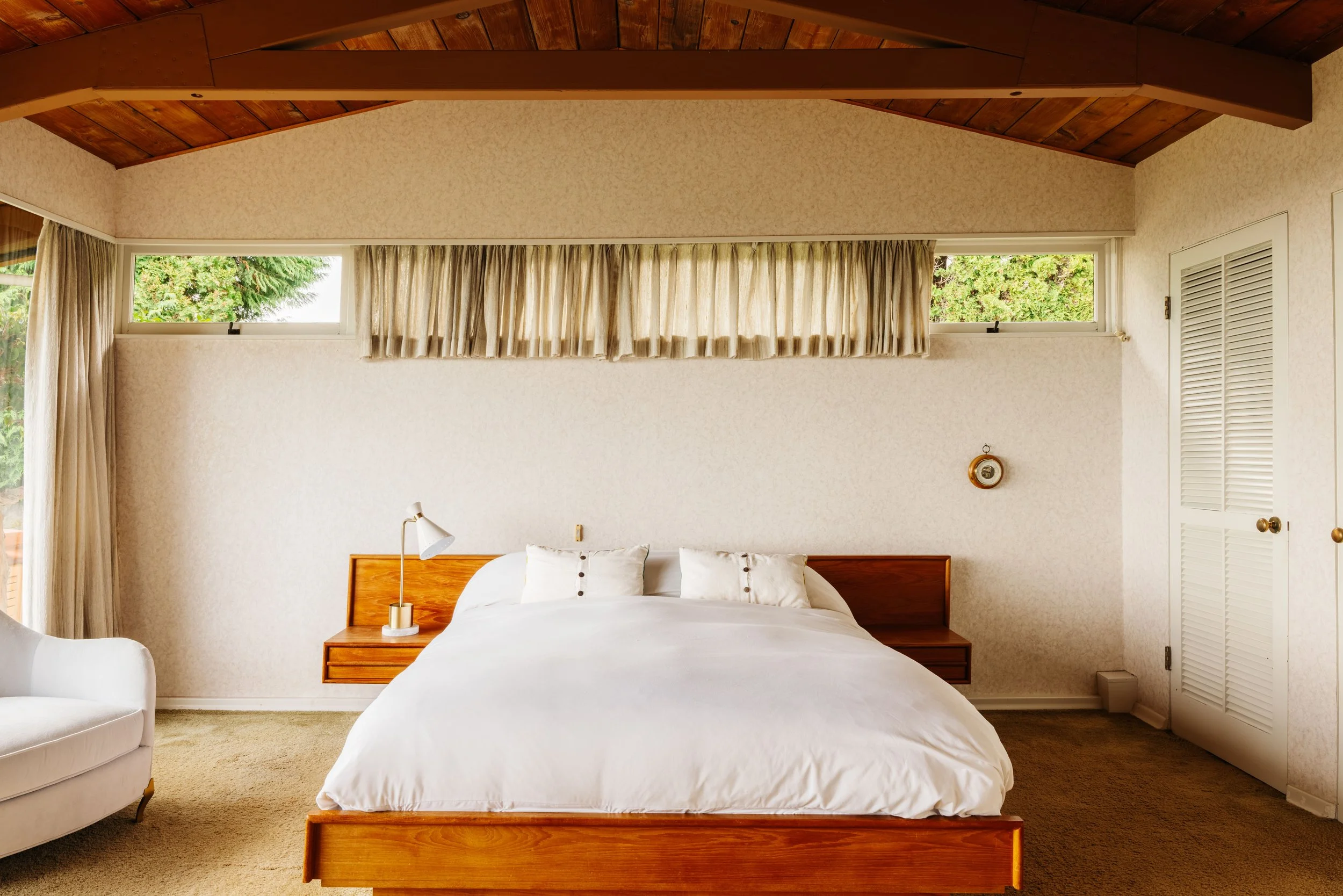
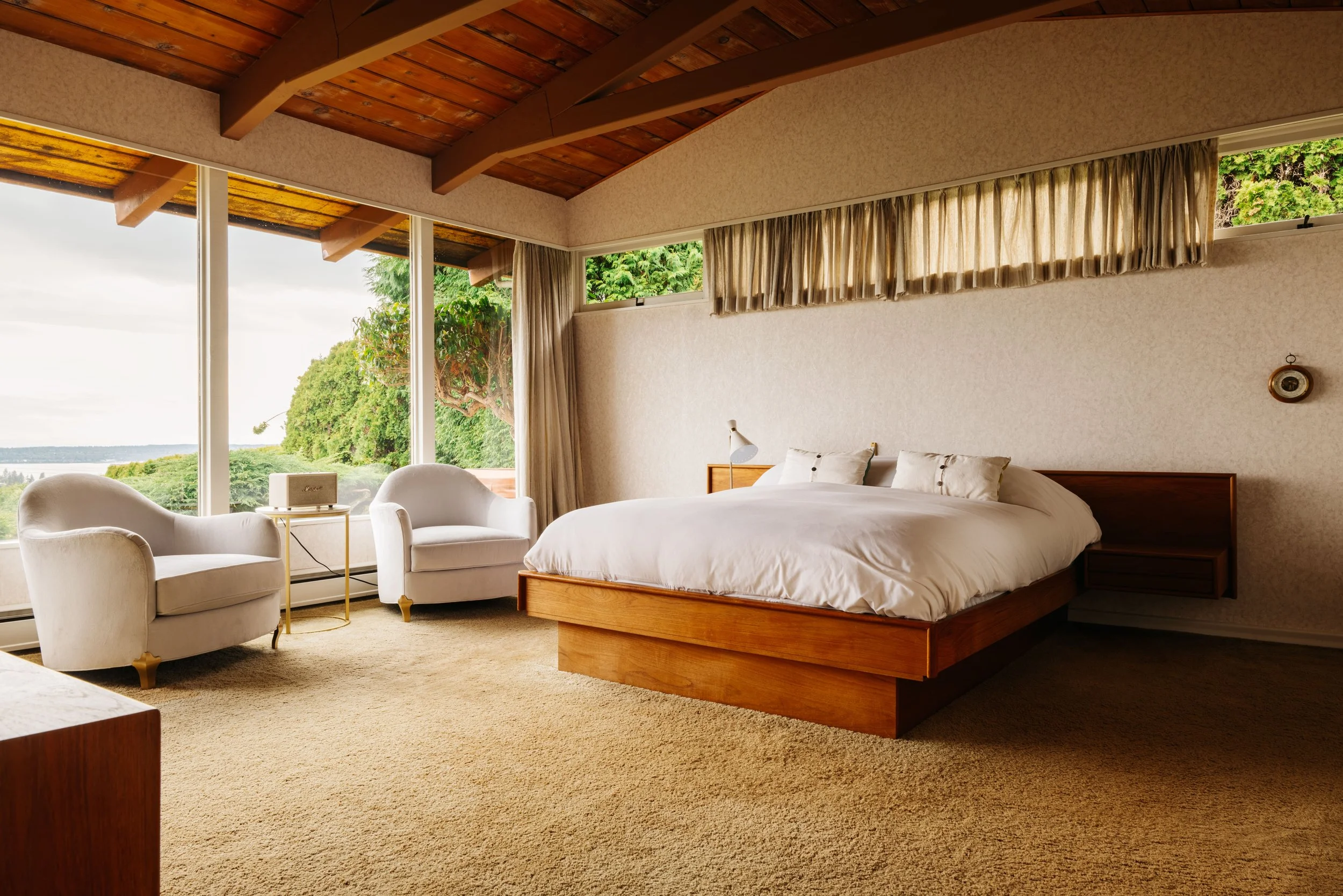
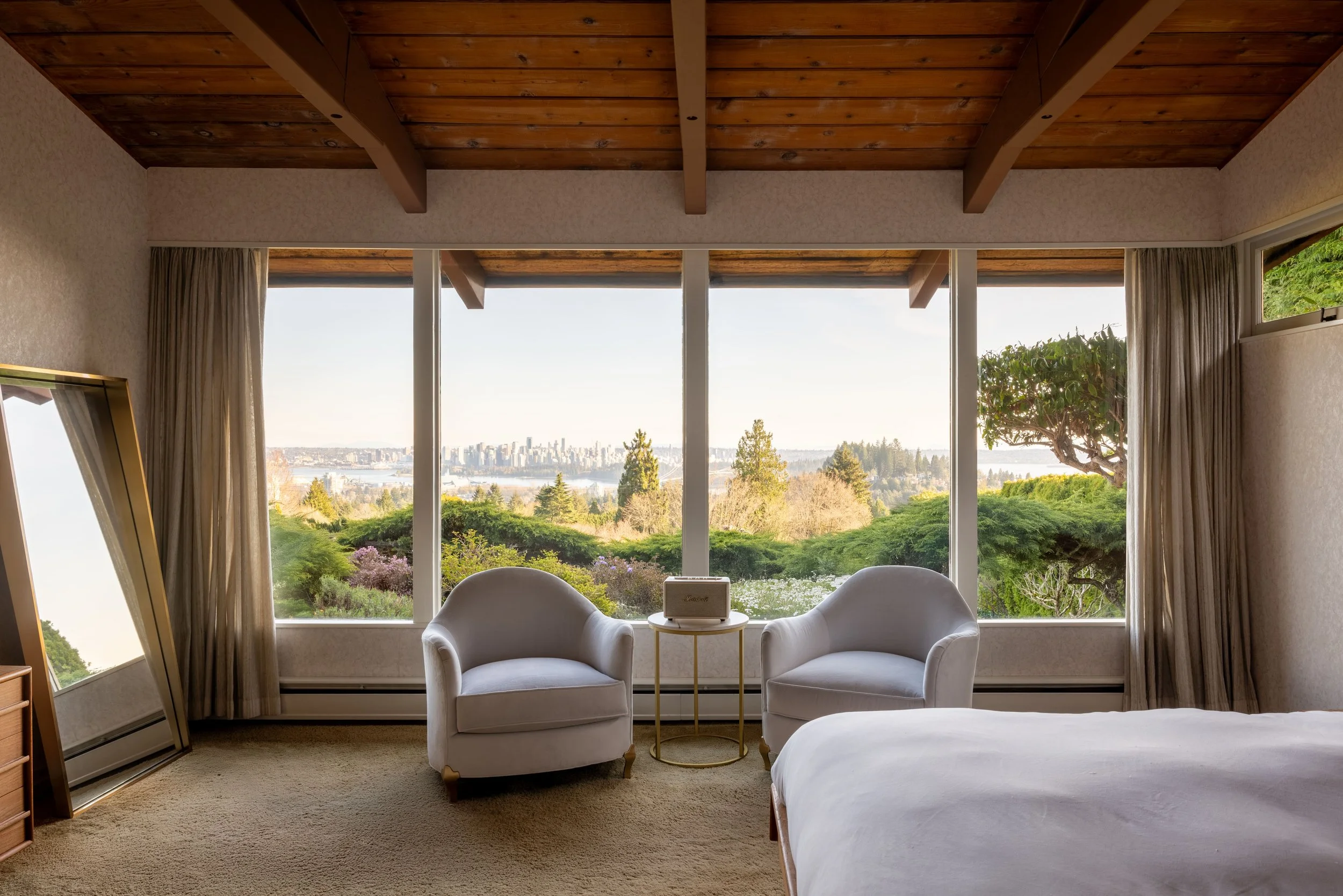
The primary bedroom is among the most quietly accomplished spaces in the home. Wall-to-wall southern windows and transom windows to the west admit an abundance of natural light and frame magnificent views toward downtown Vancouver, while a small private garden just beyond the glass imparts a sense of calm that balances the drama of the exposed timber beams and tongue-and-groove cedar ceiling above. The room is generous in every sense, equipped with its own ensuite, walk-in closet, and a wood-clad private sauna that speaks directly to the wellness philosophy the family brought to this home from the very beginning.
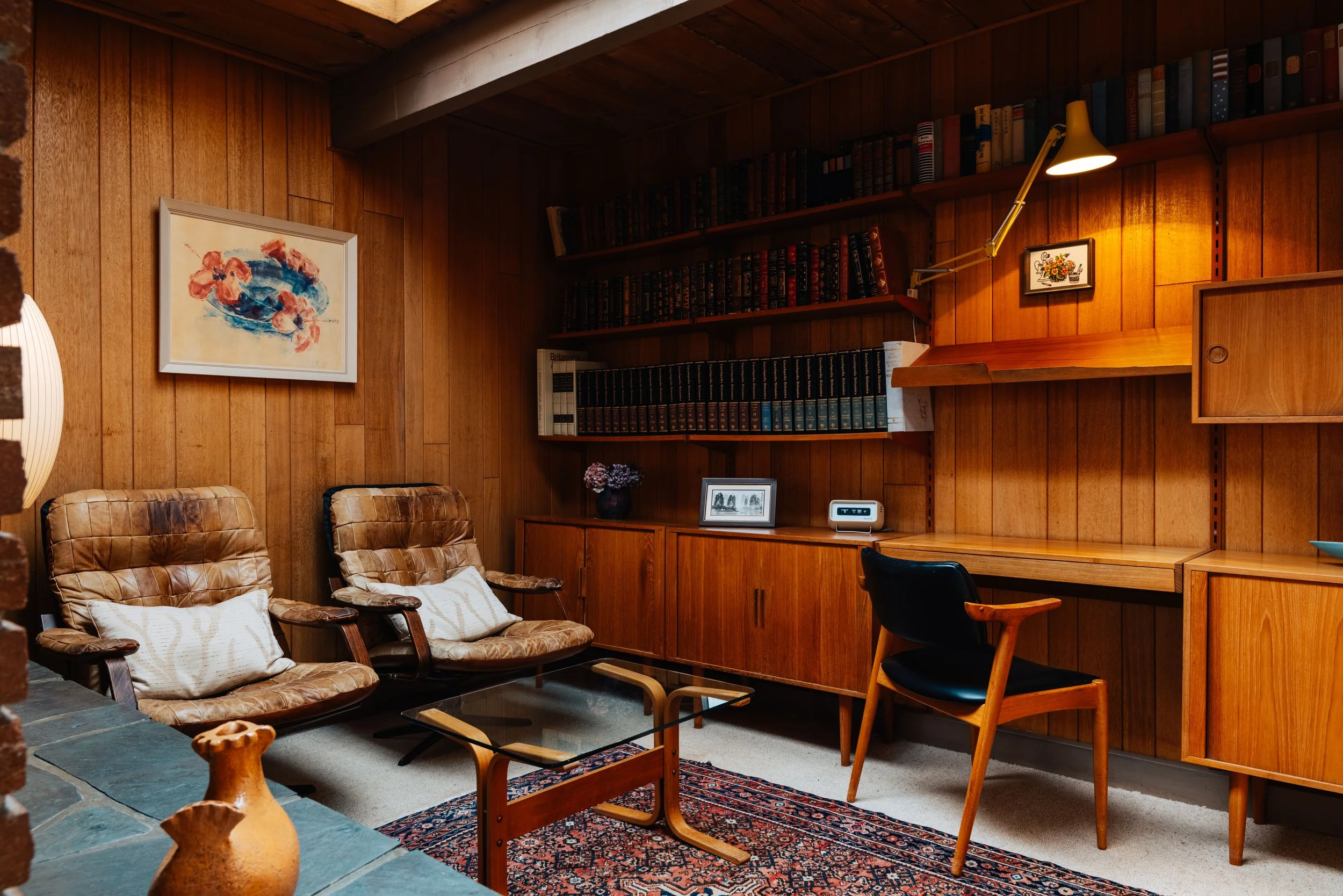
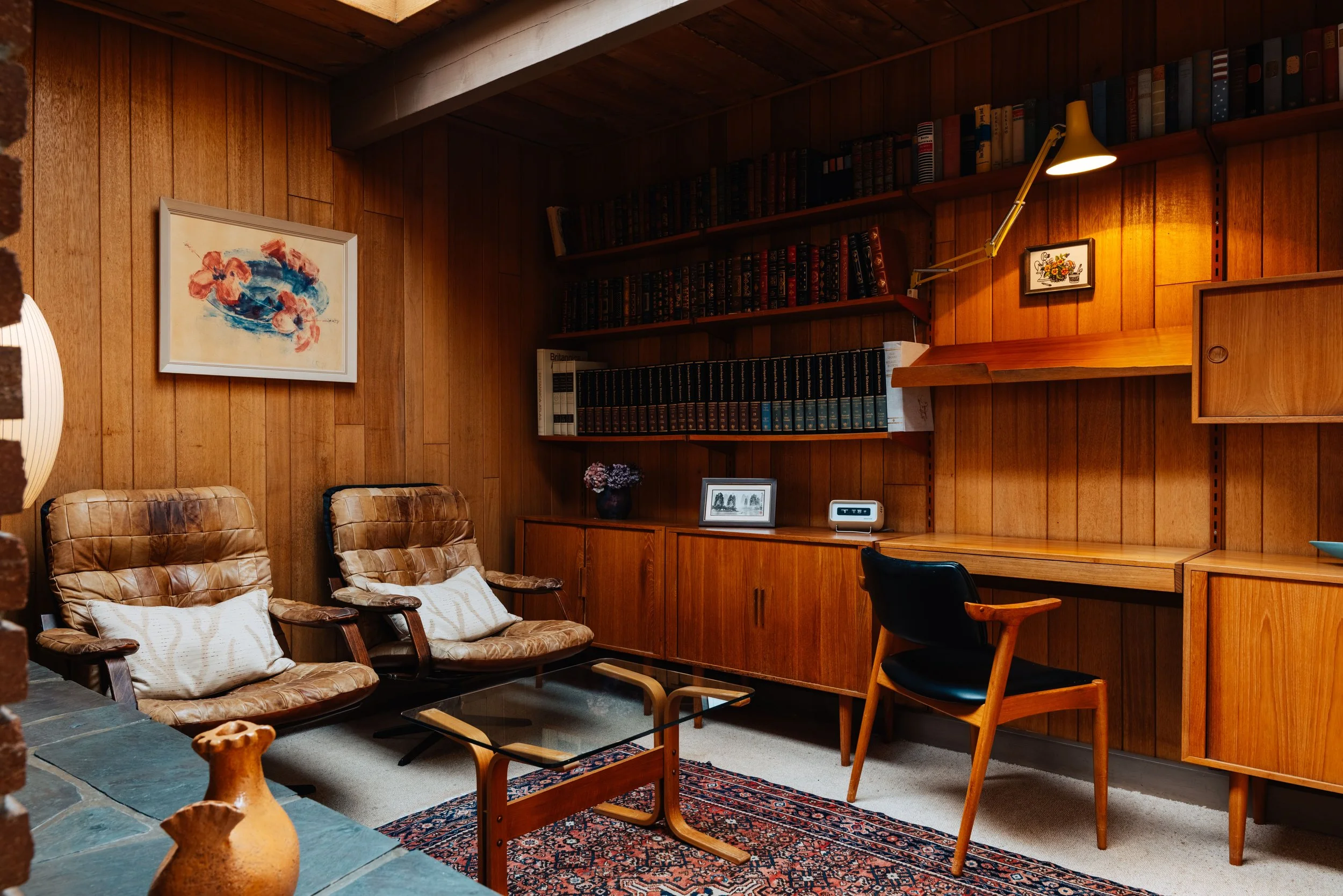
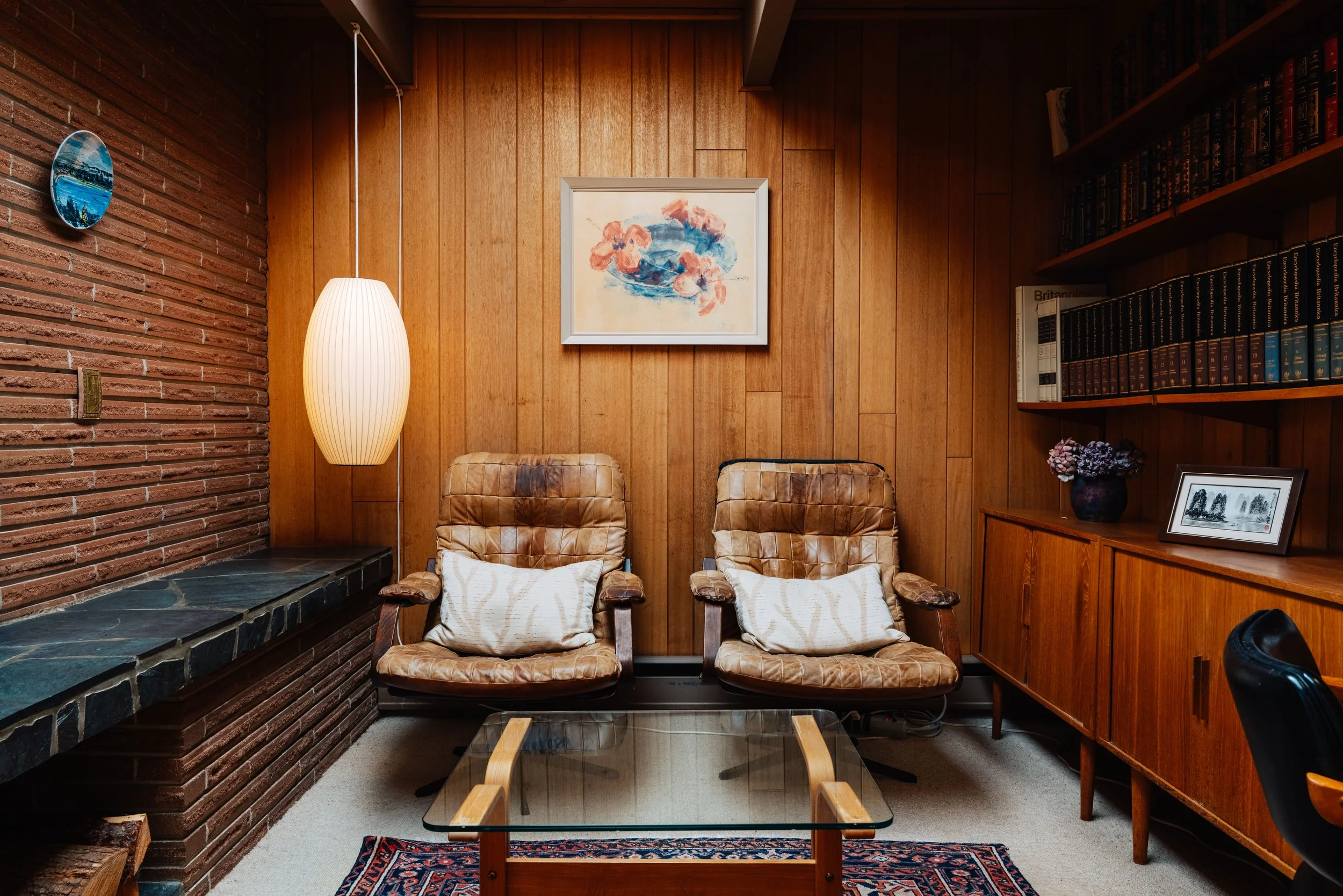
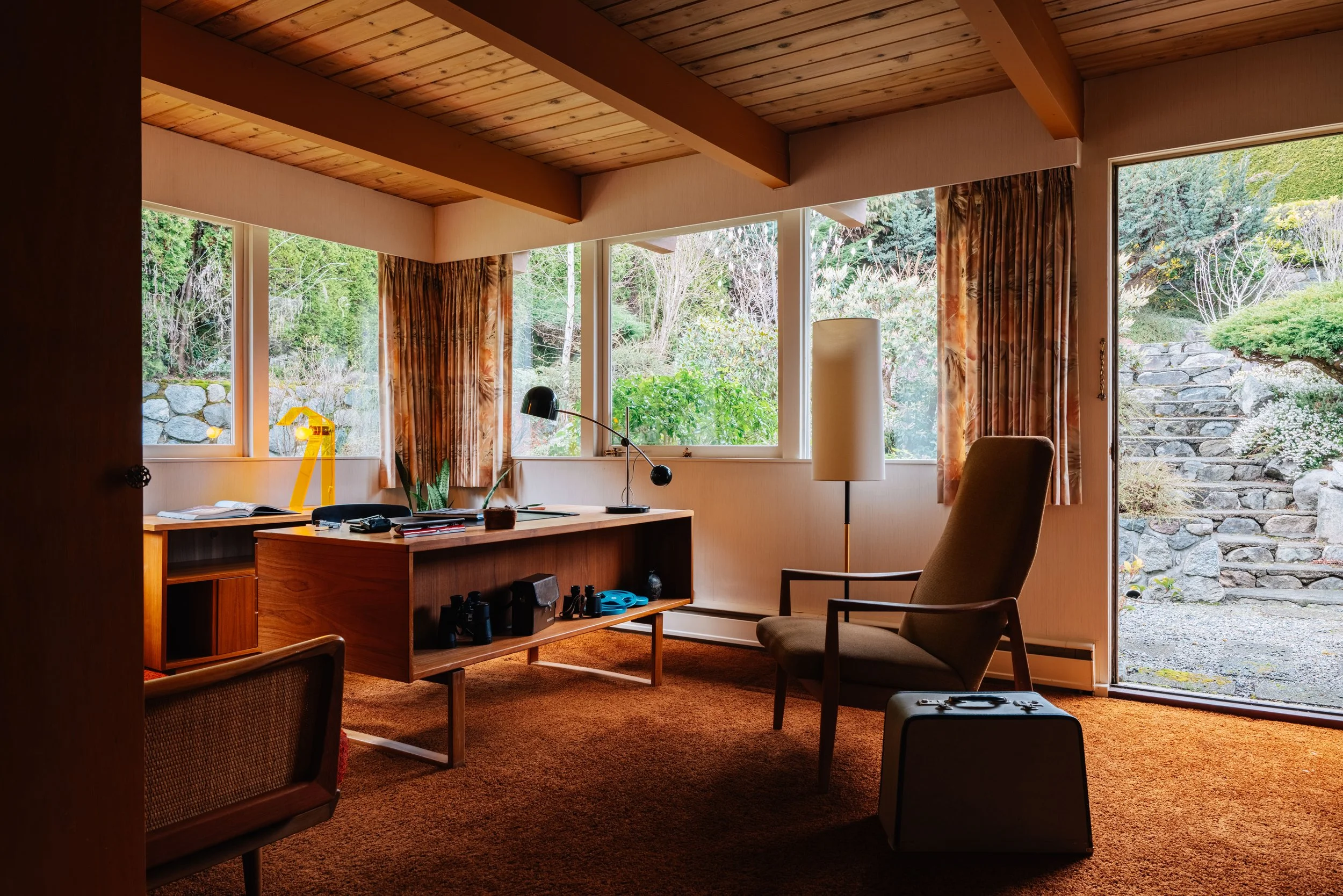
At the centre of the plan sits a study of an entirely different character. Where the rest of the home opens itself freely to the garden and the sky, this room turns inward, its walls and ceiling clad entirely in cedar planks that give it the quality of a warm, sheltered retreat. Original millwork lines one wall, providing a generous built-in desk and an abundance of storage, while a fireplace, smaller in scale but equal in dignity to the one in the living room, anchors the space with the same material conviction. It is a room that exists productively at odds with the openness of its surroundings, a place for quiet thought within a home otherwise given over to the pleasures of the outdoors.
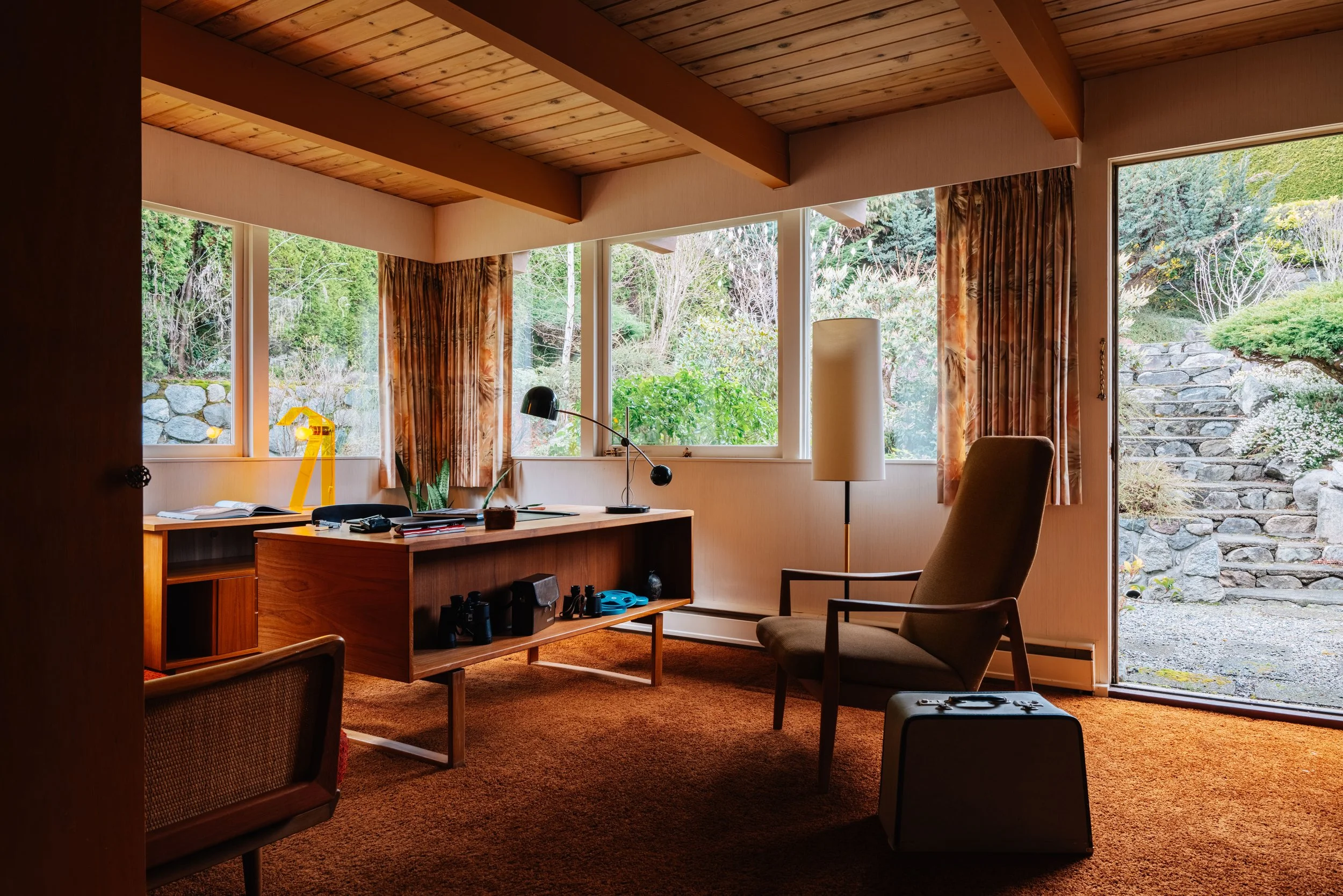
To the northwest, a playroom and second study can be separated into two independent spaces or opened via a set of accordion doors to create a single larger room, a flexibility that is pure Lewis in its thinking. Whether configured as a third bedroom, a family room, or a media room, these spaces can adapt readily to the demands of their occupants. In its current arrangement, the study feels intimate and protected, tucked against a gently sloping garden backdrop with direct access to a sunken garden to the north, providing a degree of closeness to the natural surroundings that the more expansive rooms of the home approach differently. Together these spaces demonstrate the range of spatial experiences that the Lewis plan quietly accommodates: from the grand and panoramic to the small and sheltered, always with the landscape close at hand.
The Resort
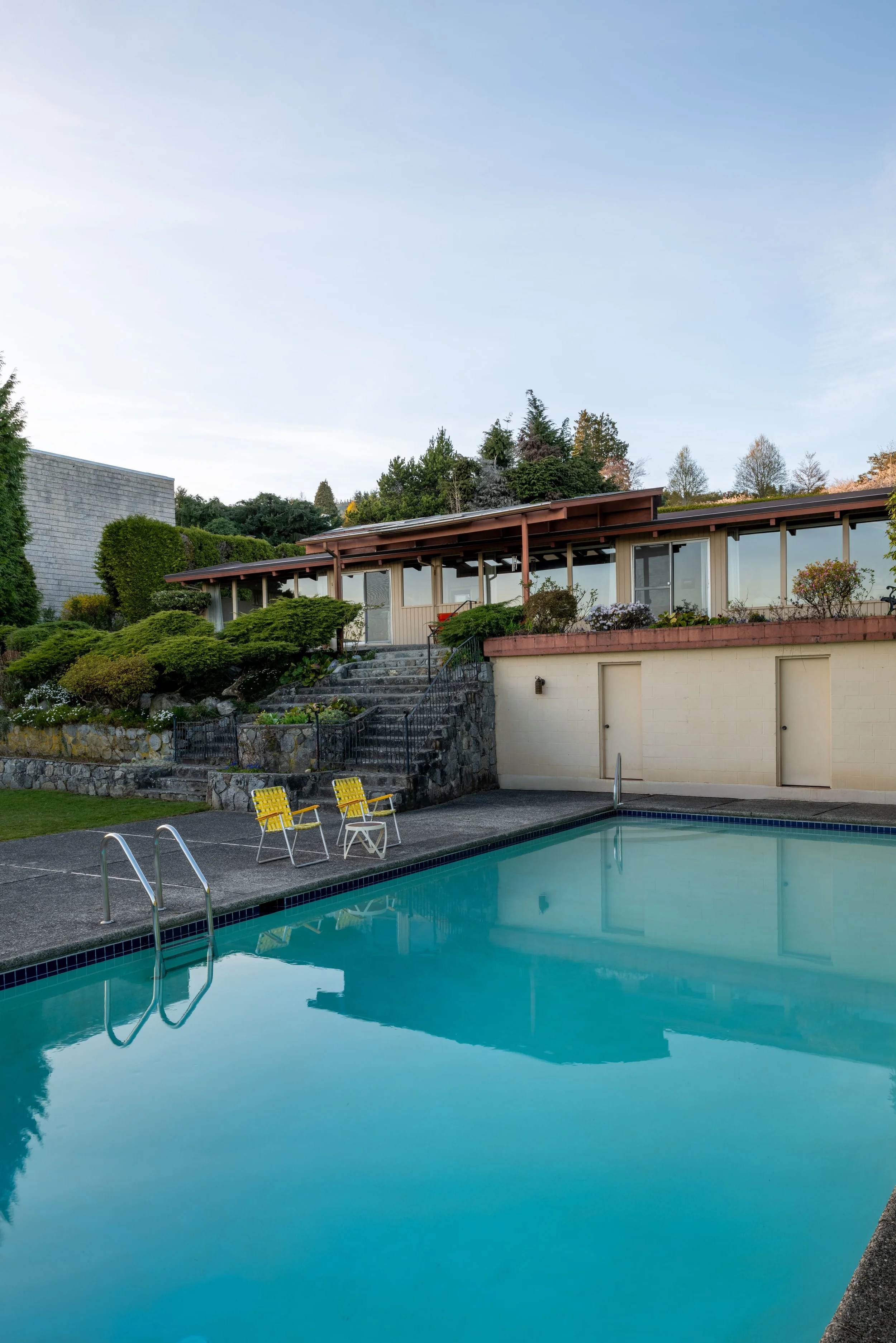
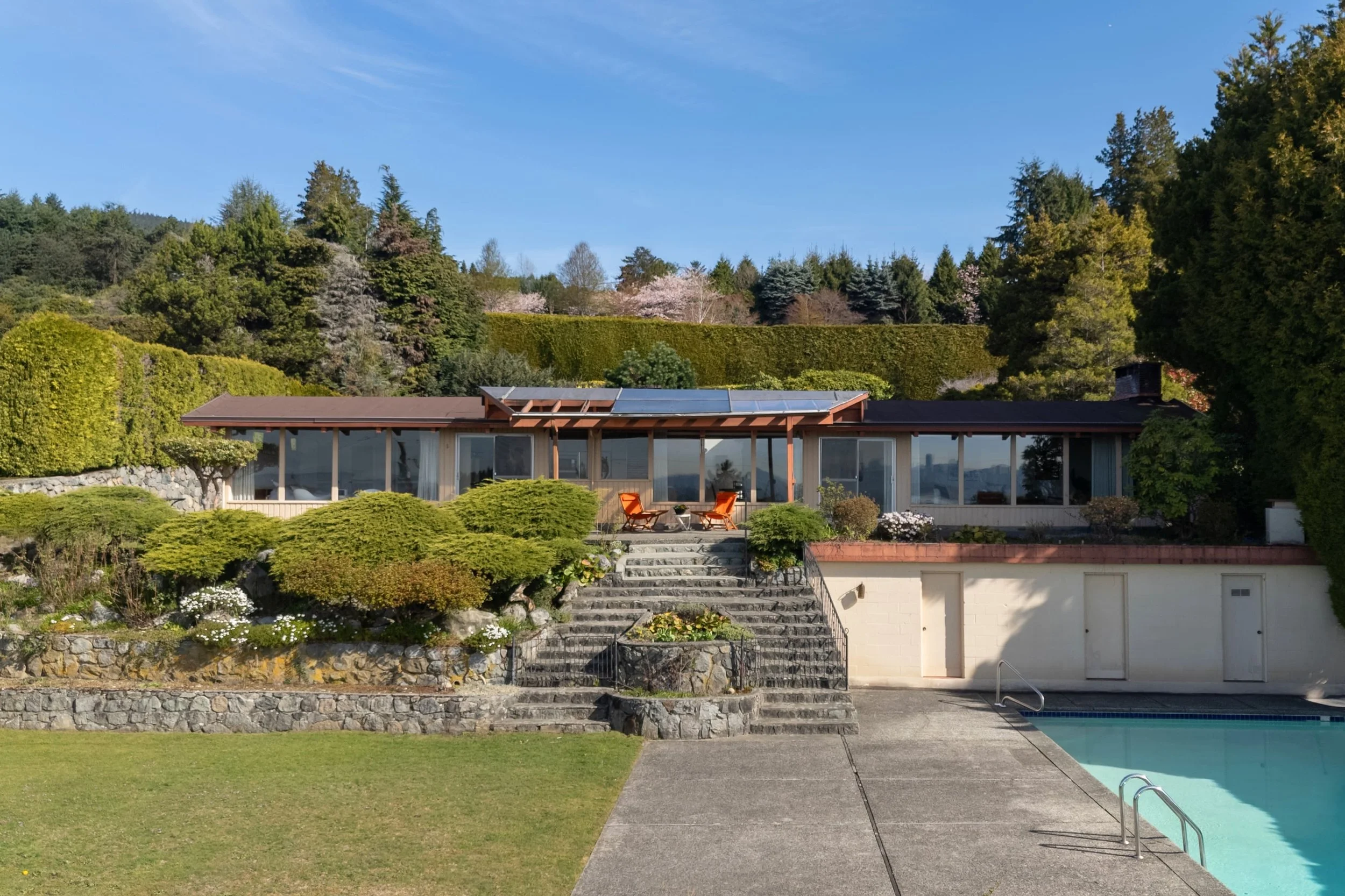
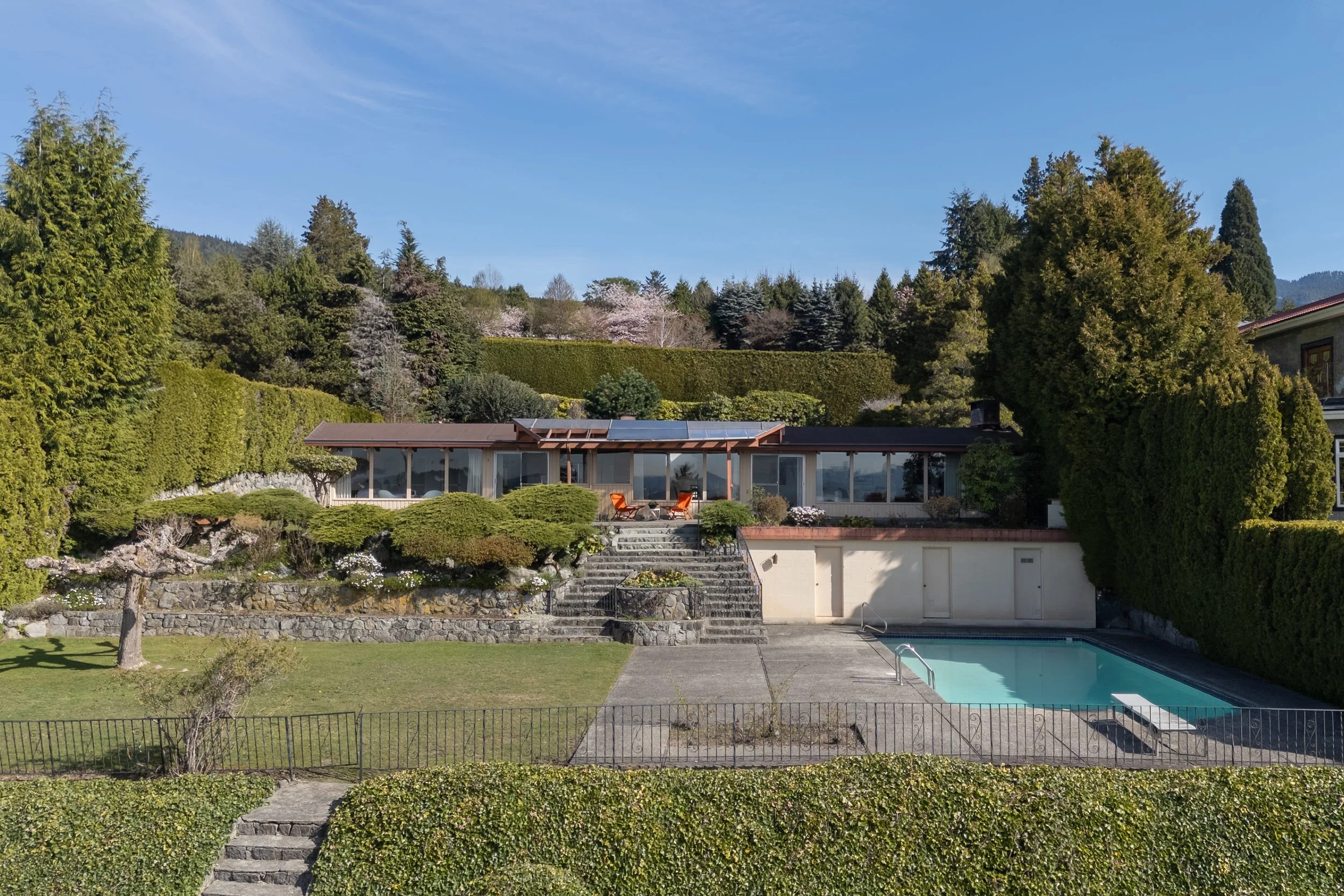
It is on the southern side of the home that the Resort House earns its name most completely. From the living room, a south-facing deck of over 600 square feet extends the full length of the building, its expansive proportions inviting the kind of unhurried outdoor living that the family cultivated here across six decades. A projecting roof shelters a portion of the patio, providing shade and protected living space while ensuring that the connection between indoors and outdoors remains a year-round proposition. From this elevated vantage point, the property reveals itself as a sequence of carefully considered recreational spaces that descend toward the view, each level distinct in character and each contributing to the sense that this is a property conceived as much for living as for shelter.
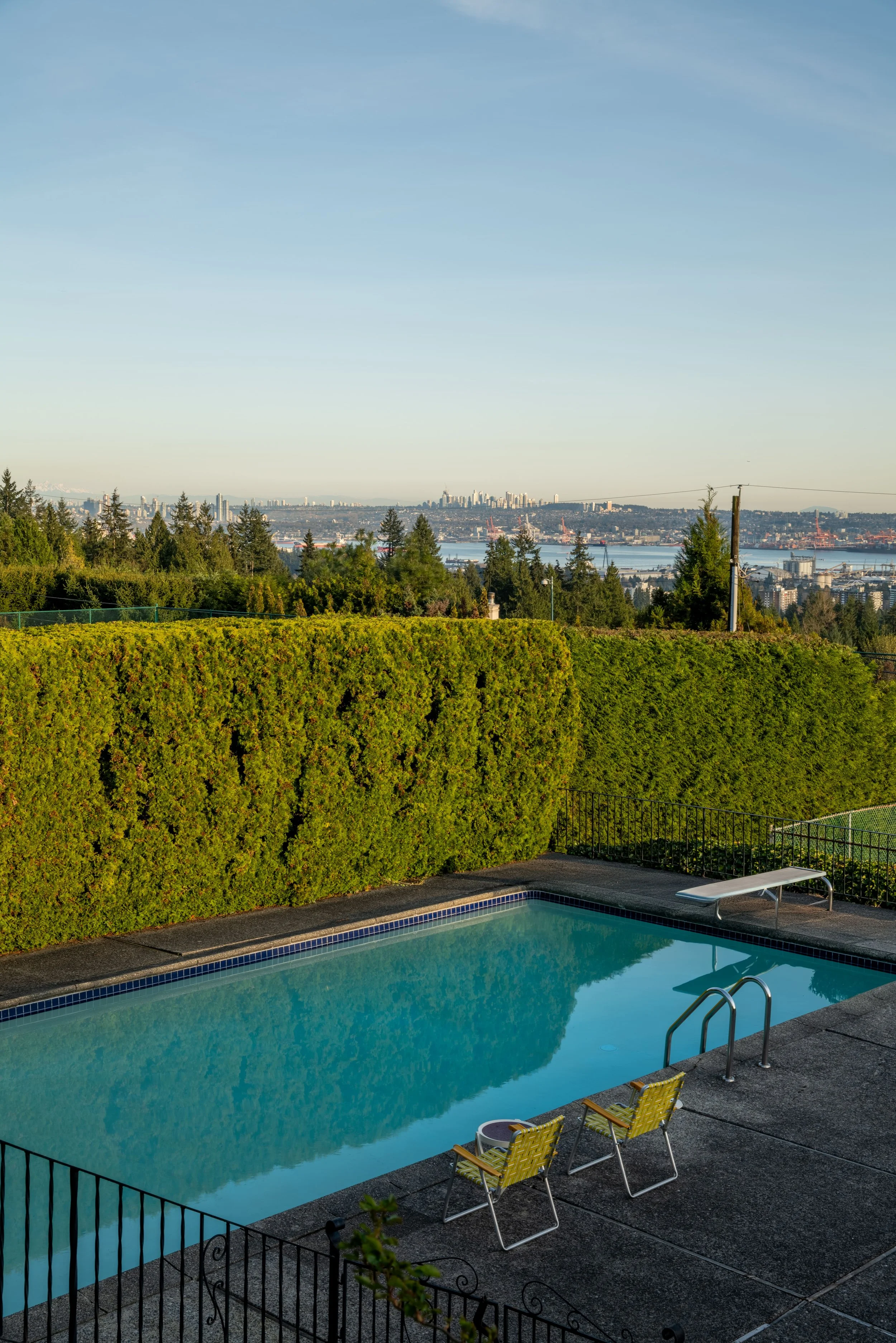
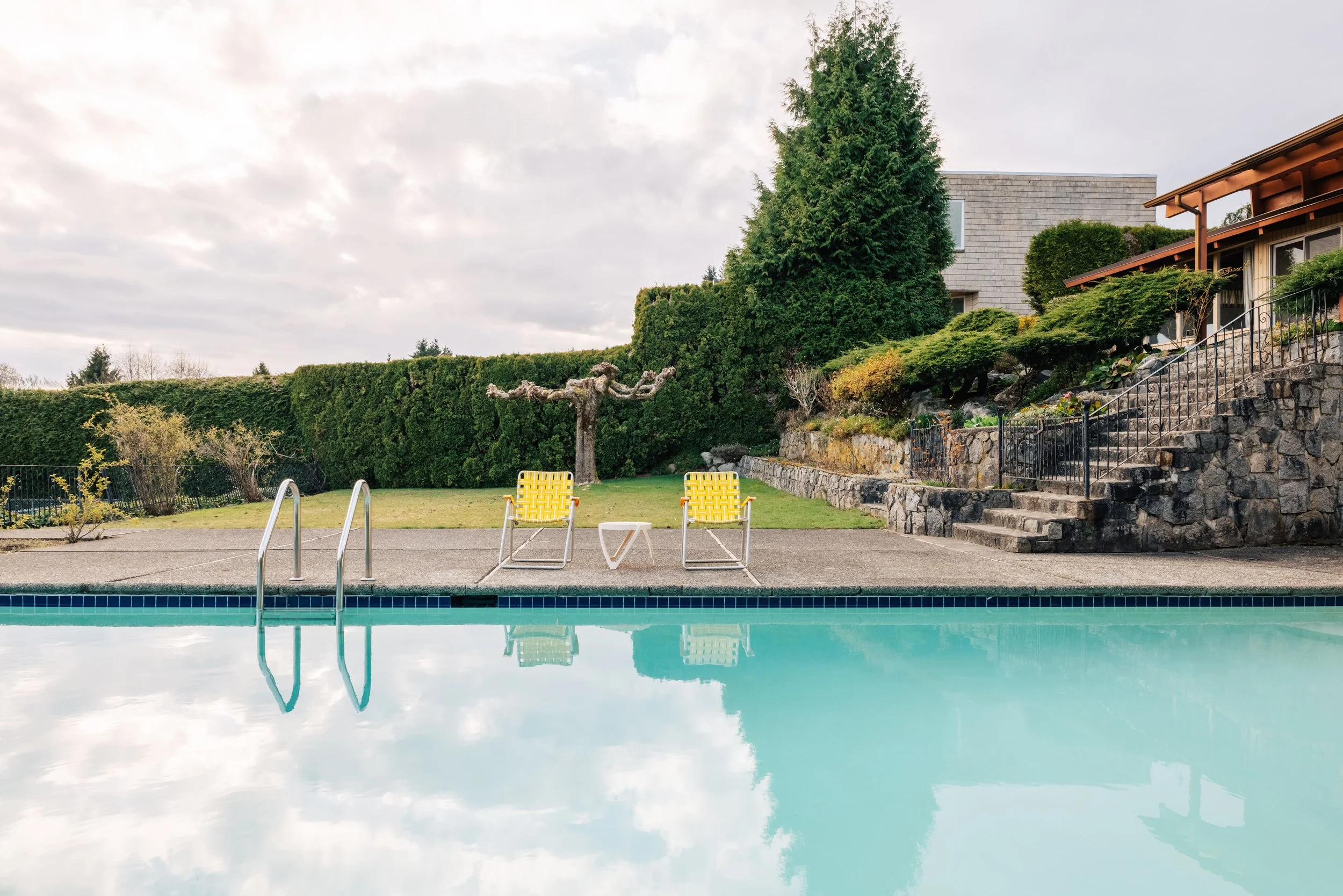
The first element in this sequence is the pool, installed in 1969 on the level immediately below the house. At twenty by forty-two feet, it is a pool whose dimensions would not be out of place in a private club, accompanied by an expansive patio and open lawn that together provide ample room for the kind of outdoor life that has always defined this property. Terraced gardens accompany the transition down from the patio above, their split-faced stone stairs and planters honouring Bob Lewis's adherence to truth in materiality with a tactile richness that extends his thinking into the landscape. Tall manicured hedges to the east and west of the property ensure that this level feels entirely private, a world contained within the larger world of the property, with sky and sea its own backdrop.
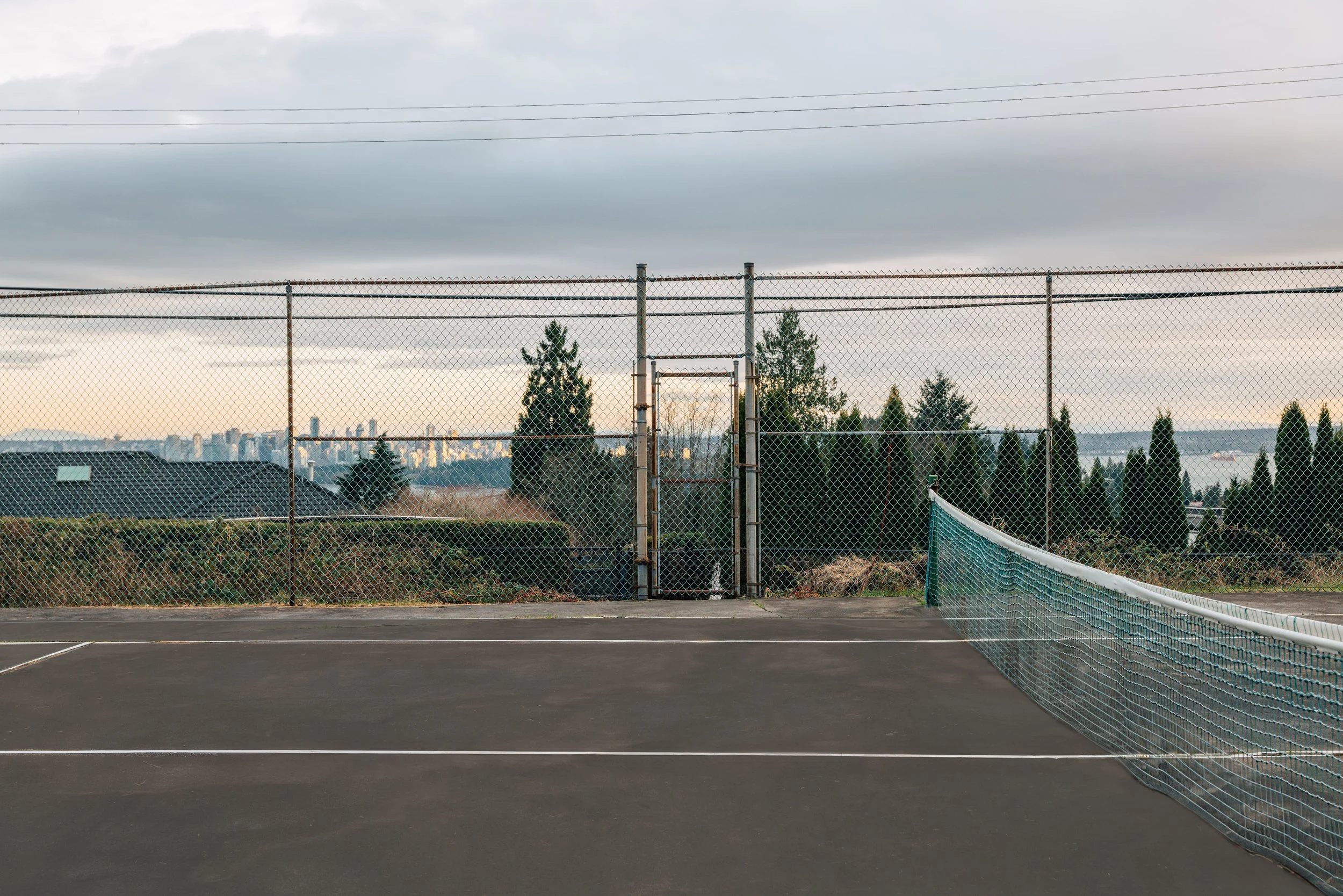
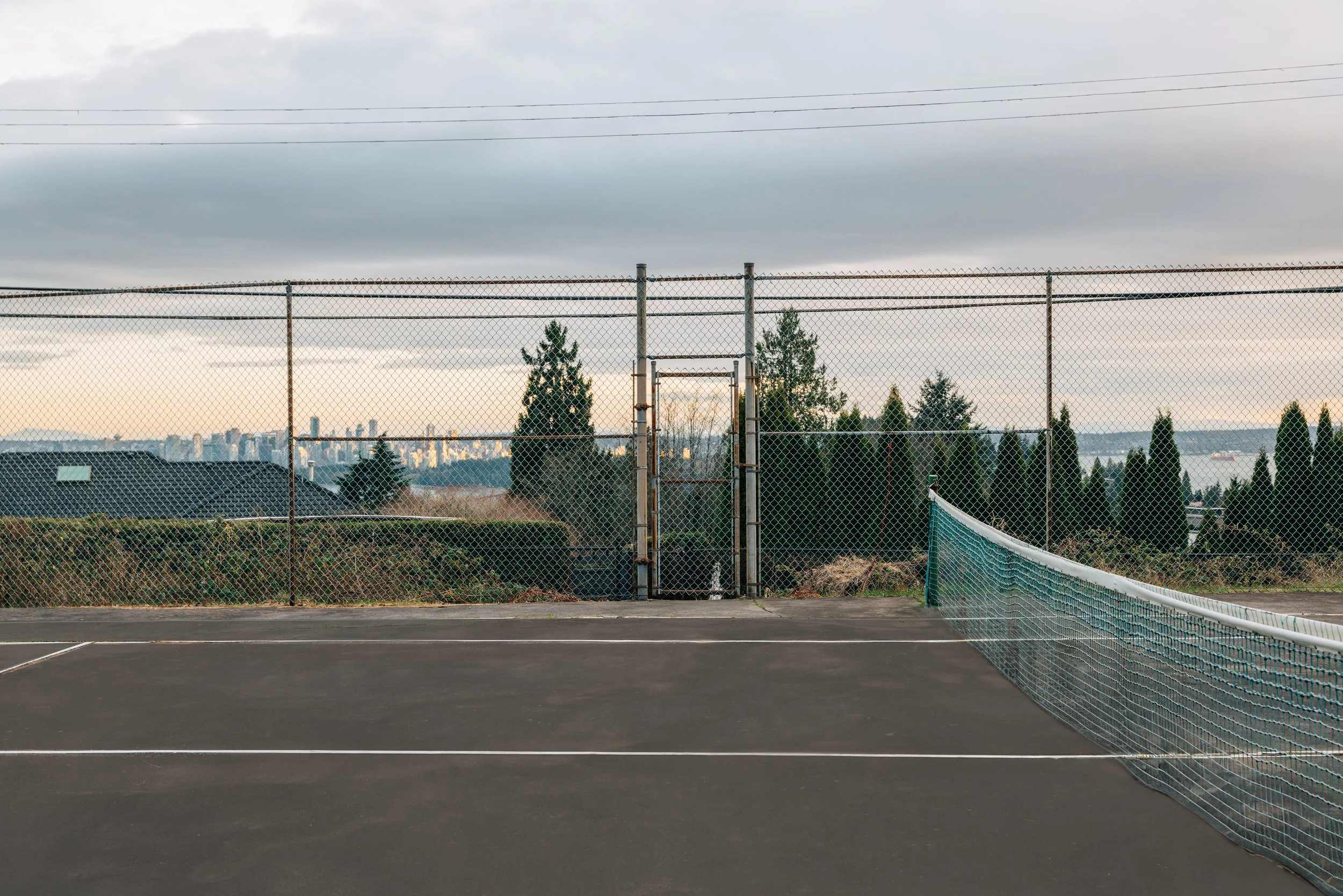
Beyond the pool, a full-sized tennis court occupies the full width of the lot, its position carefully considered so as never to obstruct the views from the home two levels above. From the court itself, the outlook across the water to the mountains and cityscape beyond is entirely unobstructed, a reminder that even the most practical elements of this property were conceived with the same attention to outlook and experience that governs every room within the house.
A Life Well Lived
For nearly seventy years, the Resort House has held its ground quietly below Fairmile Road, its horizon unchanged, its conviction undiminished. It has been the setting for a life lived with genuine intention: daily swims and morning walks, poolside gatherings and tennis matches, Christmas celebrations and family dinners that stretched long into the evening. Three generations have come to know its spaces, its light, and the particular quality of stillness that settles over the property on a clear West Coast morning.
Bob Lewis built it as a home for a family and one family made it into something extraordinary. Its next custodian will inherit not only a landmark of mid-century West Coast Modern architecture and a property of rare recreational ambition, but a way of living that this house has been quietly perfecting for nearly seven decades.
Home Facts
Name: Resort House
Address: 710 Fairmile Rd, West Vancouver, V7S 1R2
Neighbourhood: British Properties
Architect: Bob Lewis
Price: $4,185,000
Year Completed: 1957
Interior Living: Single-level rancher defined by post-and-beam construction, vaulted ceilings, and expansive glazing, with four principal rooms oriented toward a 180-degree south-facing view, creating a seamless indoor-outdoor lifestyle anchored in light, openness, and flow.
Site Area: 25,832 sqft
Levels: 1
Bedrooms: 3
Bathrooms: 2
Interior Living: 2,492 sqft
Exterior Living: 614 sqft
Structural / Engineering Highlights:
- Post-and-beam construction with vaulted ceilings
Landscape and Planning:
- South-facing orientation with expansive usable grounds; designed for resort-style living with integrated recreational amenities
Key Materials:
- Cedar beams and ceilings
- Marble tile entry
- Exposed brick (kitchen/dining)
- Wood panelling (den)
Views / Orientation:
- 180-degree south-facing views; large windows across four front rooms maximizing light and outlook
Features:
- Outdoor pool
- Tennis court
- Sauna
- Hot tub + jacuzzi bathtub
- Skylights (entry, den, bathrooms)
- Wood-burning and gas fireplaces
- Indoor/outdoor flow with large-format glazing
- Full privacy from street and neighbours
Now on Tour in West Vancouver
Reserve your private architectural tour.
Download the Story
Download a print-ready version of this feature.


Want to see more West Coast Modern homes?
Get Early Access to the Next West Coast Modern Home.